How the Toy Story toys are a little like vampires (preview)
A special look at this week's premium Friday newsletter!

Every week, Lily or Emily write and publish a Friday newsletter about what's happening right now in pop culture. It's only for paid subscribers! Here's an excerpt from this week's piece, in which Emily writes about Toy Story 5, Interview with the Vampire, immortality, and the power of elastic metaphor. If you want to read the rest, pick up a premium Episodes subscription using the button below!
Have you ever thought about how often characters in the Toy Story franchise bring up suicide or even contemplate the act? The second film in the series, released in 1999, features the toys begging beloved cowboy doll Woody "don't do it!" when he seems to be selling himself at a yard sale. (He's actually rescuing a fellow toy.) The fourth film, released in 2019, features Forky, an entire character whose schtick is throwing himself in the trash for he believes that is what he is. (In fairness to him, he's an arts and crafts project made from a spork.) And the fifth film features two separate references to suicidal ideation, most notably when Lilypad, the film's antagonist, throws herself in the trash.
The films are even more obsessed with mortality more generally. In the first film, released in 1995, Woody's rivalry with space ranger toy Buzz leads him to attempt to sideline the newer toy — only for Buzz to fall out the window and the other toys to accuse Woody of murder. Most famously, the third film, released in 2010, features an incredibly harrowing sequence where the toys are very nearly burnt up in a garbage incinerator, which would truly end their existences.
Toy Story is unique among Pixar franchises in that its sequels have largely worked, with no film in the franchise falling below "quite good" and at least a couple truly serving as all-time great films. While other Pixar movies would similarly qualify as all-time greats, it's hard to argue that any other Pixar sequels qualify, even the ones I don't mind. And the longer Toy Story runs, the more this obsession with mortality becomes central to its storytelling. The toys' fear of obsolescence keeps driving them forward; after all, Buzz is now 31 years old, ancient for a toy. He is no longer the hot new thing.
(Sidebar: Obviously, Buzz is 31 years old in our timeline. The Toy Story timeline has some weird time slippage, where seven years of real time passed between 4 and 5, but the toys' owner, Bonnie, only aged three years. And yet Lilypad is recognizably a mid-2020s piece of kid tech, and one could argue Bonnie is dealing with some Covid lockdown-inspired social delays. Nevertheless!)
What makes the Toy Story sequels work where, say, Inside Out 2 struggles to revisit the ideas of its "what if all our feelings were little guys?" predecessor is how elastic the franchise's central metaphor is. "Toys wake up when humans aren't around" is both a thing many kids assume happens already and a surprisingly robust way to think about children's relationship to the world. Every time the franchise introduces a new twist on the idea — Forky, for instance — you expect the whole enterprise to come tumbling down, but the metaphor only grows richer for how complicated it is. Unlike the feelings avatars in Inside Out, the toys are not strictly tied to one person either, so the franchise is able to consider several different cycles of human life via the perspective of the "inanimate" objects with which we share our lives.
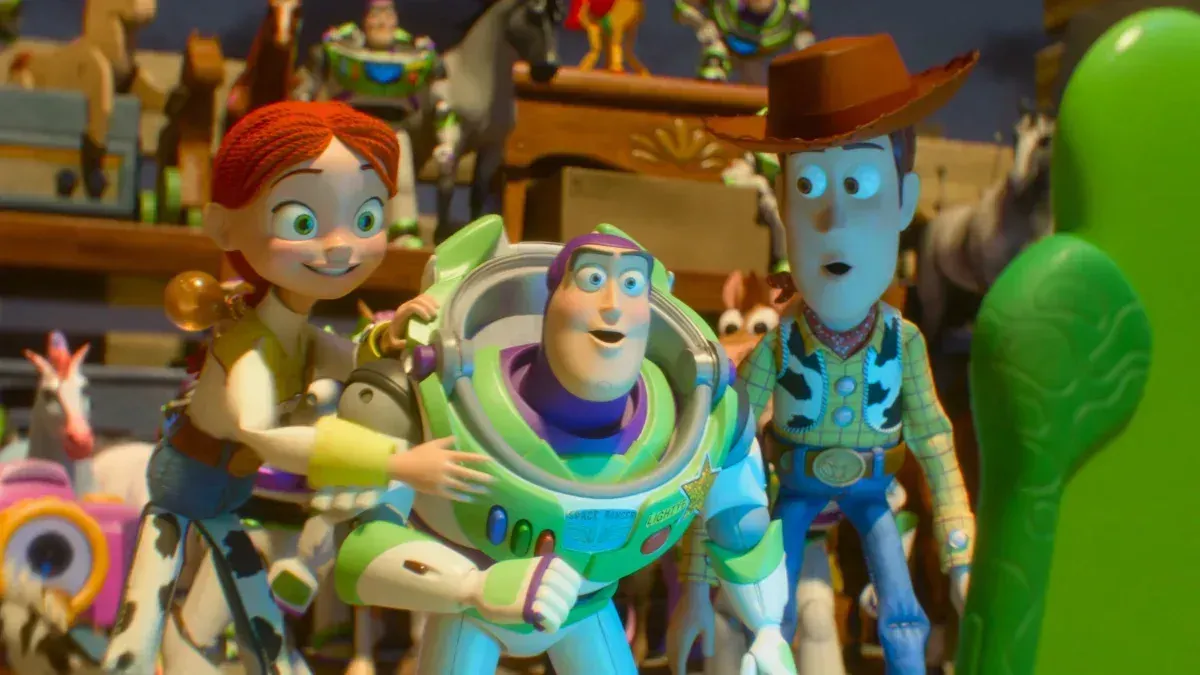
But none of that would work without the toys' approximation of immortality. We know that the toys will break down and decay with time, and the franchise makes this clear at several points. Yet what makes Woody, Buzz, Jessie the Cowgirl, and the gang such potent characters is how they are ageless and deathless and the many ways in which they help viewers consider their own relationships to childhood and parenthood via the lens of that immortality.
The toys of Toy Story, in other words, are a lot like the vampires of Interview With the Vampire.
Want to read the rest? Upgrade to premium today!