Nevermoor is the best middle-grade magic school series to read right now
Jessica Townsend's ongoing tale of a super special girl and her super special friends beats the pants off you-know-who
Almost from the moment the first Harry Potter books were published, the desire to find "the next" version of J.K. Rowling's (sigh) hugely influential series has been present. In recent years, as Rowling's utter and complete shitbaggery has become evident and reading rates have plummeted among middle-grade ages, the desire to find some other book series that will capture some of that Potter appeal has only grown. Surely there could be a fantasy series for tweens set at a magic school that was written by someone who didn't hate trans people, right? Surely?
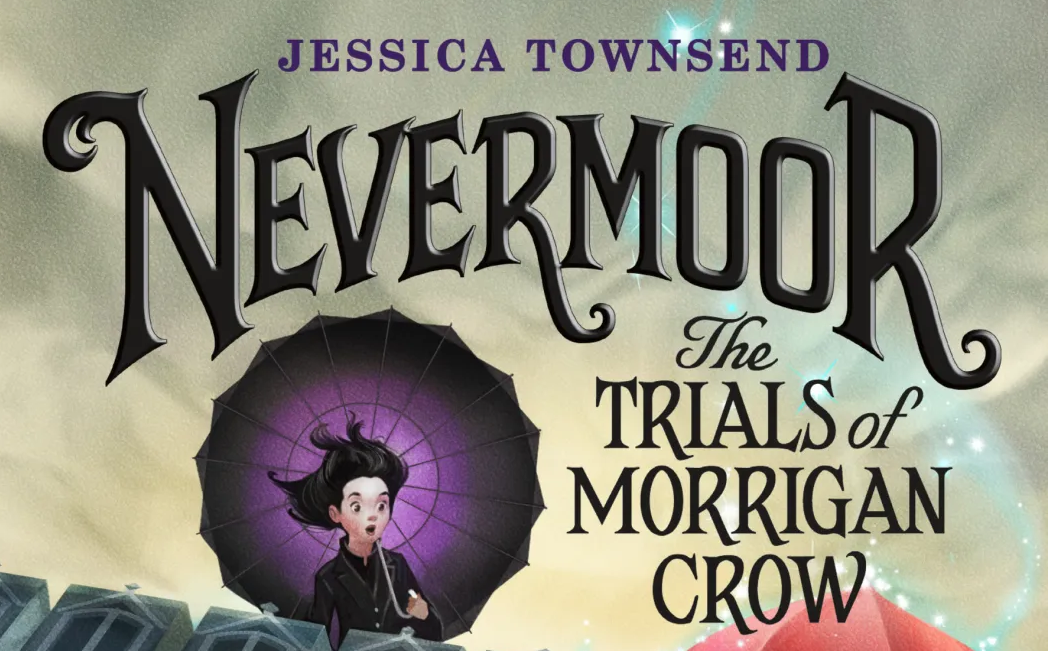
Enter Jessica Townsend's Nevermoor series, which launched in 2018, with new volumes following in 2019, 2020, and 2025. I was first turned onto the books by a friend of mine whose daughter loved to read books about "hidden realms" and subsequently blitzed through the whole series faster than almost anything else she read. Having now read the books myself, I see why. Townsend writes in an arch, incredibly funny register that, nevertheless, has room for real darkness and drama.
The Nevermoor books follow a girl named Morrigan Crow who has lived her entire life with the knowledge that she is a cursed child who will die on her 11th birthday. What is a cursed child? Why the 11th birthday? Through four books, readers have only gotten glancing answers to either question. Townsend focuses mainly on Morrigan's emotional experience of the fact. Indeed, all of Townsend's work is full of worldbuilding like this, where an entire cosmos is packed into a spare detail that is itself never fully unpacked.
Before she can properly die, however, Morrigan is spirited away to the hidden city of Nevermoor, a place that seems to operate by a kind of slightly-more-tween-friendly Terry Pratchett logic, with nearly everything serving as a joke of one form or another. Her new patron, Jupiter North, believes she's a natural fit for the Wundrous Society, a marvelous group of extremely talented people who help serve society — and who only admit nine new children each year. Will Morrigan be chosen? Have you read a middle-grade series before?
Considering that setup and the considerable number of copies the first book in the series has sold, I am far from the first person to compare Nevermoor to Potter, but it's worth noting how Nevermoor improves upon Rowling's work — and a lot of middle-grade genre fiction — particularly on three different levels: plot, character, and politics.
Nevermoor's plot takes big chances
A lot of middle-grade fantasy — okay, a lot of fantasy — is an invitation to self-insert. Thus, the protagonist is either the most special person to ever have lived, stronger and smarter than all the rest, or they are a passive vehicle to watch the plot happen around them. Too often, they're both.
And don't get me wrong — this kind of storytelling can have its pleasures. But one reason the Potter film adaptations were duller than a lot of other fantasy films stems from how their straightforward adaptation approach revealed just how little Harry Potter actually does in those books. (I was complaining about this before J.K. Rowling — and it's important to emphasize this — revealed herself as a truly terrible person.)
In the Nevermoor books, Morrigan is a big dumb stupid idiot who takes enormous chances, leads with her heart, and frequently screws things up. What's more, her friends — particularly her closest pals, prank-loving dragonrider Hawthorne and snarky mesmerist Cadence — take big chances too. Townsend understands that being a tween-to-young-teenager involves lots of moments when it feels like your life is just one thing after another, often assailing you without rhyme or reason, and the only rational response is to just come out swinging.
What's more, the books subtly shift subgenres, so, while the first book is a fairly standard portal fantasy, the fourth is a cozy mystery, more or less, and both feel like they belong in the same series.
Townsend is not as clean a plotter as many of her fellow middle-grade fantasists. There was a point about a third of the way into every one of these books where I wondered if the story was going anywhere, so enamored is the author of exploring every nook and cranny of the magical world-within-a-world she's built. But then, inevitably, at the halfway point of every book, some much larger plot she had slowly been assembling revealed itself, and (more importantly) Morrigan would have thoughts and feelings and a plan to deal with the big problems that faced her. That plan often blew up in her face, but her willingness to keep doing things made her refreshingly unlike many other fantasy protagonists.
Perhaps nowhere is this better exemplified than in the third book, Hollowpox, which begins with the typical adventures in Nevermoor before Townsend reveals the story's main crisis: a plague that reduces the talking animals of Nevermoor — called Wunimals — to mute beasts that are like any other animal. (The book was released in the middle of the Covid-19 pandemic lockdowns, and that bad timing luck may have sapped the series' momentum somewhat.) The book spirals from there into a conspiracy thriller (a rare genre for middle-grade indeed), and, at every point, Morrigan is trying both to keep up with the plot and to affect it in some way or another, doing some truly astonishing things to save her friends by the end.
All of which brings us to what makes Morrigan different from nearly any other protagonist of a series like this.
Become a paid subscriber: You'll get access to three weekly newsletters only paid subscribers receive, the Episodes Discord, and almost a decade of archives. Plus you'll get to comment and ask questions in the mailbag! Sign up for as little as $5/month below!
Morrigan is a Chosen One — but really not in the way you'd expect
So the Chosen One narrative is a scourge on genre fiction in general. It's popular for the reasons you'd expect — everybody likes to imagine they're the most special! — but it's been so done to death that there's very little room to maneuver within it. And that's before you get to how much this specific narrative has had really weird societal knock-on effects or at least made some not insignificant portion of men between the ages of 30 and 50 whine about Luke Skywalker's presentation in The Last Jedi a lot.
From the earliest chapters of Nevermoor — before Morrigan has so much as heard of the titular hidden realm — you will know that she's a Chosen One figure. But also from those earliest chapters, Townsend is offering hints that not all is as it seems. For one thing, the whole cursed child thing plays out as incredibly odd and dark, with people around Morrigan getting badly injured semi-frequently, something that necessitates her being sealed away from the world at large much of the time. This choice leads to many of the usual Chosen One places — would you believe her family doesn't like her much, and she has no friends? — but with such a tinge of menace that it feels like something different.
Spoilers for the first book follow. Come back at the next subhead if you want to live and/or remain unspoiled.
And then halfway through book one, right as you're learning about the dreaded Wundersmith Ezra Squall — a magic user of such awesome power that he killed lots of people, destroyed much of Nevermoor, and was ultimately banished — you're starting to wonder: Is Morrigan like him? Spoilers: She is. She's the next Wundersmith, and, though Jupiter and her friends keep telling her that she is not destined to be evil and is, instead, the sum of the choices she makes, gosh, all that untrammeled power is just so tempting...
"The Chosen One is actually kinda evil or is tempted to do great evil" isn't a new trope, per se, but it's one that is used rather sparingly and very rarely in middle-grade. By the time Squall is an on-page character who reveals — convincingly! — that only he can teach Morrigan to use her prodigious gifts because he killed everybody else who might have done so, even the most hugely moral readers might be, like, C'mon, Morrigan. Be a little evil!
Which leads us nicely to the books' surprisingly complex, thoughtful politics.
The series' politics are leftist without being all that preening about it
I hate to keep comparing this series to Potter — it's so dismissive of Nevermoor's many gifts, and also, if a trans person says the words "Harry Potter" too many times, little feral J.K. Rowlings pop out of her back like in Gremlins — but one of the most annoying trends in the wake of Rowling's heel turn has been to note that her series' politics were always deeply suspect. Unfortunately, however, this annoying trend is largely accurate. Like, yes, there's some nice stuff about banding together against evil in there, but also, the goblins are antisemitic stereotypes and there's a whole terrifying magic prison system that is barely interrogated.
Now, there's not a scene in the Nevermoor series where Cadence plants the phrase "dialectical materialism" in the brains of every citizen of Nevermoor so they overthrow the ruling class, but otherwise, the whole series offers a soft rebuke of the usual assumptions underlying the genre.
For starters, the stories are casually diverse in a way that doesn't call attention to itself. Morrigan's class is full of kids of different racial and ethnic backgrounds from her, and their teacher is revealed, late in book three, to be in a relationship with another woman. None of this is drilled into the audience in the manner of so much hyper-progressive fiction — you just kinda get vibes from the teacher until she's kissing her friend, and then you're, like, "Wow, my fictional gaydar's on point" — but Townsend's commitment to it is admirable.
Morrigan herself ends up being a sneaky way for Townsend to talk about immigration and how frequently immigrants and other members of the traditional underclass are suspected of being destabilizing elements. The author is enormously gifted at portraying the way that societies are too easily whipped up into a mob by bad actors who seek only to divide society based on their own fears, insecurities, and lust for just a little bit more power or money.
What's more, the whole idea behind Morrigan's character is both that absolute power can corrupt absolutely and that no one person — not even the Wundersmith — should attempt to solve everything by themselves, that there's power in collective action, that the best things happen when we're all on board. Even here, the book is rarely didactic. Squall is a fascinating character with motivations that make sense even if they mark him as truly monstrous, but Townsend's strong moral sense keeps readers from idolizing him too much in the manner of so many other compelling villains. More, there are frequent hints that the true evil in the series isn't Squall himself but, rather, a larger, overarching system that spurs conflict almost due to its very existence. That conspiracy in book three? It goes straight to the top.
(Sidebar: Lest trans people fear, Townsend spent much of her 2025 book tour shaking her head sadly about what a jerk Rowling has been and saying that she wanted every kid to feel welcome in Nevermoor, so you're safe!)
Do I think the series has perfect politics along every axis? Nah. The whole setup of "Nevermoor is the one perfect, free place, and every other country is a threat to it" has the potential to go very wrong in later books and very nearly does a couple of times in the series so far. But no work should have politics I agree with 100 percent — or even 50 percent — of the time because it should be more interested in whatever experience I'm having as an audience member.
So if you are a middle-grade reader or a parent who is wondering how to get some of that — shit, I can't say his name another time without spurring dire consequences, but you know the kid. wizard? lightning bolt on his forehead? — magic, there are few better options out there than Nevermoor. And unlike most of the others, this one is still in the midst of being released — Townsend plans nine books — so you can get in on one of the most joyful parts of reading any middle-grade series: anxiously awaiting the next book with your friends.
Which is to say: Jessica, c'mon. Give us some details about book five already.
A Good Song
The free edition of Episodes, which (usually) covers classic TV and film, is published every other Wednesday. Premium subscribers get newsletters every Monday, Tuesday, Wednesday, and Friday. Our editor-in-chief is Emily St. James, and our managing editor is Lily Osler. If you have suggested topics, please reply to the email version of this newsletter or comment (if you are a paid subscriber).