Public Access Afterworld is everything you love about Jane Schoenbrun, and then some
Plus: Possible Love, The Only Living Pickpocket in New York, and a good SNL sketch.


Happy Monday, Episodes pals! This week, we've got takes on Jane Schoenbrun's debut novel and Lee Chang-dong's Possible Love, as well as our usual collection of other bibs and bobs. Remember: If you subscribe, you'll get this newsletter in your inbox every Monday!
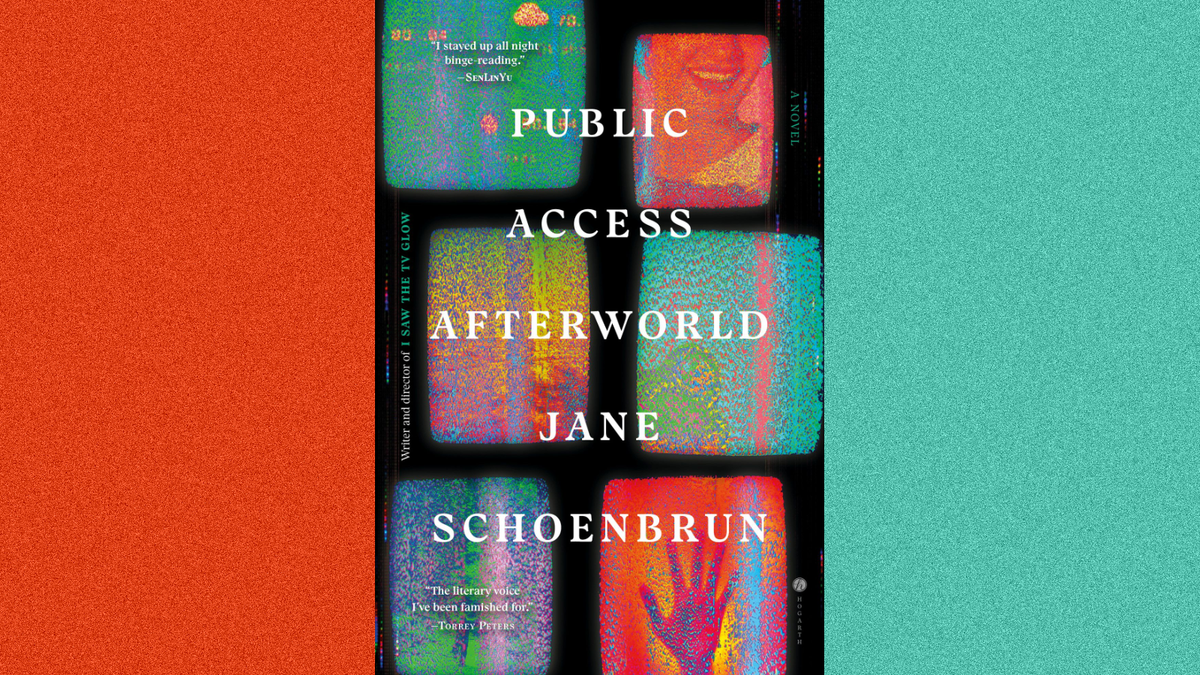
Public Access Afterworld lets its themes point to places I Saw the TV Glow couldn't
Public Access Afterworld, the first novel from director/absolute icon Jane Schoenbrun, is far from perfect. It is a bit longer than it absolutely needs to be; its prose is often clunky and overwrought in a very first-novel sort of way; characters get lavishly introduced only to drop off the page the moment Schoenbrun forgets about them; the novel hits on a bunch of themes, especially vis a vis class and gentrification, that it never explores in the depth they deserve.
It is also, without a doubt, my favorite thing Schoenbrun has worked on — and I fucking love Schoenbrun's work.
Schoenbrun tends to write spare screenplays with lots of open space in them (even the relative laugh riot of Teenage Sex and Death at Camp Miasma moves at a far slower pace than other meta-slashers), which made me a bit skeptical about their ability to develop the kind of fast-paced paranoid conspiracy thriller that Public Access Afteworld promised. But it turns out that Schoenbrun is absurdly talented at plotting and character work! The plot is twisty, sometimes shocking, just the right amount of schlocky, and always well-grounded in the themes Schoenbrun is exploring; the characters are round, morally complex, and absurdly compelling. Many of the blurbs on the back of the book talk about how the blurbers binge-read the novel, and I was the same way — the book is 600 pages, and I knocked it out in two days flat, reading every second I had free time.
I particularly like how Public Access Afterworld gives Schoenbrun space to play out themes and extended metaphors at a length that's not possible in their films. You can read the film-within-a-film in Camp Miasma as a specifically trans narrative, or you can read it as a broader narrative about sex and dissociation, but either way, the film is about a relatively specific (if common) experience: not being entirely present in your own body during sex. Similarly, in I Saw the TV Glow, there's certainly some complexity around Owen's relationship with The Pink Opaque, but the most generous and thematically rich read of the movie is also a narrow one: The Pink Opaque represents transition, and the film is about the mingled potential and terror of transitioning. Both movies are pointing toward experiences that are specific, interesting, and underrepresented in pop culture, beyond a doubt. But there is a limit to the elasticity of their speculative metaphors.
In Public Access Afterworld, on the other hand, speculative metaphors can point in multiple directions at once. The novel's central premise is that there is a phantom TV channel, the titular Public Access Afterworld, that calls to certain TV obsessives. If you answer its call, Public Access Afterworld will supposedly bring you to "the airwaves," but no one on Earth knows exactly what that means, as no one has ever returned from their trip to the alternate dimension. Most of the people Public Access Afterworld calls to are teenage girls and young women in perilous home-life situations or otherwise living with trauma; for them, the phantom network is a promise of release from the lives and bodies that hold so many bad memories.
As you could imagine, Public Access Afterworld, like The Pink Opaque in I Saw the TV Glow, is intimately tied to gender dysphoria and dissociation. David Sawyer, the leader of a cult based around accessing the network, is very strongly implied to be transfeminine and repressed, and Bethany Peters, the novel's protagonist and Public Access Afterworld's latest target, is just a straight-up trans woman.
But what interests me is that Public Access Afterworld isn't a one-to-one analogy for anything in that way the The Pink Opaque is for transition. Bethany transitioned a decade prior to the events of the novel. Her lingering dissociation — a condition that drives her crazy, as she feels she should have gotten over it by this point in her transition — has much more to do with how cruelly her family treated her in the wake of her coming out. David, on the other hand, is dissociated for exactly the reasons Owen is in TV Glow, but he can't access Public Access Afterworld; it chose his best friend, not him. Public Access Afterworld promises a reprieve from the dissociative pain of living as a girl in America, but not for everyone. More than that, the secret network carries a deeply sinister undertone — without spoiling anything, I'll just say that "the airwaves" aren't all they're cracked up to be. Public Access Afterworld, then, is a metaphor for gender dysphoria, but it's also a metaphor for PTSD, for repression, and most of all for poisonous nostalgia. It's the most elastic speculative metaphor Schoenbrun's written yet by a good ways.
Anyway, I could go on about this book for thousands and thousands of words. It has maybe my favorite frame narrative in any novel I've read! It's using the same thematic language as Infinite Jest! Suffice it to say that you should pick up a copy and give it a read, pronto. —Lily Osler
Possible Love and the politics of envy
At just under three hours in length, Possible Love will, unfortunately, be poorly served by its Netflix home. Don't get me wrong – the streamer is the only reason this movie, one of the best of 2026 and South Korean auteur Lee Chang-dong's follow-up to his 2018 masterpiece Burning, exists. It agreed to fully fund the film and leave Lee alone after reading his script. If nothing else, we've gotta give Big Red (that's what we're all calling Netflix now) that. But its meditative rhythms and slow-building story might tempt you to engage in a little second-screen experiencing when watched at home. Hell, I saw it in a big, beautiful theater in Koreatown, and there were still a couple of people staring at their phones the whole time (thankfully on very dim brightness levels).
Possible Love is the second film in a project launched by Polish director Maciej Musial to remake all 10 installments of Krzysztof Kieślowski's 1989 TV miniseries Dekalog, which consisted of 10 TV episodes, each about a different one of the 10 commandments. Now, the only other film in this series to have even entered production is Ashgar Farhadi's Parallel Tales, which was greeted with indifference at Cannes, so I suspect Possible Love will be the Sufjan Stevens's Illinois of this particular international filmmaking project, but, also, as mentioned, it's one of the best films of the year.
Lee drew the 10th commandment – "Thou shalt not covet" – which is a less immediately dramatically satisfying commandment than, like, "Thou shalt not kill." Yet what he's landed on is a hypnotic, involving exploration of how the class war informs envy – and vice versa. Jeon Do-yeon, in a performance that would land an Oscar nomination in a just world, plays Ahn Mi-ok, a working-class woman in Seoul, just grateful to be hanging onto her rather low-level job. Her husband, Choi Ho-seok (Sul Kyung-gu), lost his steady job at a large factory after playing a role in organizing a labor union sometime before the film begins. (How Lee slowly unspools the true story of what happened to Ho-seok is one of the film's chief pleasures.) Ho-seok has a new job, but it's one where he's clearly struggling to learn new processes and constantly feeling behind.
Mi-ok gains the notice of director Lee Ye-ji (Cho Yeo-jeong), who is making a documentary about labor in the face of a changing world. Soon, Mi-ok is becoming the main face of Ye-ji's film, and the two women are becoming... not friends, exactly, but closer than a journalist and her subject probably should be. They're only a year apart in age, something that only serves to further highlight the enormous income imbalance between the two of them. Ye-ji is polished and lovely, someone who clearly has all the best things and a very good skincare routine; Mi-ok is 44 but looks older, worn down by a life that hasn't turned out the way she had expected. Soon, the two women – and their respective husbands – are all bound up in each other's lives, culminating in a vacation the two couples take together that only serves to underscore their class differences.
Lee is fascinated by the question of the transactional nature of this relationship. Ye-ji needs Mi-ok to make her film, but Lee ducks away from making her interest as parasitic as other filmmakers might suggest. More, Mi-ok and her family's fascination with Ye-ji's lifestyle is driven, yes, by very real problems with class disparity and how South Korea treats its workers. But it's also rooted deeply in envy, in the fundamental idea that it is simply not fair for anybody to have so much more than everybody else. To "not covet" what Ye-ji has is not to ignore the class war entirely; it is, however, to accept that what is good in life can't necessarily be bought or sold. But it sure makes it easier to appreciate the free pleasures of this life when you have a lot of money.
While watching Possible Love, I thought a lot about my daughter, who is four. We still live in an apartment where she doesn't really have her own room, instead taking up a little nook off our main room. When she goes over to the houses of her friends whose parents are in better financial circumstances than mine, she is always furious when she leaves, driven by an emotion she can't entirely figure out. It is this deep-seated impulse to say, "No, I should have that" that Lee is most interested in – and he's interested in the idea that to never envy anything would be to allow the world to lock in some of its most harmful inequalities. It's a complicated, thorny movie, with a lot of the qualities of a great novel. It would be a good one to check out over the long weekend ahead. Just don't look at your phone, please. –Emily St. James
Unfortunately, this Saturday Night Live sketch is excellent
Buy Emily's It's a Wonderful Life book!
Every Time a Bell Rings, the book about It's a Wonderful Life that I cowrote with Defector's Lauren Theisen, is out now! Less a making-of or a historical document, it's more an attempt to consider the film from a variety of angles, major character by major character. There are essays about World War II PTSD, whether Bedford Falls had any gays in it, and Donna Reed's impossible standard for womanhood. And it's an incredibly beautiful holiday gift, with a gold foil cover and festive seasonal endplates. Buy it today! —ESJ
Last week in Episodes...
- In our Monday Digest, Emily wrote about how Godzilla Minus Zero finally touches the franchise's third rail, while Lily talked about how playing Night in the Woods feels like watching Texas turn blue on election night.
What's fascinating about this sequel, however, is how Yamazaki doesn't just flirt with touching the third rail of Godzilla movies but grabs hold of it and starts laughing. There are flashbacks to the aftermath of the nuclear attack on Hiroshima here, and the presence of the US military's non-occupying occupying force is much more pointed this time around.
- On Wednesday, Emily blogged about what the midterms mean for trans Americans — and why there's more to be hopeful about than might meet the eye.
I think there is a better case for muted trans optimism in the wake of the midterms than there is one for even the most muted of trans pessimism. What the midterms suggest most strongly to me is that the country might not yet be entirely comfortable with trans people writ large — and that backsliding is a real shift in our status quo from the 2010s — but Americans, and especially left-of-center Americans, are generally more tolerant of our existence than not.
- Thursday took Emily back to A French Village as a truly upsetting twofer of episodes brought the sexual violence of war and the ever-approaching specter of the Holocaust to Villeneuve.
- And on Friday, Lily wrote about the way that La bola negra's beautiful cinematography masks the emptiness of its characters.
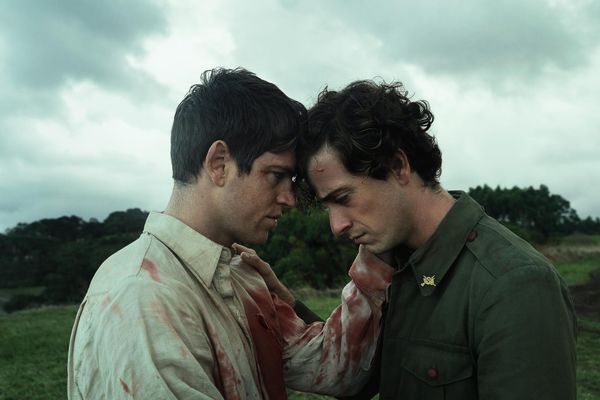
La bola negra is a movie that wears its themes on its sleeve, and yet it never quite feels like those themes are meant for the characters in the movie. Rather, the film often talks past its own characters in an attempt to address its audience directly. In doing so, it bends all of its plotlines toward an ending that winds up feeling deterministic, as if all the suffering and struggle of queer history was being directed by the hand of fate toward a guy in 2010s Madrid being able to have a boyfriend.
Want to read all of that great stuff? The only people who have access to all of it are our paid subscribers! Why not upgrade your subscription today? If you do, you can take part in Friday's upcoming mailbag!
Some pop culture things we're into
- In honor of Blexas, I finally bit the bullet and read Casey McQuiston's much-discoursed — and Blexas-predicting! — 2019 romance novel Red, White, and Royal Blue. I'd tried to read it a few years before, only to be put off by its West Wing-ish fanboy attitude toward the American political class and its many, many, many references to Harry Potter. (Those references are, thankfully, gone from newer editions of the novel.) This time, though, I found myself really digging it. It's a relic of another political era, sure, but it's self-consciously one — McQuiston wrote it in part as a reaction to Trump's election — and, more importantly, the central romance is tense, juicy, and very well-characterized. I'm excited to read more of their books! —LO
- On a very different literary note, I read Patrick Cottrell's Afternoon Hours of a Hermit, the metafictional semi-sequel to Sorry to Disrupt the Peace!, his extremely weird (laudatory) 2018 debut. It's hard to give justice to the semi-hallucinatory quality of Cottrell's prose: We are stuck deep within the head of his exclamation-point-happy narrator as he meditates on basically anything he sees while ignoring all the basic principles of social interaction. It's hilarious, heartbreaking, and spiky in my favorite way — if you're shopping for holiday gifts for the litfic sickos in your life, put this one on your list! —LO
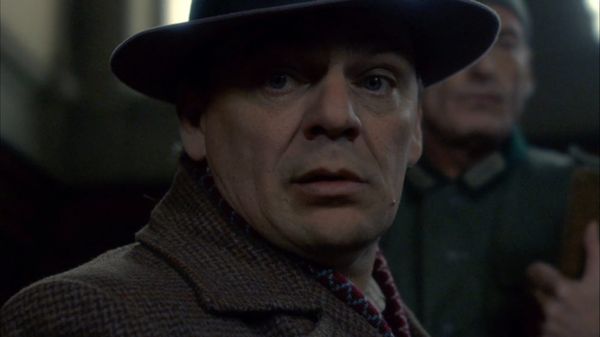
- My mom was in town, so I checked out less pop culture stuff than usual, but one thing I did do was take her to see The Only Living Pickpocket in New York. It was good! A bit slight, but I loved that John Turturro was locked in and that every time a new actor popped up, it would be, like, Tatiana Maslany, making so much of a five-minute part. It also badly made me want to move to New York City, a thing that I will, alas, probably never do. –ESJ
- I saw the Yellowjackets premiere! You know what? It was really good. Am I hopelessly biased because I saw it in a theater full of my colleagues and beloved coworkers? Yes. Do I think most people will agree with me? Also yes. –ESJ
- I've really been enjoying this five-part video essay series on the legacy of Louis C.K., made by a one-time fan who spent many years thinking the accusations against the comedian were overblown, only to change his mind once he started looking into everything. It's a great deep dive into how a terrible guy's worst qualities can be hiding in plain sight in his art once you know what to look for. –ESJ
Let's watch this impeccably-designed, executed-on-the-fly TV news oner, shall we?
Discuss
Which of the 10 commandments do you want to make a probing film exploration of? Talk about it in comments or the Discord!
Some good links
- The Trolls' Comeuppance [The Atlantic]
- How Hollywood turned its back on trans actors [The Guardian]
- Purchase art from "Kelly Reikart," the Kelly Reichardt-themed kart racer [Cath Kastner]
- The Republic of Heaven [Philip Pullman]
- Emily talks All That Heaven Allows [Feminist Frequency Radio]
A Good Song
The free edition of Episodes is published every Monday and every other Wednesday. Premium subscribers get those newsletters, plus extra ones every Wednesday, Thursday, and Friday. Our editor-in-chief is Emily St. James, and our managing editor is Lily Osler. If you have suggested topics, please reply to the email version of this newsletter or comment (if you are a paid subscriber).