Peacock's Ponies and when streaming enters crunch time
Plus: Damien McCarthy's horror movies, Some Like It Hot, and true fashion.


Happy Monday, Episodes pals! This week, we've got takes on the particular weaknesses of the streaming TV business model and the highs and lows of Damian McCarthy's back catalog, as well as our usual collection of other bibs and bobs. Remember: If you subscribe, you'll get this newsletter in your inbox every Monday!
The maddest scramble of the streaming era
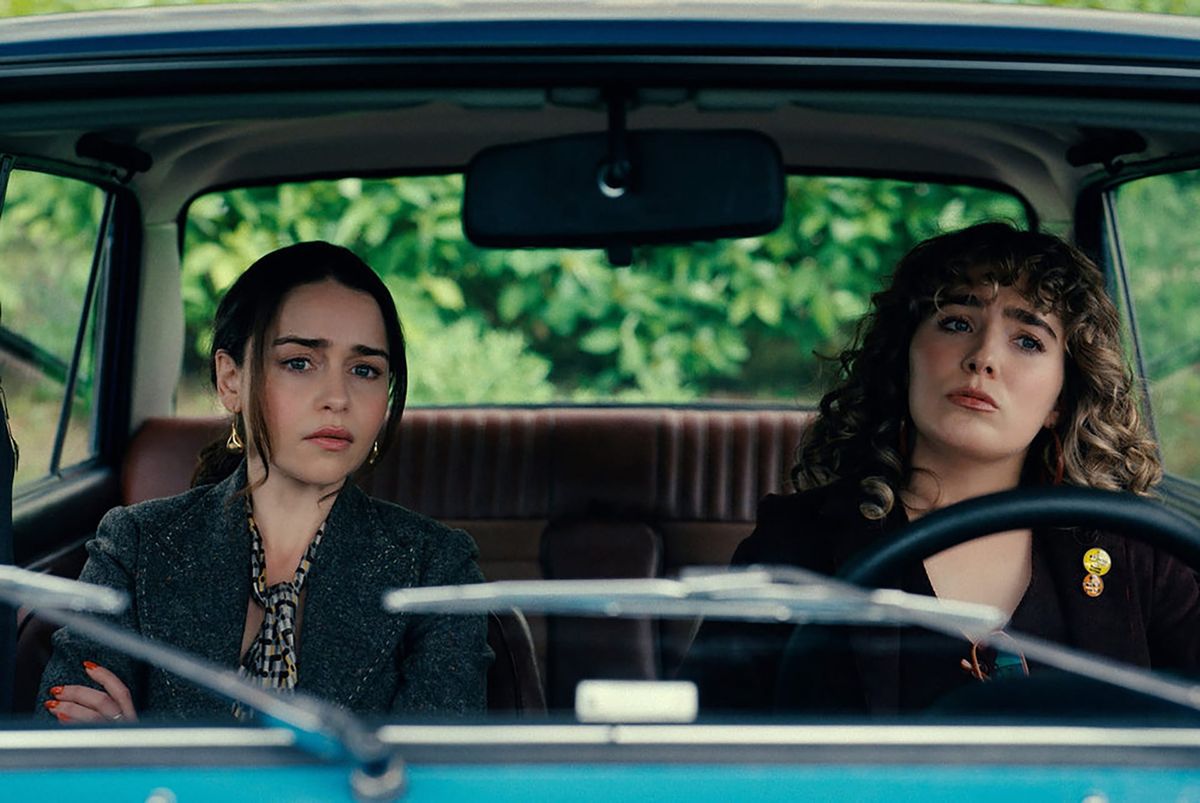
I have been meaning to watch Peacock's Ponies from the moment I first heard about it back when it debuted to strong reviews in January. Co-creator David Iserson is someone I'm loosely friendly with, thanks to Podcast Like It's...; I love spy shows; and Haley Lu Richardson, one of my favorite actresses working, received some of her best reviews yet for her work in the show. Centered on two women living in Moscow in the 1970s because their husbands """"""work for the US government,""""" Ponies' blend of dark comedy and stakes-filled drama really sounded up my alley.
Then it was canceled in June after one season. That it took so long for Peacock to make a decision suggests execs there were likely torn, the show's warm critical notices clashing with the fact that seemingly nobody watched it. Oh, well, I thought. I'll watch it someday.
Someday turned out to be this past week because in our ongoing cost-cutting measures, Libby and I canceled the Peacock subscription we'd gotten for the Winter Olympics back in February, then mostly used to watch Alysa Liu skate. That gave me around two weeks to watch all of Ponies, and there's nothing like a ticking clock to finally make you check something out in the streaming era.
I'm only two episodes in, so I won't say anything definitive, but I'm enjoying the show. Richardson really is a lot of fun, and if series lead Emilia Clarke is playing the less outwardly entertaining role, her work offers a vivid reminder of how charismatic she is as a screen presence. Plus, her Russian seems like it's pretty good! I don't speak Russian, so I have no idea, but as an English and occasional German speaker, I'm convinced! I always love a Cold War milieu, and this offers a premise that's just different enough from every other Cold War espionage thriller to keep me engaged. Some of the plotting is a little hinky, but that's to be expected with a show so complicated in its early going.
But I'm not here to talk about Ponies, actually. What I'm interested in is the way that this mad dash to finish a show you've been meaning to check out but haven't bothered with just yet simply because you've canceled the streaming service it's on is perhaps the best replica of the old "you have to watch it when it's on, or you might never see it again" status quo of TV in the 20th century. Like, yes, I will probably subscribe to Peacock again someday – for the 2028 Summer Olympics most likely – so it's not a one-to-one match. But my impending end of Peacock has created an urgency that streaming television often lacks.
A couple of months ago, veteran TV writer Javier Grillo-Marxuach wrote a long, intriguing Bluesky thread about how the binge watch model of TV presentation had effectively hollowed out most of the ways TV used to promote itself. None of it will strike anybody reading this newsletter as terribly new, but it has colored my thinking – both critically and creatively – about how we tell stories on television ever since. TV has always existed in a weird grey space where ephemerality was both its greatest enemy and its greatest asset. If you don't see the thing now, you might never see it. The streaming era has paradoxically made ephemerality seem like less of a problem (I could have checked out Ponies at any time), which has made it a much bigger problem all the same (because I knew I could watch at my leisure, the show was canceled for lack of viewership).
Obviously, there are some streaming shows that escape this ephemerality paradox – Stranger Things is the most obvious example – but Netflix's ongoing woes with getting people to check out the second seasons of shows that were huge in season one speak to this as well. With no mechanism to keep driving people to your show, even one as simple as "I might miss out on the conversation around this one," it becomes something one can check out at some point eventually, which makes it just as easy to never watch, at least until some other thing places an artificial constraint on the viewer.
RIP, Ponies. I'll bet I would have loved Season 2. –Emily St. James
Caveat is cryptic in a good way, except when it comes to characterization
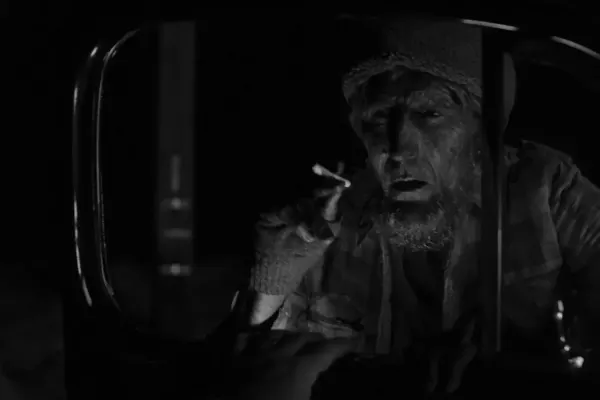
Irish writer-director Damian McCarthy has been rising to horror movie fame as of late — his latest, Hokum, had the bad fortune to open right before Obsession, but it still raked in quintuple its budget, and its wide theatrical release gave the film far more reach than McCarthy's prior features. I've seen, and quite liked Oddity, his 2024 haunted-house movie, so I figured, with autumn beginning to arrive in Minnesota, that it was time for me to watch his other back-catalog movie: 2020's streaming exclusive Caveat.
I liked it! It's a micro-budget movie in which Isaac, an amnesiac who's just been released from the hospital, is given the worst house-sitting gig in all of Ireland: He's meant to keep watch over Olga, a schizophrenic teenager, while wearing a torture-device-adjacent leather vest and chain to keep him imprisoned in the house's four dilapidated walls. Predictably, big scary things happen to Isaac, but McCarthy's restraint means you spend far more time getting terrified of possible shadows in the hallway than jumping from latex monsters. (And the one monstrous figure we do get is phenomenal.) The movie's microscopic budget — a quarter of a million pounds! — certainly shows in what McCarthy chooses to leave up to implication, but I was never, like, oh, I guess this is sorta good for a movie on a tiny budget. Where it succeeds — in its atmospherics, its unnerving mise-en-scene, its leads' performances — it does so without qualifiers.
All that in mind, I've been trying to puzzle out why I merely liked Caveat rather than loved it. Ultimately, it comes down to the way that McCarthy uses implication. Just about every low-budget horror director out there makes up for the scenes and effects they just don't have the funds to shoot by hinting at something terrifying that's waiting just offscreen. McCarthy's no exception; his premise and set do most of the work of getting you nice and scared.
My issue with Caveat was that McCarthy allowed this approach of using vague implication instead of specific detail to carry over to the movie's characterization. Isaac gets most of his characterization in a third-act flashback in which — spoilers — he learns that he agreed to kill Olga's father in a for-hire murder scheme, only to bail at the last moment. It's clearly information that he finds very distressing, but we have very little understanding of his inner life beyond that distress. Why did he agree to the job? What was his relationship with Moe, the man who put out the hit? How is his current predicament challenging or reinforcing the person he used to be? Here, McCarthy gives us very little to work with, which meant that I spent the film's third act less invested in how Isaac was going to find his way out of this nightmare than in trying to puzzle out the movie's emotional stakes. It reminded me just a bit of Iron Lung, a far worse movie but one that likewise prioritizes the horror of implication at the expense of building an emotional rapport between protagonist and audience.
 Lily Osler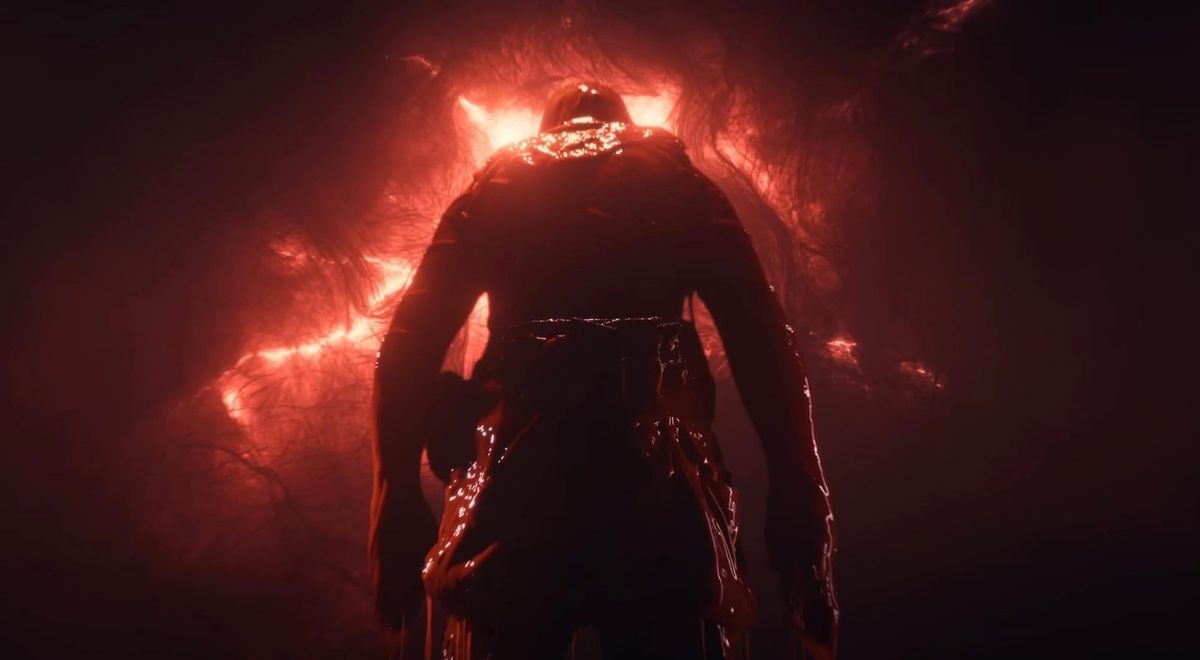
None of this is to say that horror would do better not to ask its audience to do inference work about its characters! It Follows, my favorite horror movie of the millennium, is cagey about its characters' lives to great effect. But it's a balancing act: Too little detail given to emotionally impactful character beats can rob a film of its scares. Seeing McCarthy struggle with this in Caveat has mostly just made me more appreciative of Oddity, which manages to keep its characters' backstories spare but not befuddling. —Lily Osler
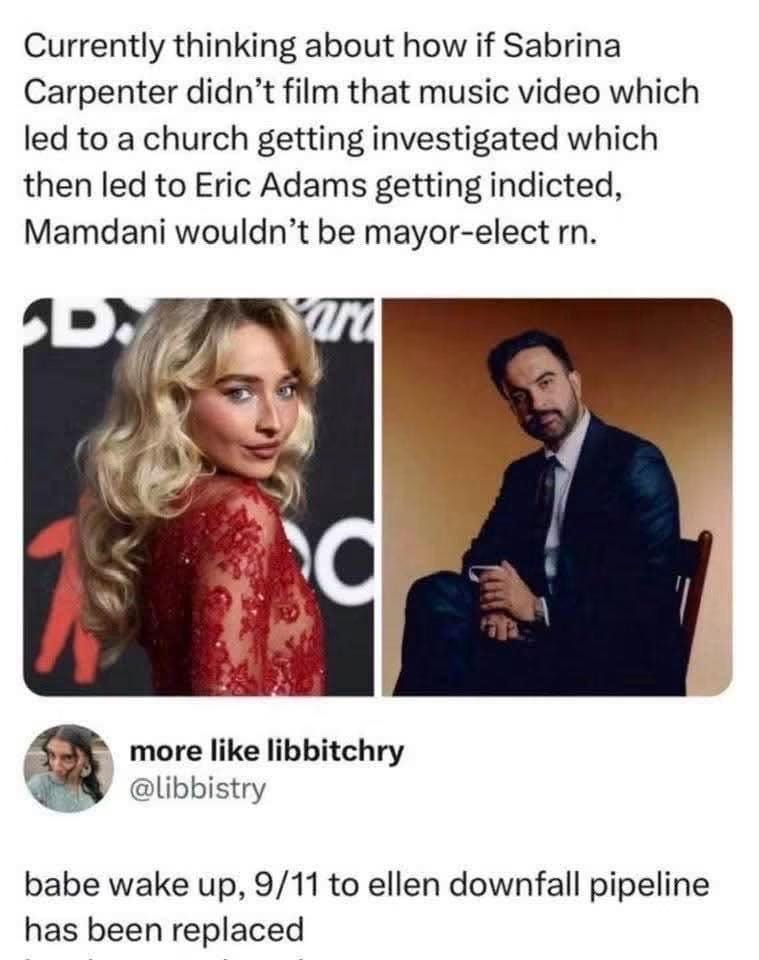
Sabrina Carpenter is praxis
Buy Emily's It's a Wonderful Life book!
Believe it or not, we're just a few weeks away from the publication of Every Time a Bell Rings, the book about It's a Wonderful Life that I cowrote with Defector's Lauren Theisen! It is — I say with some pride — a very strange book that is less a making-of or a historical document and more an attempt to consider the film from a variety of angles, major character by major character. There are essays about World War II PTSD, whether Bedford Falls had any gays in it, and Donna Reed's impossible standard for womanhood. Buy it today, and if you're in Los Angeles, come to our launch event at Village Well in Culver City! —ESJ
Last week in Episodes...
- We celebrated the eerie prescience of Coyote vs. ACME.
- Emily's 26 Episodes series reached 2016 with a look back at Atlanta and the 2010s boom in so-called "diverse comedies," which ended with Hollywood's gradual abandonment of that very movement in the 2020s. Not great!
Towering above all of these series, however – and very much the best short-film sitcom made yet, in my opinion – was Atlanta, Donald Glover's journey through the titular city, its hip-hop scene, and Black life in the 2010s and 2020s. Lasting only four seasons, the show managed to break through with wider audiences in a way many of the other shows mentioned here did not. There are plenty of possible reasons for that success, including the hunger for diverse shows Viruet and Coleman talked about above. Underrated among them, however, is just how much Glover had toiled away in network sitcoms, internalizing the rhythms of 30 Rock and Community until he could replicate them in his sleep. Atlanta is not a joke-a-minute show, but it's funnier than any other short-film sitcom.
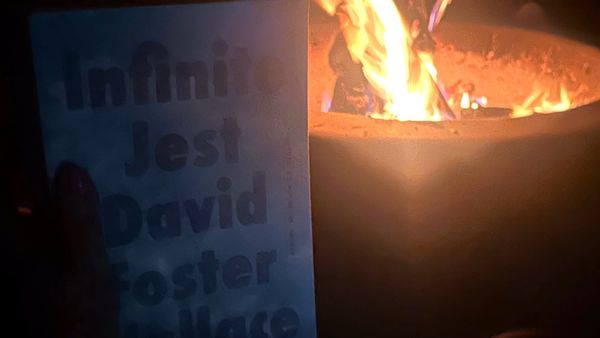
- Emily and Lily reached week seven of their Infinite Jest book club, with Emily making a stunning admission:
I don't give a shit about the Enfield Tennis Academy.
- Finally, Lily looked at the rise of Daniel Kraus, the horror writer who won the Pulitzer earlier this year for his phantasmagoric World War I novel Angel Down. Does he write masculinity better than most highly celebrated would-be Hemingways? Lily argues yes!
To Kraus, masculinity is not an abstract concept, a habit of mind that needs to be reconsidered or analyzed. It is a monster, a beast of flesh and gore, and the only way to save yourself is to claw your way out of its gullet.
Want to read all of that great stuff? The only people who have access to all of it are our paid subscribers! Why not upgrade your subscription today? If you do, you can take part in Friday's upcoming mailbag!
And paid subscribers: Get those mailbag questions in.
Some pop culture things we're into
- It's been one of Those Weeks in the Hill-St. James system of checks and balances, so I've been largely unable to keep up with much of anything that's not reading final page proofs of Beth March Returns from the Dead at such a granular level that I've forgotten what words are. But I have been slowly making my way through Salem's Lot, one of the Stephen King novels I've never read, and I'm really liking it. It's clear that King has not yet entirely figured out his craft – his next novel, The Shining, is his masterpiece imo – but its sense of accumulation is something I'm truly fascinated by. I'm reading a lot of King for a novel I might write that is not a horror novel, and it's this sense of slow-building dread that I think I'll be most likely to take. –ESJ
- I've never been the biggest Michael Mann stan, but I have always liked 2009's Public Enemies, one of his less frequently heralded works. And in rewatching it this past week for the podcast, I was really struck both by how much I enjoyed it and by how much the thing that unites it with my favorite Mann, Miami Vice, is its consideration of how women become trapped by the systems these men propagate. That's present in all of Mann, at least nominally, but it feels most pointed to me in Miami Vice and Public Enemies. Also: If you haven't revisited either because you remember them looking gross, as so much early digital cinematography does, the era of 4K TVs has been very kind to these movies. They're worth checking out. –ESJ
- I happened upon a skeet boosting The Rubáiyát of Dorothy Ashby, a 1970 album by the titular jazz harpist. I've liked Ashby's work a lot in the past, but this is really her magnum opus, and if "jazz harp" sounds at all like a thing you might be into... do check it out. –ESJ
- Did you know I'd never seen Some Like It Hot until this week? Probably not; I imagine you're not keeping up that closely with which Billy Wilder movies I've watched. But! I finally saw it last night, and it rocks! I appreciate that it gets everything that would one day become a transphobic talking point out of its system in its first 40 minutes, then mostly becomes about Joe's accent work and Daphne's awakening as a heterosexual trans woman?? —LO
- I needed something to read in between Angel Down and this week's Infinite Jest portion that would be a little less, like, Big Impressive Words In Long Virtuosic Sentences, so I wound up reading Lydia Davis' 2023 collection Our Strangers. I've loved Davis since I picked up Can't and Won't in undergrad, and Our Strangers reminded me why her work — precisely-constructed fictions that lie somewhere between ultra-short flash pieces and poems — speaks to me. No one notices commonplace things the way she does, and her ability to collapse so much ordinary beauty into such small pieces is breathtaking. —LO
Let's watch a celebration of true fashion, shall we?
Discuss
What's something you watched on a streaming platform only because you were running out of time to check it out? Were you glad you checked it out? Did the artificial scarceness help you lock in at all? Talk about it in comments or the Discord!
Some good links
- This is not a love song: Explaining the maximalism of trans rights [Autonomy]
- A few notes on the state of AI right now [Dave Karpf]
- Streaming is raising prices faster than cable ever did [The Hollywood Reporter]
- Charlie Kirk didn't matter [Panic World]
- What If We Could Have a Future? [Defector]
A Good Song
The free edition of Episodes is published every Monday and every other Wednesday. Premium subscribers get those newsletters, plus extra ones every Tuesday, Wednesday, and Friday. Our editor-in-chief is Emily St. James, and our managing editor is Lily Osler. If you have suggested topics, please reply to the email version of this newsletter or comment (if you are a paid subscriber).