Patrick Stewart was never precious about his roles. That's what made him great.
Plus: why Wildwood's flaws are what make it great.


Happy Monday, Episodes pals! This week, we've got takes on Patrick Stewart's career and Laika's Wildwood, as well as our usual collection of other bibs and bobs. Remember: If you subscribe, you'll get this newsletter in your inbox every Monday!
On Patrick Stewart's lack of preciousness
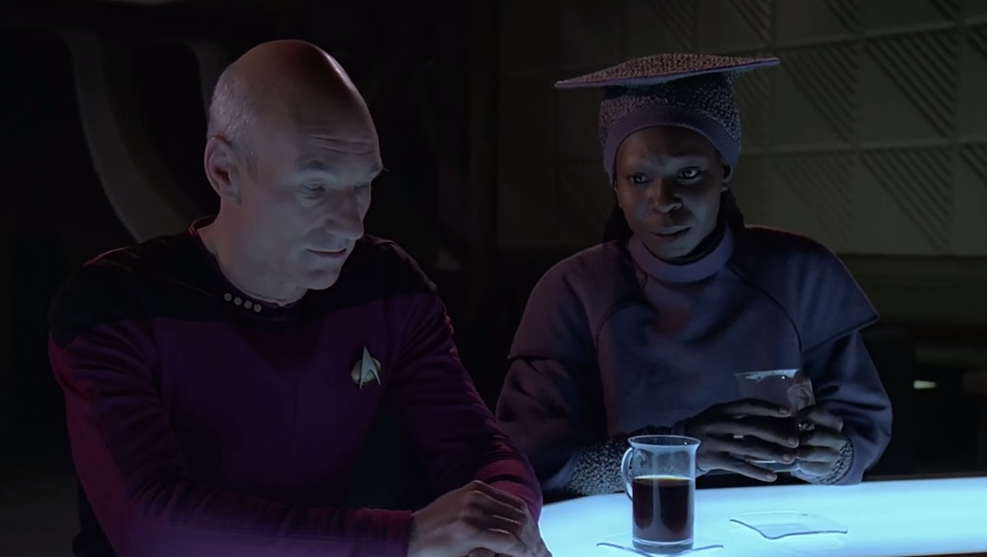
Now that his work as Jean-Luc Picard on Star Trek: The Next Generation has been more or less canonized, it's easy to forget that when acclaimed Shakespearean actor Sir Patrick Stewart signed up for the role in 1987, the tone in the press was one of general bafflement. Sure, TNG was pretty close to a sure thing in terms of success, and at 26 episodes a year, its star stood to make a lot of money. And Stewart certainly was no stranger to genre stories, what with his roles in David Lynch's Dune and John Boorman's Excalibur.
Yet he was also a member of the Royal Shakespeare Company, one of the most prestigious theatre companies in the world, and he'd played pivotal roles in productions of everything from Hamlet to Hedda Gabler. This guy? Was going to do Star Trek??
Now, every actor alive has to offer their best, "No, I've been dying to play Glup Shitto my whole life" at press junkets for the genre blockbuster they're starring in. But in the 1980s, actors being comfortable with the franchise machine was so rare that when Harrison Ford signed on for multiple Indiana Jones movies, it marked him as a new kind of star, as per Paul Fisher's The Last Kings of Hollywood. And that was just agreeing to make three movies, not star in multiple seasons of television. Especially in the first couple seasons of TNG, which are — to be highly charitable — hit and miss, Stewart's gambit must have seemed, at best, a play for making enough money to only take on passion projects for the rest of his life.
Yet if Stewart felt the strain of those early, terrible episodes, he never let it show onscreen. Watch him in any episode of the show, and you'll see the same level of commitment to the truly disastrous scripts as you do to the all-time TV sci-fi masterpieces. The same proved true of his work in the X-Men franchise where he, again, was on the early side of actors having to lash themselves forever to superhero material. Yes, the role of Professor X seemed tailor-made for him (even though the character predates Stewart's fame), but whether Stewart was starring in a good X-Men film or a bad one, he brought the gravitas. Knowing that he and Ian McKellen would pop up for a few scenes together in these films made even the worst of them easier to bear.
Stewart's lack of preciousness extended to his last decade of roles before he sadly passed away last week. Like, he gave several interviews where he winkingly said that his work as the poop emoji in The Emoji Movie was hugely important to him. He loved acting for its own sake, not as a vehicle to make him famous. He had grown up a working-class English boy, and he never entirely seemed to get over how lucky he was to get to make a real living from the thing he loved best.
Since his death, Stewart's level of commitment to progressive causes — especially his support for women experiencing domestic violence — has been brought more to the fore than I think it ever was while he was alive. Here, too, his ability to be honest and humble about just how much good he could do as a famous actor bringing attention to a worthy cause helped more than it might have had he made himself the famous face of a cause. Stewart liked certain perks he got from being famous; he also clearly liked acting more.
Picard has always been a narrow runner-up to Sisko in the annals of my favorite Star Trek captains, but Stewart's death still hit me really hard. I'm going to be so sad not to see him pop up in odd and random roles anymore, and I hope that his final role in Avengers: Doomsday makes great use of his talents. Still, we have decades of work to watch, all of which showed a man who loved what he did and didn't mind if you thought he was being a bit silly. –Emily St. James
If Wildwood were better, it wouldn't have been perfect
Going into Wildwood, Laika's new $100 million stop-motion feature, I was nursing a slight suspicion that it wouldn't quite live up to its truly massive hype. In the run-up to the movie's release, most of the press I'd seen about it focused on its unbelievably lavish production — animated at an unusually fluid 24 frames per second, the movie, which took a decade and a half to make, is the longest stop-motion film ever produced*. The trailer looked absolutely stunning, as fluid as computer animation but with the rich texture and heft that only real light on physical objects can offer.
But a laborious process doesn't guarantee great art, especially when more effort goes into gorgeous visuals than into a movie's script. (Richard Williams' The Thief and the Cobbler, as detailed in this Lindsay Ellis video that I like so much that I'm linking it both here and in the Good Links section below, is a pretty striking example of this.) Was all this attention paid to how Wildwood looked disguising a subpar script?
*None of which would have been possible if Laika, recovering from the massive flop of its last film, weren't owned by Nike billionaire Phil Knight and run by his son Travis.
Well, yeah, kinda! Wildwood, based on a middle grade novel written by Decemberists frontman Colin Meloy and illustrated by Carson Ellis, is certainly rich and imaginative in the world it draws. The titular Wildwood is a magical wilderness that spans from the west side of Portland, OR to the Pacific Ocean*, and its denizens, human and animal, are endearingly strange (if, yes, basically all pastiches of other fantasy characters). But when the movie has to go beyond that kaleidoscopic weirdness to the details of the wood-dwelling characters' relationships with one another and the land, it falters a bit. In particular, the conflict between a tribe of farmer-mystics and a ragtag group of bandits feels radically underwritten, to the point that I wasn't even aware they were supposed to dislike one another until deep into the movie's third act. The worldbuilding is also oddly perfunctory — as much as I love a story that blends the real and surreal, the presence of a magic forest on the boundaries of a real city seems like it ought to, you know, impact that city in some way? The dialogue, too, is quite rough at times, relying on overly broad kid-friendly jokes that seem at odds with the movie's intended audience of edgy tweens who've seen The Nightmare Before Christmas one too many times.
*Laika is based in Hillsboro, OR, which means that Wildwood was animated within the Wildwood.
And yet the more I think about these flaws, the less I mind them.
Part of this, beyond a doubt, is that genuinely unbelievable animation. While Laika's process is by no means tech-free — the characters' faces are 3D printed and some models that would be truly impossible to create physically were added in with CGI — the entire thing looks hand-crafted in the best possible sense. The characters' clothing, in particular, is staggeringly well-made, especially considering that it drapes over models only a few inches tall — I spent, like, half the movie leaning over to my wife and yell-whispering," How the hell did they knit that sweater?!"
More importantly, though, Wildwood's uneven script earns some grace because Wildwood is a movie about having grace for broken things. The movie culminates in the kind of free-for-all battle you'd expect at the end of a fantasy flick, but the film is uneasy with the bloodshed. One of the film's 13-year-old protagonists, Curtis, kills the commander of the opposing army, then looks absolutely horrified with himself, a moment of guilt the film never quite resolves. The other protagonist, Prue, also ends the movie feeling a nebulous sense of guilt; she and her younger brother only exist because of a deal her parents made with the movie's villain.
The lesson for both of them is that to be human is to be imperfect, to carry around some measure of guilt. Evil comes from people — like the movie's antagonist, Alexandra, who builds a robotic replica of her dead son — who chase perfection at any cost. "The better part of bravery," Meloy sings in a credits song, "is in the letting go."
Could some of the issues with Wildwood's script have been ironed out with a few more passes? Maybe. But that version of Wildwood would, on some level, have felt like one that didn't have the courage of its own convictions. Rough edges, like art, help make us human, and, grumble as I might, I'm glad Laika left them in. —Lily Osler
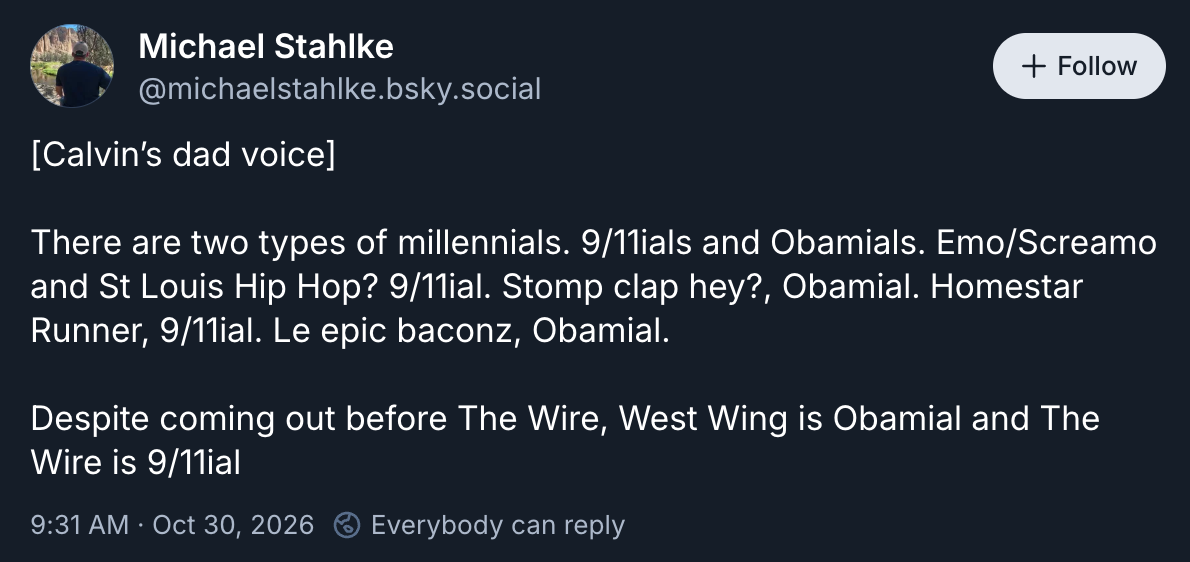
The two kinds of Millennials
Buy Emily's It's a Wonderful Life book!
Every Time a Bell Rings, the book about It's a Wonderful Life that I cowrote with Defector's Lauren Theisen, is out now! Less a making-of or a historical document, it's more an attempt to consider the film from a variety of angles, major character by major character. There are essays about World War II PTSD, whether Bedford Falls had any gays in it, and Donna Reed's impossible standard for womanhood. And it's an incredibly beautiful holiday gift, with a gold foil cover and festive seasonal endplates. Buy it today! —ESJ
Last week in Episodes...
- In our Monday Digest, Lily talked about why Ken Russell's long-censored The Devils is still shocking today, while Emily got into the thin themes of Lance Oppenheim's visually striking Primetime.
Primetime is incredibly beautiful to look at, utilizing format shifts among different forms of digital video and film to breathtaking effect, and the performances are all wonderful. (Oddly, Robert Pattinson's lead performance as Predator host Chris Hansen, while deeply uncanny, might lag behind some of his costars; then again, the film doesn't really give Hansen anything like an arc or even the absence of one.) And yet I could never entirely escape the feeling that the movie's central thesis was: Did you know this existed? Yes. I did. I was there.
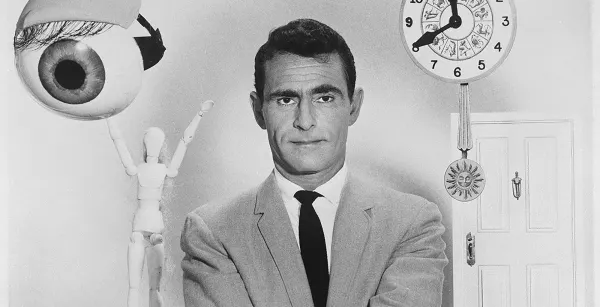
- On Wednesday, Emily interviewed critic Alan Sepinwall about his new book Serling and the long tail of The Twilight Zone.
Sepinwall: [The Twilight Zone] was covering so many different subjects about humanity and our future. Do we deserve to survive? Do we deserve to have good things? Are we all condemned to be our worst selves and suffer our worst fates? It could tackle all these big, lofty questions and wrap them up in this genre wrapping.
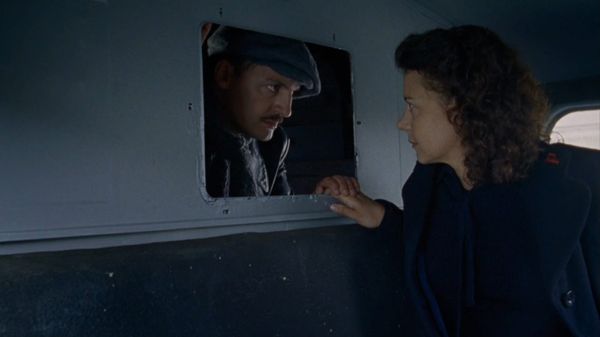
- Thursday brought us another A French Village recap! In this one, Emily got into the central question the show seems to be asking: what happens to a society when the leaders are doing the wrong things for noble reasons, or vice versa?
- And on Friday, Lily made an argument that You Can See Everything is a genuine horror movie — and one with the potential to revitalize social horror.
And yet it's self-evident to me that You Can See Everything is a horror movie. I'd go so far as to say it has the potential to be a tentpole of the genre, not merely an exception but a full-on archetype. And I hope it rises to that canonical status: It's a horror movie that other horror filmmakers ought to learn from if they hope to keep their genre fresh and vital.
Want to read all of that great stuff? The only people who have access to all of it are our paid subscribers! Why not upgrade your subscription today? If you do, you can take part in Friday's upcoming mailbag!
Some pop culture things we're into
- Despite being a big ol' fan of Rosemary's Baby and The Exorcist, the other ultrafamous midcentury New Hollywood demon horror movies, until this week I had never seen 1976's The Omen. I was aware that it was not quite going to live up to those two other films, both of which are usually considered to be among the greatest horror movies of all time, but The Omen was much, much worse than I thought it was going to be. But here's the key: it was bad in ways I found absolutely delightful! It's a well-shot, beautifully-costumed '70s Gothic in which the Antichrist has like two lines and is more annoying than evil. In other words: perfect late autumn viewing for a lazy night with friends and fun cocktails. —LO
- I, too, saw Wildwood, and I'll have more to say about it Friday. Suffice to say, I think it's a terrific experience, and I agree with Lily that it's enhanced by its flaws. Also, it's been kind of wild to watch the press tour, featuring Peyton Elizabeth Lee and Jacob Tremblay, who play the two main kids in the movie, and realize they're just full-on adults now, who could no longer voice Prue and Curtis in any future sequels. –ESJ
- I also finally saw You Can See Everything. What a movie! I'm struck by how the movie splits cleanly into two different movies, yet neither works separately from the other. It's the movie of the year to me, not least because it speaks to our present moment in ways that are almost eerie. I found it hugely inspirational in a bunch of projects I'm working on. –ESJ
- I haven't been watching or reading too much horror this year for reasons I don't entirely understand, but I did rewatch Over the Garden Wall for the first time in several years. It's the kind of thing I don't typically enjoy – see my almost pathological aversion to Steven Universe – but it's also hits such a specific mix of tones that I find warm and inviting at this time of year. I honestly think it's a better November watch than Halloween watch, but that's really splitting hairs. I wrote about it back in 2020 and stand by every word. –ESJ
- I've been trying to read books with creative use of footnotes as part of a potential novel project, and somebody recommended Jonathan Stroud's Bartimaeus trilogy to me. I'm only a little way into the first book, and I'm having a delightful time with it. It obviously shows its YA trappings, but the footnotes – which mostly allow our over-it djinn narrator to snidely comment on what he's up to – add a layer of metatextual fun that is typically reserved for adult fiction. More as events warrant. –ESJ
Let's watch a deeply stoned Patrick Stewart do a quadruple take, shall we?
Discuss
What's something you love where the flaws somehow make it better in your eyes? Talk about it in comments or the Discord!
Some good links
- Some Theories About That Nude Scene In You Can See Everything [Defector]
- Did Disney Really Steal Aladdin? [Lindsay Ellis]
- Actually, Rocky deserved to win Best Picture [Screencrush]
- Are transgender sports bans really about protecting women? [Helen Webberley]
- Hooray for Hollywood? [Monetary Thoughts with Peter Labuza]
- Scream Drafts: The Twilight Zone [Screen Drafts]
- You Can See Everything is just the tip of the iceberg [Slate]
A Good Song
The free edition of Episodes is published every Monday and every other Wednesday. Premium subscribers get those newsletters, plus extra ones every Wednesday, Thursday, and Friday. Our editor-in-chief is Emily St. James, and our managing editor is Lily Osler. If you have suggested topics, please reply to the email version of this newsletter or comment (if you are a paid subscriber).