How Rod Serling invented modern television (more or less)
Alan Sepinwall on his new book, the scariest Twilight Zones, and the tragic hopefulness underpinning the series.

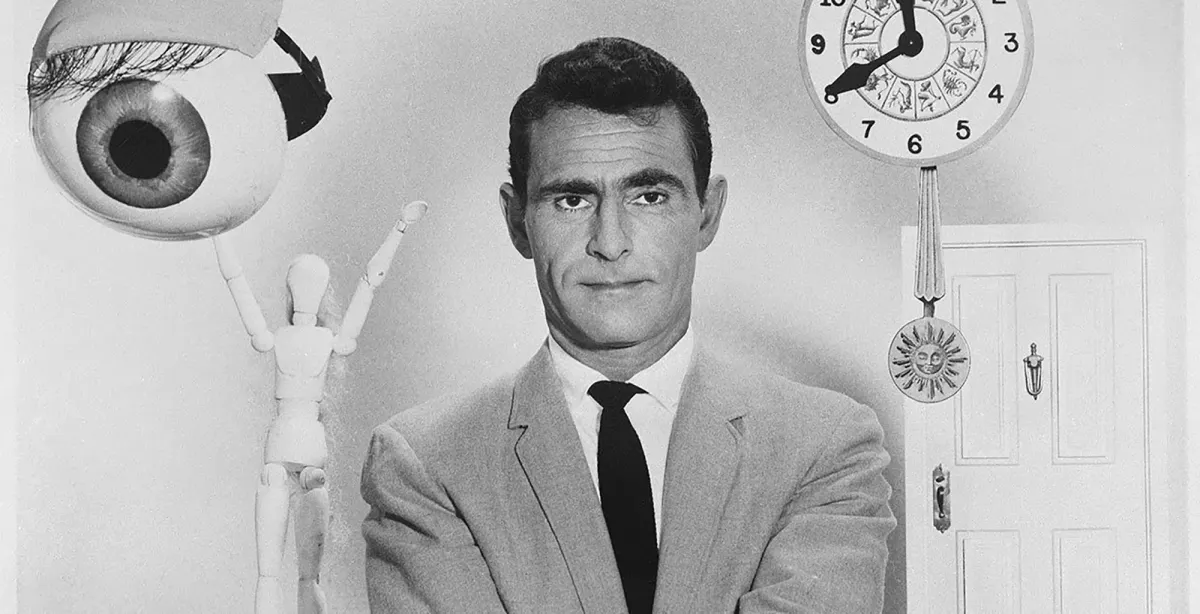
Despite covering much of The Twilight Zone during my time at The A.V. Club, I hadn't really thought about Rod Serling. Yeah, I loved his iconic television masterpiece, and I had enjoyed some of his early teleplays in Criterion's Golden Age of Television set. But I hadn't really thought about him as TV's first celebrity showrunner.
Granted, Serling became such because he was literally onscreen in the vast majority of Twilight Zone episodes, delivering narration to camera at the beginning and end of the story. That he was able to also write and produce enormous numbers of those episodes is even more staggering. Like, yes, he had Buck Houghton's help on the production side, but Serling could write a TV script in a day or two if pressed. The man was a machine.
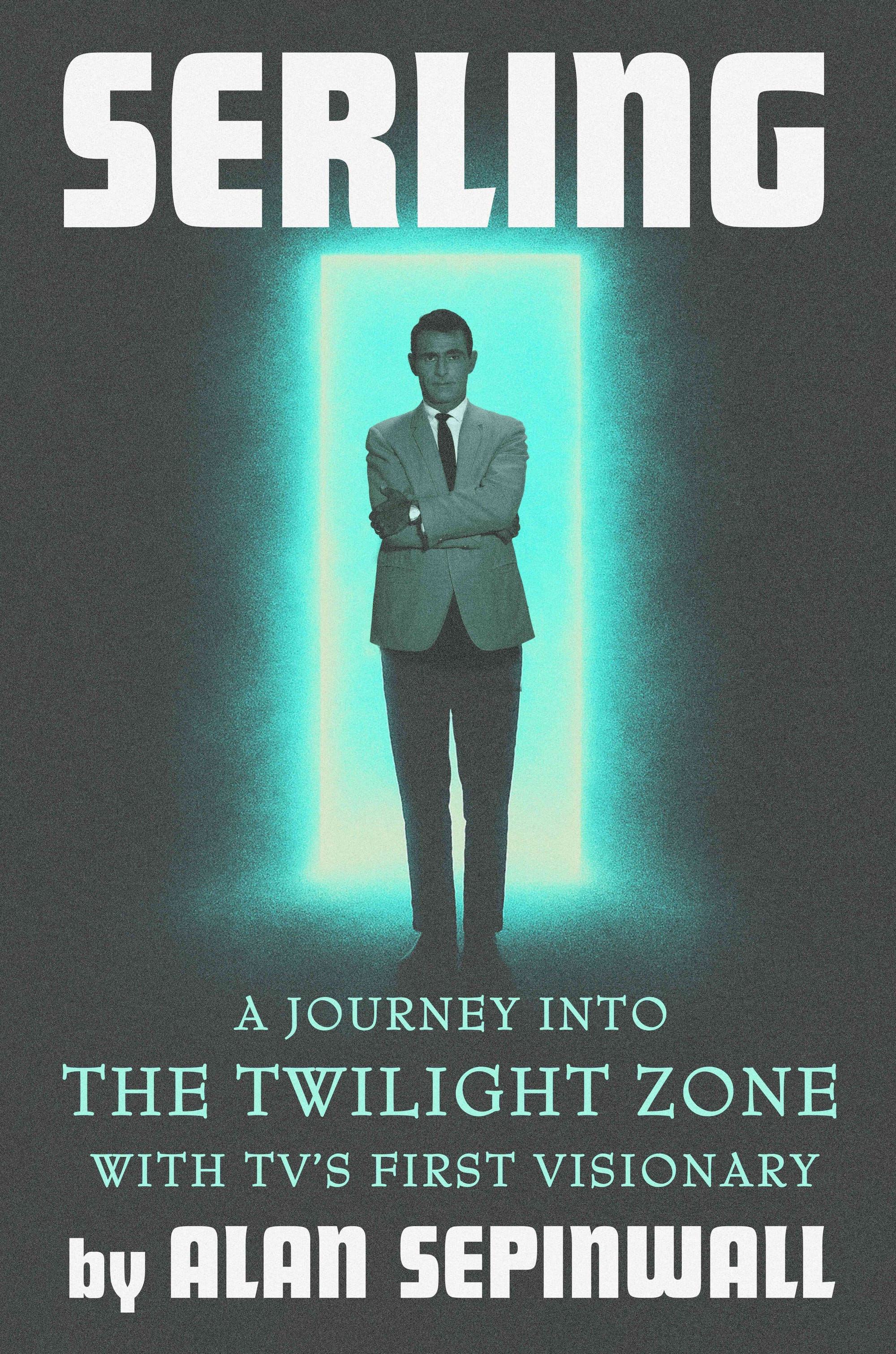
Longtime TV critic Alan Sepinwall's biography of Serling — appropriately titled Serling — drags the TV kingpin into the spotlight, revealing the many ways in which his career in television was defined by his youth in Binghamton, New York, and a bloody, brutal stint in the Pacific theater of World War II. Sepinwall also took in a huge swath of Serling's TV work, including much of the stuff he did pre-Twilight Zone — and even before he started working in national television.
I found Serling a fairly revelatory biography, digging into a figure everybody who cares about television deserves to know more about. It's a smart, authoritative read from one of the greats of American TV criticism, and it's Sepinwall's best book yet. I naturally wanted to talk to him about Serling's legacy, the many unlikely industry fans of The Twilight Zone, and the scary episodes you need to watch this Halloween.
Our conversation has been lightly edited for length and clarity.
An editor brought this project to you, it sounds like. What immediately made you say, "I've got to write that book"?
The thing about being a TV critic full time is that there's basically no time to go back and look at old stuff because too many new things are happening constantly. The only time I can ever justify going back in time is if there's a professional obligation to do so. If someone comes to me and says, "Do you want to write a book about Rod Serling?" that means I have an excuse to go back and rewatch all of The Twilight Zone and see all of Night Gallery, which I basically hadn't seen. I got to go back and watch all the 1950s stuff, which I had heard of but didn't know about. I got to learn about this guy I knew was a giant of the business I've devoted my entire career to writing about, but I didn't actually know a whole tone about him. So, if someone is going to pay me to become an expert on Rod Serling, I'm going to do that. And it turned out to be really fun and fulfilling.
While Serling is now mostly known for Twilight Zone, some of the stuff he made before that — like Requiem for a Heavyweight — does endure to some extent. Was there anything that simply doesn't exist anymore that you couldn't track down? And were there early Serling scripts you saw and were blown away by?
There was some stuff I just couldn't see. When he was in Cincinnati [before moving to New York in the 1950s], he wrote almost every episode of this series called The Storm, which was a weekly anthology that ran for about a year. There's one episode of The Storm on YouTube called "No Gods to Serve." Others exist in private collections. Nick Parisi, who's the head of the Rod Serling Memorial Foundation, wrote his own really good book about everything Rod ever wrote, and he's seen way more stuff than I have.
I went to Paley a lot. I looked at a lot of stuff on YouTube. I went to Ithaca and UCLA. I saw as much as I could, but I knew I was not going to see everything. It's interesting. Some of the stuff is super dated and corny, and you can tell Serling is still sort of figuring himself out. But some of it is beautiful and holds up really, really well.
"Requiem for a Heavyweight" is the most famous thing Serling wrote in this period. I wondered if it lived up to its reputation, and it absolutely did. Jack Palance is so good, and the way that Serling writes about a fighter having to figure out a life after boxing is really lovely and powerful. Pretty much everything from this period that was inspired by Rod's time in the war is really potent. I especially liked "Bomber's Moon," which he did with John Frankenheimer, about an Air Force officer who has a nervous breakdown. And "The Comedian," based on an Ernest Lehman short story about the dark side of show business, is fantastic.
So before he became much more famous as the host of The Twilight Zone, he was already incredibly famous as the Aaron Sorkin of the 1950s, doing all these really thoughtful, issue-oriented pieces where everyone talks exactly the same way because he's a writer who can only write in his own voice.
I have been trying to think of a writer right now who is that level of famous. Obviously, Sorkin is famous, but a lot of people wouldn't know him if they saw him on the street.
That's the advantage of being on a television show for over 150 episodes over five seasons that are rerun forever and ever [like Serling was]. And he did commercials too. There are writers from the mid-20h century who would have had more name recognition, but I'm not sure anyone would have been more recognizable than [Serling].
In the book, you talk about how the Serling style is very dialogue heavy. Everybody talks in the same cadence, and it's not necessarily cinematic or visual in nature, to the degree that he struggled to cross over to writing films. And yet The Twilight Zone is also one of the most beautiful shows directorially of that era. How do you square that?
It's a few things. First, Buck Houghton, the main producer on the show, did a great job hiring George Clemens as the director of photography and a lot of great directors like Douglas Heyes and the young Richard Donner. That helped give the show a strong visual sense. But I also think that, because he was doing genre stuff, Rod was writing a little bit more with visuals in mind, even as he was giving directors a wide latitude and the ideas within his scripts were inspiring the directors to do cool things. More than anything else, he's good with short stories. The longer the piece is, the more the dialogue drowns everything else out.
I think about the very first episode, "Where Is Everybody?", and it has dialogue, but it's almost a purely visual experience. And that wasn't even the first choice to be the first episode!
It was the fifth or sixth of the different pilots he tried! It was the one where CBS finally said, "Okay, we can do that." Before that, the biggest fit was over one called "The Happy Place," which was set in a dystopia where if you reach a certain age, you are basically sent off to a concentration camp to die. CBS was, like, "That's too depressing. Our audience won't watch that." Then some others were a little too weird for them. But "Where Is Everybody" isn't even technically science fiction. There's an explanation for why the guy is in this town. It all makes logical sense in the end.
What made it possible for Serling and Houghton to produce so many episodes of a show where every installment involved entirely new characters and sets?
Houghton was a really gifted and smart producer. He made sure they were based at MGM, which at the time had the best collection of sets and props and costumes of any studio backlot, so it was easy to do a Western one week and a trip to Mars the next. He hired great department heads. And Serling's work inspired everybody to give it their all in shifting from one setting and genre to the next each week.
In the intro to your book, I was struck by the interview Serling did with a young Mike Wallace right as Twilight Zone debuted that suggests a lot of people saw the show as him retreating from being his boldest self because he was no longer directly confronting social issues. Obviously, we think about the show very differently now. Did that reputation change as the show was on, or did its reputation change as its fans grew older and moved into the entertainment industry themselves?
It was more the latter. At the time, obviously, the show was a modest success. It ran five years, but it was constantly fighting to stay on the air and have money. It was never a huge hit in its day by the standards of what broadcast television considered success in the early 1960s. Yet because he had very cleverly hidden things behind allegory and metaphor, it took until the core demographic of kids and teenagers started growing up for people to realize he had been [talking about social issues] all along. He just pretended he wasn't.
New Subscriber Special!
Through Sunday, new paid subscribers can submit their choices of things Emily or Lily must cover, and we'll throw those choices in a lottery. And remember: Paid subscribers get access to all the newsletters only paid subscribers receive, including the 26 Episodes feature and our TV recaps; the Episodes Discord; and almost a decade of archives. Plus you'll get to comment and ask questions in the mailbag! Sign up for as little as $5/month below!
People who create great television often wish they were doing something else. Serling seems like he was mostly fine writing television, but it does seem like he had ambitions in other arenas. How did that influence his TV writing?
TV, obviously, was what made him, and he was happy with it at first. But at a certain point, he was very frustrated he could not become a consistently successful screenwriter. He really wanted to be a playwright, and that never happened for him in his lifetime. He really wanted to be a novelist, and he wrote essentially one book that nobody bought. He wanted to do all of these other things, but TV, especially half-hour episodes of television, was ultimately what he was the best at. That was a source of frustration, especially because TV is a lot of goddamn work, especially if you're going to do it at the level of prestige and influence that he was at.
Do you have a sense of why he was never able to crack those other forms? He did some draft of Planet of the Apes, but it sounds like that got mostly set aside.
Structurally, his [Apes] draft is more or less the movie you see. There's changes in the dialogue and tone and approach, but the actual story is more or less what he wrote. It was sort of a Goldilocks situation. He needed things to be just right for him to work on a movie. He was not a paycheck writer; you couldn't just give him an assignment and expect him to do something interesting with it. And he needed to be paired with a visually strong director. If you put him with John Frankenheimer [who directed Serling's script for Seven Days in May] or Franklin Schaffner on Apes, that can work. If you put him with a middling director in a subject he didn't care about, it was just garbage. So it never quite worked out for him.
What is it about Twilight Zone that has made it have such a long reach?
It was covering so many different subjects about humanity and our future. Do we deserve to survive? Do we deserve to have good things? Are we all condemned to be our worst selves and suffer our worst fates? It could tackle all these big, lofty questions and wrap them up in this genre wrapping. So you would be watching a thing about a crook who dies and thinks he's gone to Heaven, and it's a light confection. But then you get to the end, and it turns out he's gone to Hell. And that's not even one of the better episodes, just one that popped into my head! But it gets you thinking about what eternity is like and what we actually want to get out of ourselves and our destiny. And it's shockingly kid friendly, so it's entry-level great quality TV in a way that something like Hill Street Blues is not. You can show Twilight Zone to an 8-year-old, and they'll get something profound out of it.
You talk to a lot of people in the book who are influenced by the show or just big fans of it. Some of them are obvious pulls like Guillermo del Toro or J.J. Abrams. But some are much more fascinating. Who are people you encountered in the process of working on the book where you wouldn't have predicted they were that influenced by The Twilight Zone?
About a year ago, I was in LA. FX asked me to moderate a panel for the 20th anniversary of It's Always Sunny in Philadelphia. Since I was in LA anyway, I used it as an excuse to go over to the UCLA Serling Archives to watch a few things I hadn't seen yet, including the pilot of a sitcom he wrote called Shaddick, which was based on a TV movie he'd made called The Storm in Summer.
I was in the green schmoozing with the cast at the event, and Rob Mac asked if I was doing anything else when I was in town. I said I was just at UCLA because I was researching a book about Rod Serling. Rob's eyes lit up, and he grabbed my forearm and said, "Alan, you have to talk to me for this book. Rod Serling is my guy." I've known Rob Mac a long time. I like him. And I was still thinking, in the back of my head, [sarcastically] obviously, there's a big connection between Twilight Zone and It's Always Sunny.
We finally did the interview, and he completely swayed me. He had some of the best, most thoughtful things to say about why Twilight Zone worked and why it's endured. By the time we were done talking, I could 1 million percent see the connection between that and Sunny, between that and Mythic Quest, between that and a lot of what Rob has done.
One big thing you point to in the book as a weakness of Serling was his writing of women. What are other things he was particularly bad at writing?
He was really bad at writing comedy. By all accounts, he was a very funny person in real life, a real life of the party kind of guy. If you watch interviews, his audience is laughing whenever he cracks a joke. But for whatever reason, other than "Will the Real Martian Please Stand Up?" almost any Twilight Zone comedy episode he wrote is pretty dire. His sense of humor never translated.
When it comes to writing women, because he wrote every character as himself and because he was a mid-20th century straight white guy, he had a really hard time picturing what a woman thinks and what a woman is like. Whenever an episode is successfully about a woman, it's because the episode could just as easily have had a man in that role. If it was just a gender-neutral character who happened to be played by a woman, he could think deep things about them. But if she was a secretary or, God help us, a wife...
The Serling wives are really these awful, awful caricatures, and that comes up again and again and again. One of the earliest things of his I saw was an episode of Suspense called "Nightmare at Ground Zero," which is about a main character who designs mannequins that are used at bomb test sites. His wife is so god-awful that one day he decides he's going to swap her in for one of the mannequins, so she'll die, and he can run off with a mannequin that he would rather spend time with. There's some stuff going on there.
When you look back at your research for this book, is there anything cool you found out that didn't end up having a place in the book?
I went down this long rabbit hole about all the different Twilight Zone pilots and in what order he wrote them and why each of them was dismissed. This was pages and pages of the book. My initial editor, when I turned in that draft, was, like, "Alan, you're getting too far into the weeds here." At a certain point when you make yourself into a Rod Serling expert, you can go too far with it.
[On the day we spoke], Walter Koenig passed away. Lots of people performed Rod Serling's scripts on the stage, even though Serling himself didn't really live to see that. Occasionally, people would produce episodes of Twilight Zone for the theater. And in the early 2000s, Walter Koenig directed a Twilight Zone double feature in LA, so it was Star Trek meets Twilight Zone.
Who do you think gave the best performances in Twilight Zone episodes?
Obvious choices are obvious, but Agnes Moorehead in "The Invaders." There's no dialogue. The aliens look so silly. That episode works entirely because of how raw and animalistic she is throughout it. You don't want to stop watching her at any point.
Burgess Meredith in "Time Enough at Last." Burgess Meredith in basically any of his episodes other than "Mr. Dingle the Strong," which is just stupid.
Jack Klugman in "A Passage for Trumpet" and also "In Praise of Pip." Klugman, I think, was the single best actor probably at reciting Rod Serling dialogue. It was the perfect match of writer and actor.
Since we're coming up on Halloween, what for you are the scariest episodes of The Twilight Zone, especially ones that retain the power to be scary to this day?
When you watch his Night Gallery episodes, you'll see Rod Serling was really good at writing scary stuff. "The Caterpillar," the famous one where Laurence Harvey gets a worm in his brain, is pure, pure nightmare fuel. Serling's script is actually creepier, and with a better ending, than the short story he was adapting. He doesn't get enough credit for how good he was at making other people's stories work for television.
But all of the scariest Twilight Zones, with a couple of exceptions like "It's a Good Life," were written by Charles Beaumont or Richard Matheson. "Long Distance Call" freaks me the hell out. "Night Call" freaks me the hell out. So, the two where you're getting calls from the afterlife are great. "22" is very creepy. "Shadow Play" is very freaky. I would go with some of those.
When you think about this show, which has so many dark, despairing episodes and also some more lighthearted, warm ones or even sentimental ones, do you think there's a fundamental belief about humanity that unites Serling's work?
It's hope. I think he's wrestling with it. In a lot of episodes, he's really trying to say, "What if we could be our best selves?" and "What if good things could work out?" You get those some of the time, but you also get ones where terrible things happen to good people and where bad people get away with it. The ideal structure of a Twilight Zone episode is a bad person gets what's coming to them or a good person gets a second chance. It's not even so much what Rod believed about people as what he wanted to believe. That was him working his way through it over the five seasons of that show.
Serling is available wherever books are sold.
A Good Song
The free edition of Episodes, which (usually) covers classic TV and film, is published every other Wednesday. Premium subscribers get newsletters every Monday, Tuesday, Wednesday, and Friday. Our editor-in-chief is Emily St. James, and our managing editor is Lily Osler. If you have suggested topics, please reply to the email version of this newsletter or comment (if you are a paid subscriber).