Real screams: 13 entertainments that can scare even a hardened horror buff
What does it take to spook a pair of culture writers who don't frighten easily? Read on to find out!


The Episodes staff, by and large, are not a bunch of scaredy-cats. As our newsletter archives attest, we're horror buffs, and it tends to take a lot to get a scare out of us. To honor the heart of October — scientifically, the most terrifying month — we've put together a list of 13 things that are frightening enough to get under our skin. Will they scare you? Well, horror is inherently subjective! But if you're convinced that you're un-scareable, give them a shot... if you dare.
Twin Peaks, "Episode 9"
I limited myself to one (1) David Lynch property on this list, which was a bit of a challenge, as Lynch's work includes many of the most frightening things I've ever seen. (As a representative example, check this shit out.) But I think the most unnerving aspect of Lynch's work — the way his work can shift fluidly into a horror register in a way you half-remember from your worst nightmares — is best summed up in this episode of Twin Peaks from early in its second season. Teen characters James, Donna, and Maddy are sitting around a living room recording a dopey song James has written when, suddenly, Maddy is pulled into a vision of BOB (Frank Silva), the demonic entity that stalks Twin Peaks, coming toward her across the living room's furniture. It's hard to describe the way Silva (by all accounts, a very lovely person!) moves in that shot without resorting to almost metaphysical language; he's like a demon, a being from somewhere else hovering a few centimeters above this reality, coming right for you. Twin Peaks, from its pilot to its finale, is a disturbing show; for my money, this is its most unnerving shot. —Lily Osler
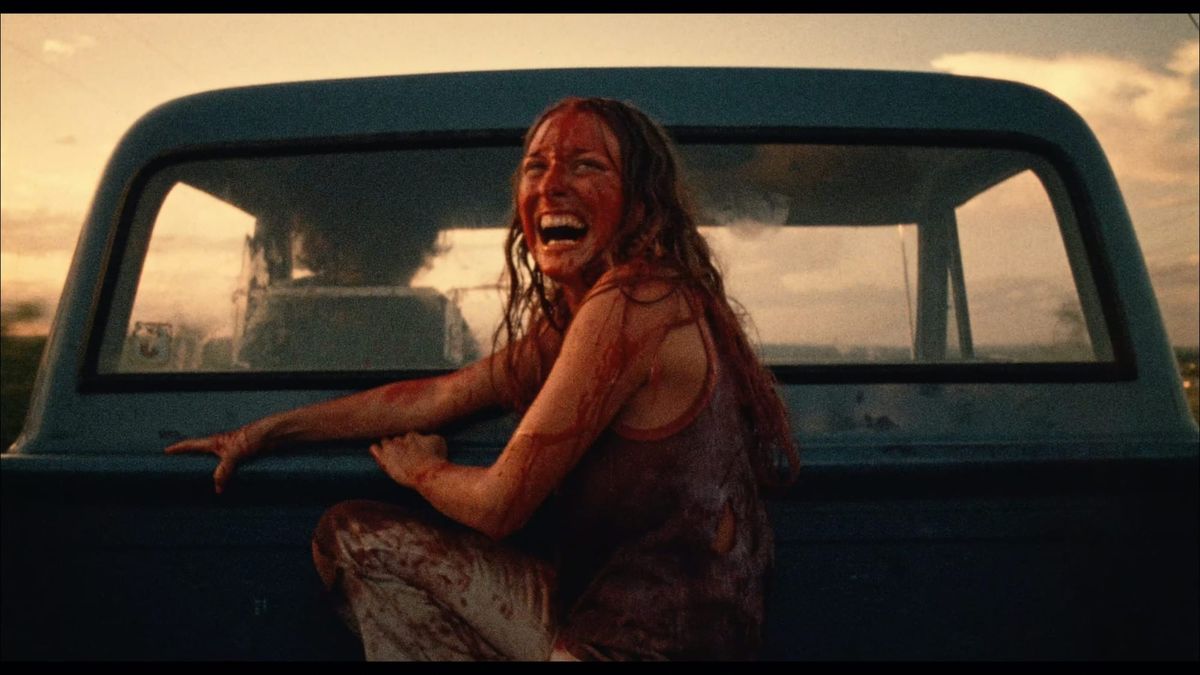
The Texas Chain Saw Massacre
I would love for my every answer to this query to be a wildly original one, something few of you have ever heard of, but look: Some classics are classics because they're just that scary, and Texas Chain Saw Massacre is that for me. The thing that gets me about this movie is how easy it is to laugh at if you like. It's certainly ridiculous enough to riff on with friends or to place yourself in judgment over, as I did as an irony-poisoned college student. But even when you are pretending you're better than it, Texas Chain Saw Massacre is going to get under your skin. I will never forget the first time I saw Leatherface's entrance to the film. A room full of chortling college students immediately went dead silent, thrown by Hooper's unusual editing and shot selection, designed to leave you completely off-kilter. We were a lot quieter after that. –Emily St. James
Rosemary's Baby
There are, obviously, different kinds of scares in horror movies; less obvious to me is that those varieties can invoke different kinds of fear. There's the quick jolt that comes from a jump scare, the lingering terror that builds from a subtly unnerving image, and the sweaty-palms stress that you feel when you identify a bit too hard with a doomed protagonist. It's the latter sort that Rosemary's Baby is able to pull off so well. Rosemary (Mia Farrow) spends the movie's late second act scurrying across the Upper West Side in search of someone, anyone, who can help her get away from the cult that's obsessed with her unborn baby. Of course, all she finds is betrayal and indifference. The intense fear this sequence always brings up in me is, of course, subjective — I'm a member of this fun little group of people whose bodily autonomy is under immense threat from the Trump administration. But the stark pathos of Farrow's performance means that, even if you can't directly relate, you can still see on screen just how horrible it must be to be a woman who won't be believed about the state of her own body. —LO
White is for Witching
Helen Oyeyemi is usually a mischievous, playful fantasy author, one whose work is more likely to feature, say, wealthy families with friendly mongoose familiars than demons or vampires. But there's no whimsy in White is for Witching, her 2009 novel about a cursed family in Dover being pulled back into the lives — and cruel worldviews — of their ancestors. While the novel largely centers around the ongoing possession of teenage Miranda Silver, it's most effectively terrifying when Oyeyemi's writing from the perspective of the Silver family house itself. The house is both an unreliable narrator and an agent of discord in the story, drawing dark and disorienting conclusions about actions Miranda and her twin brother Eliot have taken off-screen. White is for Witching is by no means a light read; Oyeyemi, who is Nigerian-British, is unsparing in her depiction of the xenophobia and racism of white Brits. And it's that exact unsparing quality that makes White is for Witching one of the scariest books I've ever read. —LO
"The Human Chair"
Edogawa Ranpo – the pen name of Japanese writer and critic Tarō Hirai, and if you say it out loud, you'll surely guess which famous horror writer Ranpo's name was an homage to – wrote this short story over 100 years ago in 1925. I first read it 25 years ago in 2001, in one of those "best horror stories of all time" short story compilations. It's the only story I remember from that collection, and it's been fucking me up ever since, to the degree that I always forget that Ranpo ends the story with a "just kidding!" beat that should be unforgivable. A well-known mystery writer is reading some fan correspondence when she gets to a letter that is deeply disturbed. That's all you should know before you read it for yourself. It's only 11 pages! –ESJ
Become a paid subscriber: You'll get access to all the newsletters only paid subscribers receive, including the 26 Episodes feature and our book club; the Episodes Discord; and almost a decade of archives. Plus you'll get to comment and ask questions in the mailbag! Sign up for as little as $5/month below!
Noroi: The Curse
Found footage is a deceptively difficult genre to get right. If you're too subtle in your scares, you risk losing the audience's attention; too blunt and the spell dissipates. But when found footage works, it can make its audience complicit in its horrors in a way few other genres can: You, as a viewer, are in literally the same position as a character in the film, reviewing footage to try and see the places where reality starts to bend. For my money, no one has pulled off this trick better than Kōji Shiraishi did in his 2005 film Noroi: The Curse*. The movie's premise is that it's the rough draft of a documentary left behind by a vanished filmmaker, and the way Shiraishi collages together different genres and styles of footage — a news network investigating a haunted shrine, a TV special about psychic children — makes you believe that this was the early cut of something that never should have seen the light of day. Shiraishi's also masterful at working in effects that make you doubt what you've just seen; I'm doing my absolute best not to spoil any of Noroi's surprises, but keep an eye out for a certain fun face in the corner of the video feed. —LO
*Noroi means curse in Japanese, so, yes, the English title does mean Curse: The Curse.
The Fourth Kind
The Fourth Kind, Olatunde Osunsanmi's 2009 alien mockumentary, is, objectively, not a very well-constructed film. Its central gimmick — that it is a recreation of actual events, with Milla Jovovitch's sequences as alien contactee Abbey Taylor placed next to interviews with the "actual" Dr. Taylor (Charlotte Milchard) — often comes across as corny and strained, a cheap imitation of the marketing ploy that The Blair Witch Project used a decade earlier. And the less said about the actual aliens — largely-unseen megalomaniacs who refer to themselves as God — the better. Despite all this, there's a strange alchemy going on between the movie's form and content. Everything about it, down to its baffling geography (why is Nome, Alaska a lush Pacific Northwest town?), is designed to knock you off-kilter and make you believe, if only for a second, that you, too, have been pulled out of reality by forces beyond your comprehension. —LO
Star Trek: Deep Space Nine, "Facets"
It's not terribly hard to make the argument that Star Trek has always had some horror DNA. The original series' first season is, essentially, a Twilight Zone riff set aboard a spaceship, and even as the franchise evolved into something sleeker and often gentler, it still made time for truly unsettling outings. The creepiest Trek moment to my eye, though, is buried in an otherwise-goofy episode of Deep Space Nine, and it's more indebted to one actor's performance than to any high-concept premise. In "Facets," science officer Jadzia Dax — an alien who carries the memories of many lifetimes within her — goes through a ritual to meet with her past selves, all played by different members of DS9's regular cast. Most of these meet-ups are silly ways to show different sides of Jadzia's personality (hotshot pilot, gymnast, shy quasi-incel), but the episode comes to a sudden halt when Avery Brooks, who typically plays Captain Benjamin Sisko, shows up in a holding cell as Joran, a past-Dax who was a serial killer. Brooks, a trained stage actor whose performance as Sisko could be sublime and bizarre at once, is absolutely fucking terrifying as Joran, near-whispering his lines and grinning broadly as he smashes his forehead against the security barrier. That this scene is buried in an otherwise zany episode only adds to its power; no matter how many times I rewatch "Facets," I never expect Joran. —LO
Slender: The Eight Pages
What was it about Slender Man that inspired so much fandom? On paper, "extremely tall, pale man who sometimes has tentacles" sounds like it could end up being very, very silly, but most of the really great scares I've gotten from the creepypasta world have involved ol' Slendy. (For instance, Marble Hornets eventually swallowed its own tail, but the first entry remains really fucking creepy.) No bit of Slender Man esoterica had quite the same effect on me as Slender: The Eight Pages, a 2012 single-level video game that involved the player wandering a creepy outdoor area in the middle of the night, looking for scraps of notebook paper for largely inexplicable reasons. (Probably, they were covered in lore.) All the while, Slender Man stalks you, and he gets closer the more pages you've gathered. That's it. And yet I played it over and over and over, never quite getting all eight pages. The game was followed by the much more polished Slender: The Arrival, but nothing ever quite matched the great jump scares of this one for me. –ESJ
Ghostwatch
A made-for-TV movie broadcast on the BBC on Halloween in 1992, Ghostwatch led to a panic when it first aired as viewers convinced it was real called into the network in droves. As a result, the movie is, I'm led to believe, still far more famous in its home country than it is in the US. While I'm hesitant to recommend it entirely — it shows its British heritage with a baffling turn toward transphobia near the end — it's the only piece of "people believed this was real when it aired!" media I've seen where I suspect I, too, would have called the network in terror. The verisimilitude comes in large part from the constant sense in Ghostwatch that you don't have the full story. As the BBC's reporters investigate a supposedly-haunted house in a working-class London neighborhood, they hear conflicting theories and mutually-exclusive accounts of how the haunting works. Even as the film's plots come together in a slightly-too-neat conclusion, you're left with the sense that you still don't actually understand what Pipes the ghost wants, does, or even is — and that you don't need to understand something to be corrupted by it. —LO
Picnic at Hanging Rock
I rarely hear people describe Picnic at Hanging Rock, Peter Weir's seminal 1975 movie about vanished girls in turn-of-the-century Australia, as horror. I imagine this is in part because of Weir's gorgeous, gauzy cinematography. His camera's gaze turns the schoolgirls' picnic at the base of the titular Hanging Rock idyllic beyond belief, with golden light swaying through fluttering leaves on a perfect summer afternoon. It's that sense of profound peace that, at least to me, makes what follows so frightening: This beautiful dream of a day is when three girls disappear into a place they cannot understand or (in the case of the one who returns) remember once they have left it. No two accounts of that day at Hanging Rock line up with one another, and the school's staff begin to lose their grip on reality as the girls remain missing. The whole thing feels like a Wikipedia article you'd stumble upon late at night, a moment of incomprehensible mystery that comes out of nowhere to interrupt ordinary life. —LO
Red Rooms
The 2023 Canadian film Red Rooms (which I have written and podcasted about) has gone more mainstream than I ever would have expected in the past year or so, but I suppose that's the power of director Pascal Plante's hypnotic vision of the horrible, too-online isolation of the 21st century. Occasional model, online gambler, and seeming true-crime enthusiast Kelly-Anne (Juliette Gariépy) gets way, way, way too into a horrible case involving a man accused of murdering three teenage girls. As her quest to find footage of one girl's death from the titular red rooms – dark web livestreams of horrible acts – takes her deeper into the darkness, Plante meticulously depicts both the unraveling of her psyche and (seemingly) her reality. That this movie can be as terrifying as it is without showing you anything is a testament to Plante's restraint and inherent understanding of horror grammar. –ESJ
The jump scare from The Exorcist III
All things considered, The Exorcist III is a pretty good police procedural wearing the hollowed-out skin of a horror franchise, creating a movie that is fine but nothing more. And yet the iconic jump scare from its hospital scene – one that displays a rather unexpected patience on the part of director William Peter Blatty (who wrote both the original Exorcist and Legion, the detective novel this sequel was based on) – feels like it teleported in from a different, scarier film. Honestly, just knowing there's a jump scare in the scene above ruins it a bit, but that's the modern era for you. Try to imagine this simply popping up in the middle of an otherwise serviceable police horror movie. That's the spirit! –ESJ
A Good Song
The free edition of Episodes is published every Monday and every other Wednesday. Premium subscribers get those newsletters, plus extra ones every Wednesday, Thursday, and Friday. Our editor-in-chief is Emily St. James, and our managing editor is Lily Osler. If you have suggested topics, please reply to the email version of this newsletter or comment (if you are a paid subscriber).