We Call It Love: A Transracial Adoptee Celebrates Hedwig and the Angry Inch at 25
"Hedwig wasn't a window into another world; it was a portal back to myself."
After a long hiatus, Episodes is publishing essays by freelance writers again! We're very proud for our first freelance piece in this new era to be this gorgeous essay by writer and psychologist Jasmine Mote. If you're interested in writing for Episodes, here's a pitch guide — we'd love to hear from you.
“We have enough identifying information of the birth parents, thus I made a request for the birth parents search to government agency and I will keep you informed of the progress.”
This is the email I received in April 2025, a few weeks before my 38th birthday. It’s from Jeongmin, a Korean social worker, telling me in broken English that the search for my birth parents has officially started.
I stare blankly. I don’t know what to feel. I’m home with a few hours to spare, so I decide to watch one of my favorite movies, something that can help me both escape from and also fully reckon with my present moment: I throw on my DVD of Hedwig and the Angry Inch.
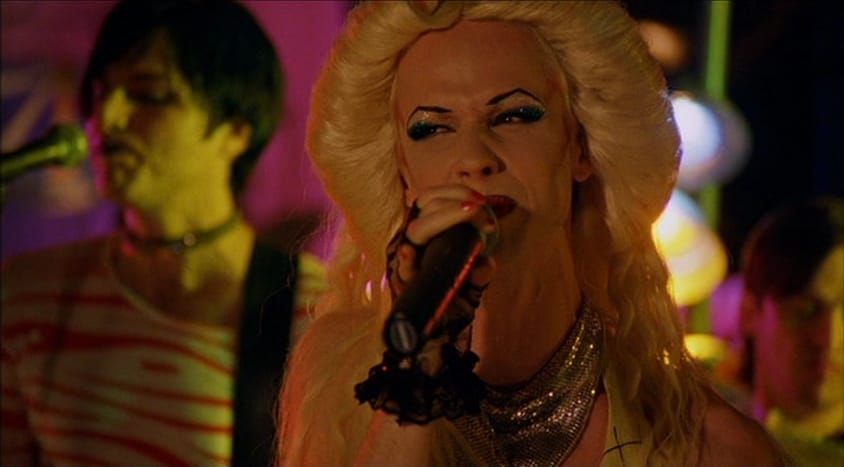
The 2001 film follows Hedwig (played by writer and director John Cameron Mitchell) and her eponymous band. Through rock songs written by Mitchell and Stephen Trask, we learn her life story: growing up in East Berlin as a young boy named Hansel before the Wall falls, following an American GI to Kansas after a botched sex reassignment surgery (in which she got the titular “angry inch”), falling in love with Christian teenager Tommy only to be dumped after her lover steals her songs and becomes a famous rock star himself.
On the surface, I am nothing like Hedwig — a cishet Asian American woman who can’t sing a correct note to save her life.
But there is something queer about being a transracial adoptee, and like so many others, I saw myself in Hedwig. We were both women who have had our hearts broken. We were born with one name in one country and now identify with another name in this one. Like Hedwig, much of my life has been dictated by forces outside of my control. I’ll never know whether who I am is because, or in spite, of what happened to me.
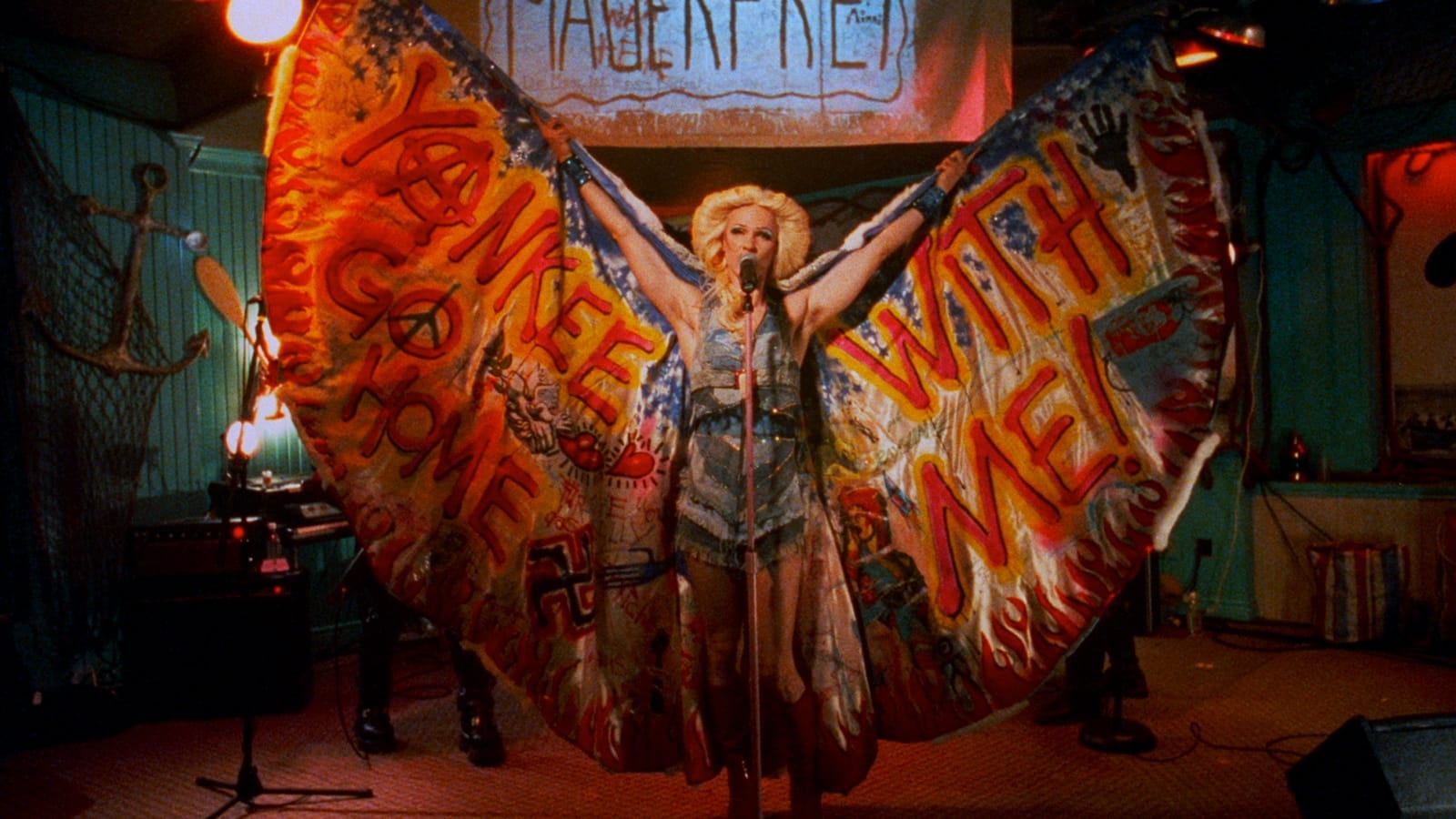
Hedwig is now regarded as a cult classic, and its legacy is far-reaching. In describing the film’s appeal back in 2009, critic Scott Tobias wrote about how the film “speaks to outsiders without being guilty of generalization” and the way its specificity allows viewers to “feel like it was made just for them.”
From Yoko Ono to the cast of Riverdale to Chappell Roan (I contend that “Sugar Daddy” walked so “The Giver” could run), modern musicians continue to emulate its sound. In 2014, it was adapted into a Tony-Award winning Broadway musical starring Neil Patrick Harris (and later Mitchell, in a full-circle moment). The musical has been staged in at least 16 countries across five continents; despite the fact that Hedwig refers to herself as an “internationally ignored song stylist,” she is now anything but.
My first exposure to Hedwig was in high school, catching it in glittering fragments while flipping through premium cable channels on my family’s big screen TV. I rediscovered it in college, watching it with my roommate and belting out “Wig in a Box” at a midnight screening in our small town theater. After I ended a four-year relationship with my high school sweetheart, I watched it twice in a row in my parent’s bathtub, my laptop sitting precariously on a closed toilet seat, crying and refilling the tub when I got too cold.
Growing up in the rural Midwest, I was often the only person of color in any given room, including with my white family. As a kid, I preferred McDonalds over Chinese takeout, something my parents always found funny. As an adult, I’m always apologizing when a lost tourist asks me for directions in Korean or a Thai cashier asks me where I’m from, and, without thinking, I blurt out “Ohio!” There’s a specific dysphoria I feel when people assume I’m part of this club I’ve never belonged to.
I never wanted my adoption to define me, so much so that over time this defensive desire itself became defining. When it came up in conversation I talked about it like a noncancerous mole: matter-of-factly, allowing others to look at it and ask questions but quickly reassuring them that it’s no big deal, actually, so let me just tuck it back underneath my shirt sleeve where it belongs. When anyone asked if I wanted to look for my birth family, my answer was a simple no. I didn’t feel compelled to give anyone a reason, including myself.
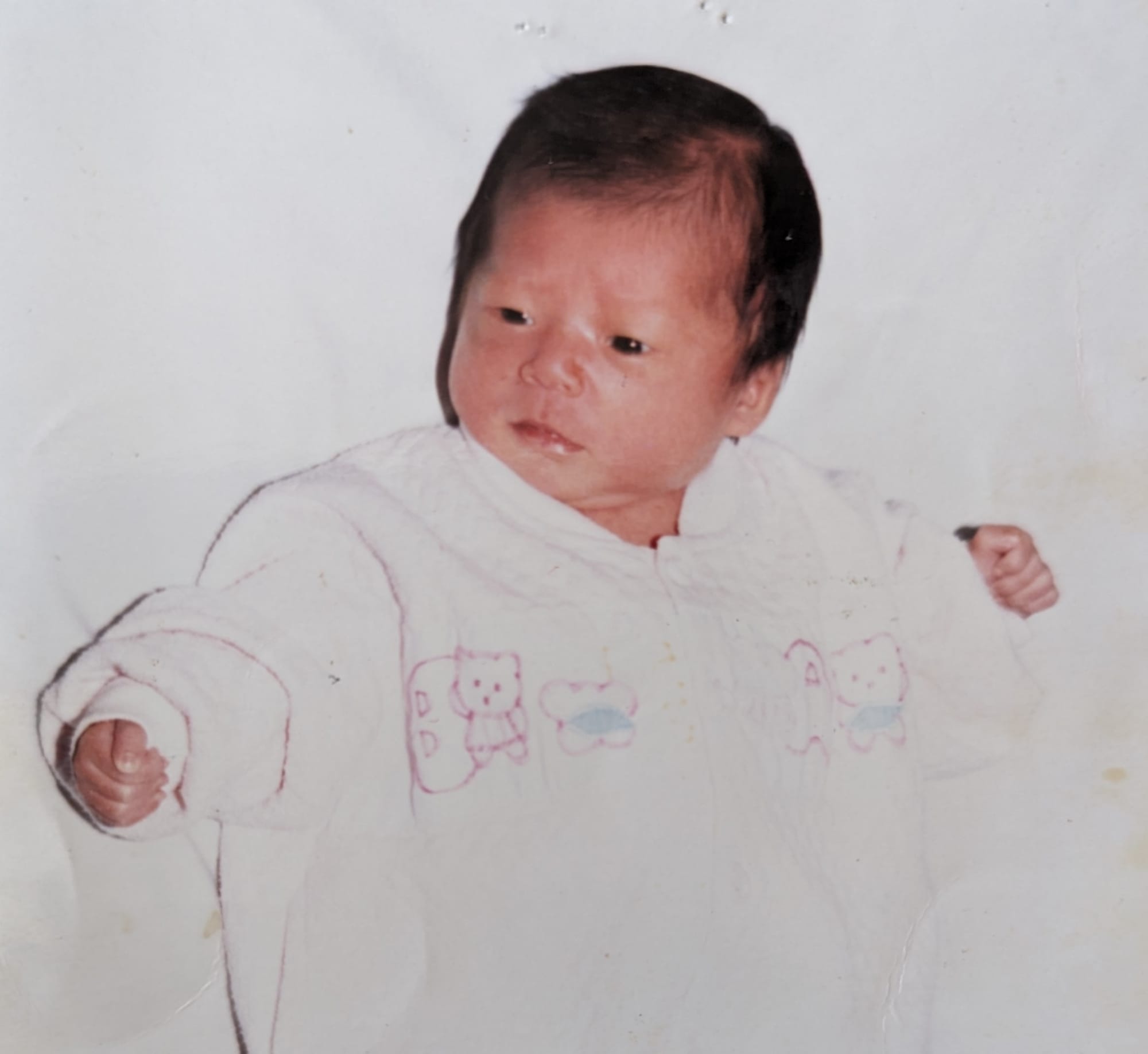
These days, I'm a psychologist, research professor, wife, mother. One Friday afternoon in a doctor’s waiting room, mindlessly scrolling on my phone, I stumbled on this headline: “AP finds widespread adoption fraud separated generations of Korean children from their families.”
I can’t catch my breath.
Reports from AP News and Frontline, alongside testimonials from dozens of adult adoptees, began a global public reckoning about the South Korean adoption infrastructure from the 1970s and 1980s. During those decades, the country created the largest international adoptee diaspora in the world, sending over 200,000 children to the United States (hi!) and Europe.
The investigation shed light on how Korean parents, often very poor ones, were lied to and manipulated to give up their newborns in order to satiate the growing (and lucrative) demand for healthy babies in the West. One father was told that his newborn son was so sick that he was unlikely to survive, so he signed away his parental rights before leaving the hospital, only to meet his (healthy) adult son years later. Another mother spent decades looking for her child, who was literally stolen from her front lawn. An independent investigation called many of these cases human rights violations, and the President of South Korea was forced to apologize.
This scandal broke through the carefully constructed container I had placed any curiosity about my origins, the one I had sealed away so long ago I couldn't even remember boxing it up like one of Hedwig’s many wigs.
Months later, I’m exchanging emails with Jeongmin and throwing on my Criterion Collection Blu-ray of Hedwig.
Stories by queer and trans artists remain too rare. In a world where, in a single season, the Supreme Court has ruled that conversion therapy can remain legal in Colorado and that trans girls can’t play sports with their friends, the film’s raucous celebration of queer spectacle, radical self-acceptance, and resiliency remains more vital than ever.
Of course, there’s profound beauty in something like Hedwig helping a queer kid feel seen for the first time. And, as Roger Ebert famously put it, movies are the ultimate empathy machines, allowing us into the stories and perspectives of people so different from our own. These common arguments for representation remain true.
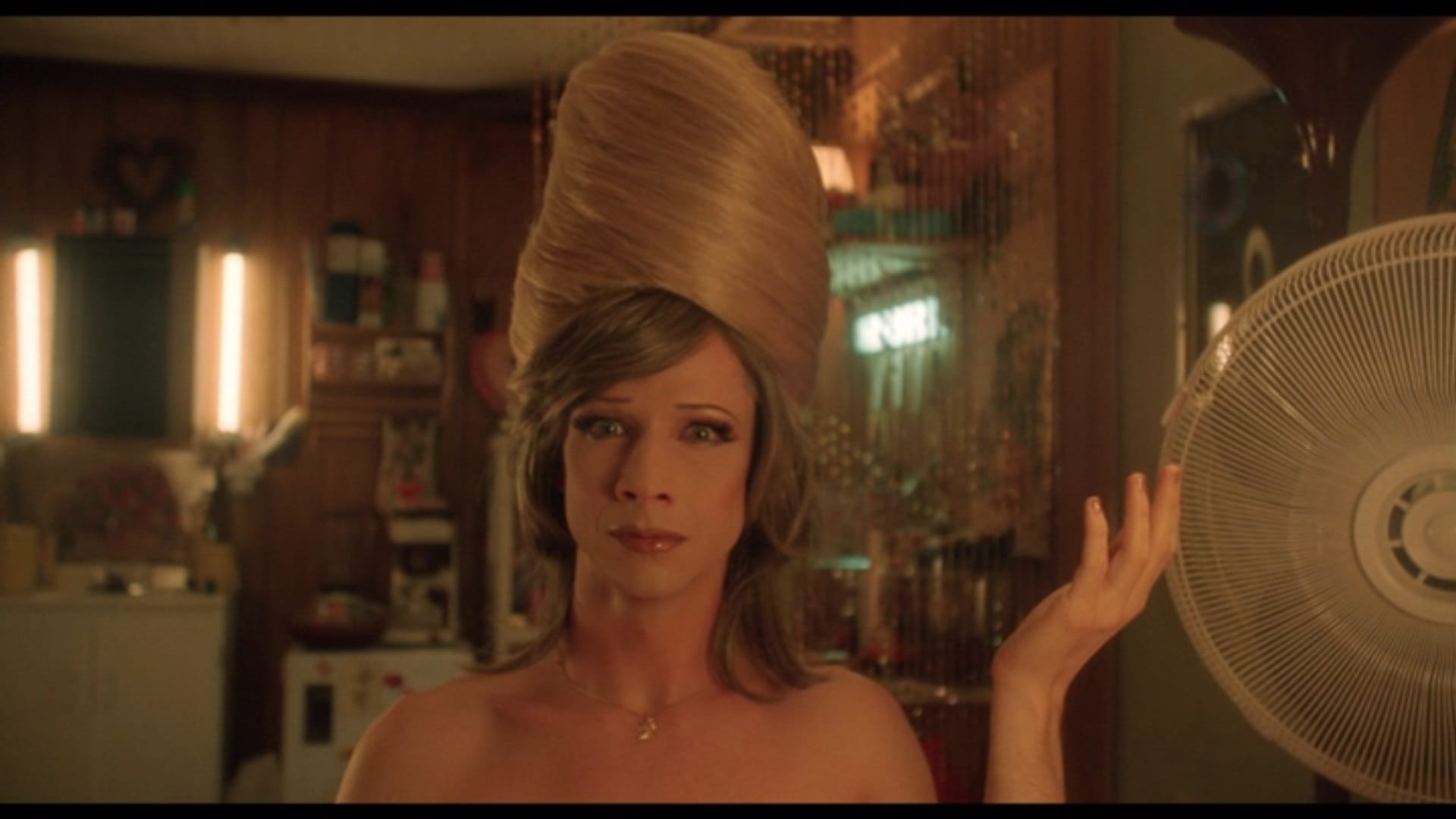
And yet, what a lack of imagination it would betray if we fought for these stories solely as anthropological exercises or believed that they could only resonate with people who shared the exact identities they portrayed. Another movie that had a big impact when I started the search for my birth parents was the 2024 film I Saw The TV Glow. Sure, it offers a beautiful and unsettling portrayal of gender dysphoria, as Episodes’ own Emily St. James has argued. But it also stokes the more universal fear of wasting your life because you’re too cowardly to understand your innermost self.
I could have put on a different movie: perhaps the 2022 film Return to Seoul, about a French adoptee returning to Korea for the first time. I’ve heard it’s good, but I’ve never seen it. At best, I dread it will feel like homework. At worst, I’m afraid it will feel overwhelming, too close to home.
Instead, I put on something familiar, beloved, and just as resonant.
Representation matters for many reasons, not least of which because it follows the assumption that great art can — needs to — come from anywhere and anyone, and you never know what is going to sneak into your soul and refuse to leave. Hedwig wasn't a window into another world; it was a portal back to myself.
A few days after watching the film, I learned that my birth father died years ago. A few weeks later, I received my birth mother’s name and a way to contact her. She resides in some sort of assisted living facility and is unable to read, so the emails I eventually sent were read to her by her social worker, who in turn sent her verbal responses back to me. Everything was in Korean, generously translated by a friend of mine.
Through this fraught game of telephone, I gained some insights. There was no fantasy fulfilled of a parent searching frantically for their stolen baby: I was unwanted, mostly by my birth father, and given away or “relinquished,” in adoption-speak, voluntarily — or as voluntarily as a newborn can be given up right after she’s born. My birth mother did not give me my Korean name; it was likely supplied as a formality by some adoption official. My birth father was abusive, and my birth mother eventually ran away from the marriage. She led a hard life.
After only a few exchanges, she says (or her social worker writes that she says) that she no longer wants to communicate with me.
It feels anticlimactic. Even a bad screenwriter wouldn’t leave so many questions unanswered. At first, I’m confused, then angry, then confused again. Eventually, I’m sadly resigned — I’m all too aware of how difficult it is to look at one’s past.
“Ain’t much of a difference between a bridge and a wall,” Hedwig sings in “Tear Me Down.”
In the middle of this, I find out that I’m pregnant with my third child. I think about how wanted each of my pregnancies have been, how meticulously planned. I think about how much I love the newborn phase, the part of my childhood that neither woman who can call herself my mother got to experience. I think about how lucky I’ve been to have children in the first place and, for the first time, how lucky I am to be able to keep them.
In an initial draft of an email, I wrote to my birth mother that I forgave her. Then I deleted it. It didn’t feel like I meant it. Now I’m grateful I didn’t because, ultimately, there’s nothing left to forgive.
Of the entirety of Hedwig, the “Origin of Love” sequence is the one that changed the most for me on my rewatch. A retelling of Plato’s Symposium, the song details the myth that we were all once creatures made up of four arms, four legs, and two heads. When the gods grew jealous of us, they split us down the middle, and we are now cursed to spend the rest of our lives looking for our other half.
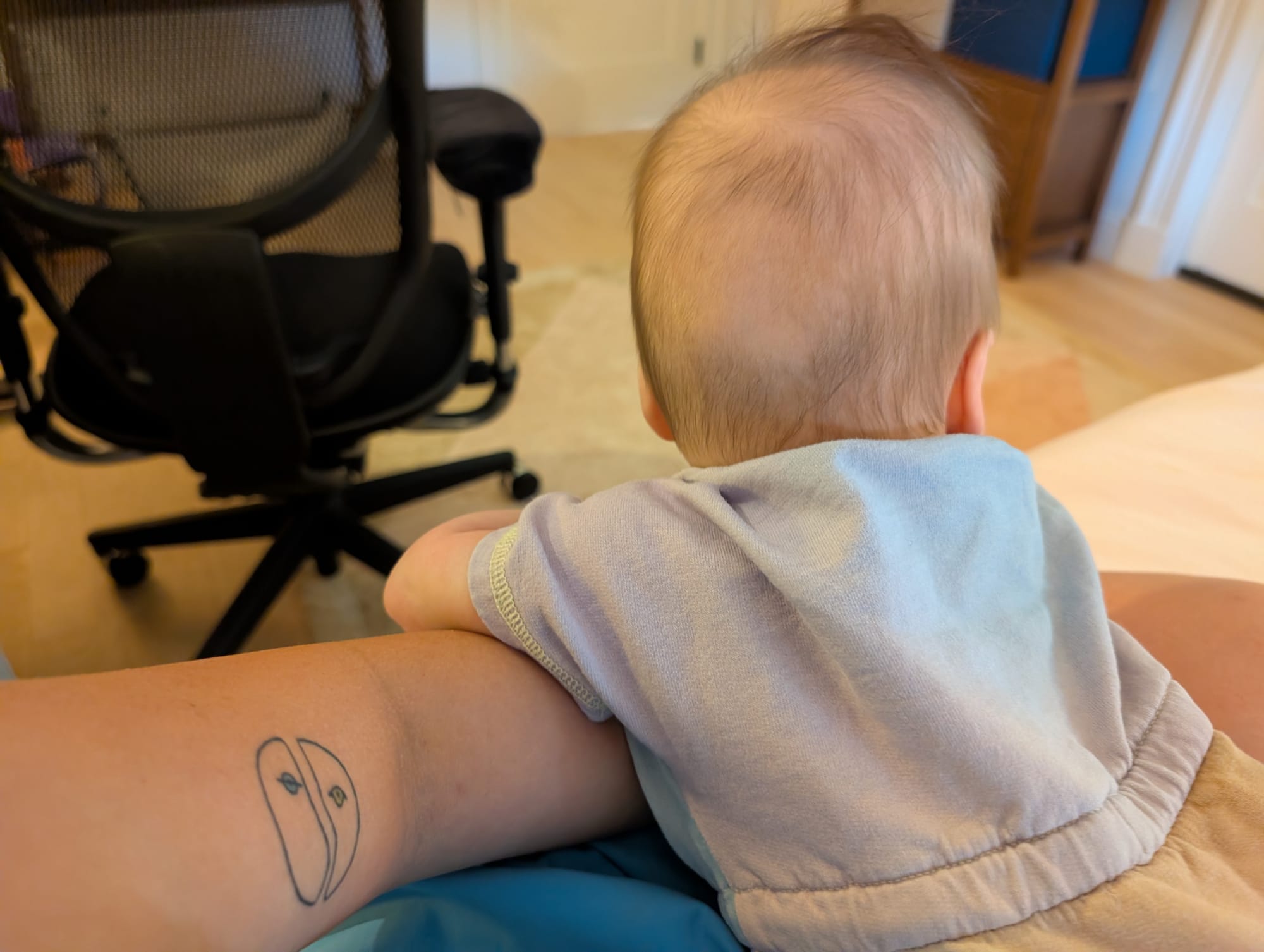
I always found the song to be a beautiful metaphor for romantic love. Now, it reminds me of giving birth: the imagery of being ripped apart, the belly button reminding us that we are separated from our other half, the sweet pain of one being becoming two.
It’s a pretty story that such a love is predetermined. But it’s not true. It's chance; it's luck; it's a choice we make, over and over again.
That doesn't make it any less sacred.
“You had a way so familiar, but I could not recognize
Because you had blood on your face and I had blood in my eyes
But I could swear by your expression that the pain down in your soul
Was the same as the one down in mine
That’s the pain that cuts a straight line down through the heart
We call it love.”
I love singing this verse to my new baby as if it was written just for us.
A Good Song
The free edition of Episodes, which (usually) covers classic TV and film, is published every other Wednesday. Premium subscribers get newsletters every Monday, Tuesday, Wednesday, and Friday. Our editor-in-chief is Emily St. James, and our managing editor is Lily Osler. If you have suggested topics, please reply to the email version of this newsletter or comment (if you are a paid subscriber).