Journalism is failing at its chief duty. Why do we keep asking art to take its place?
There's a place for endless nuance and character development. It's not in articles about the president.

All the way back in 2017 — nearly 10 years ago, Jesus Christ — I wrote the following about the punditry surrounding the early months of the first Donald Trump presidential term:
The “He sounded like a president!” comments Trump gets every time he manages to stay on message and read off a teleprompter — regardless of whether his message has previously been criticized, or whether he’s making a bunch of big promises without details — increasingly strike me as saying something like “Sure, Batman v Superman was bad, but the actors knew their lines, and you didn’t see the camera onscreen at any time!”
 Emily St. James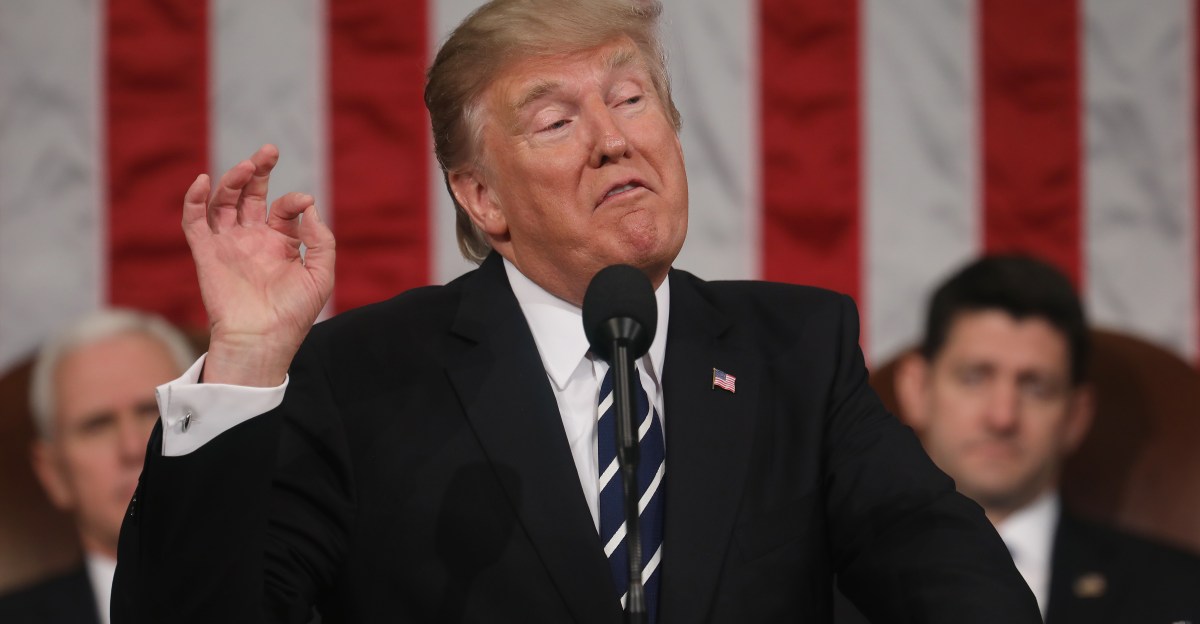
At the time, I perceived much coverage of Trump as having less to do with anything like rigorous political journalism, which might have dug into the claims the president made or talked to members of communities affected by his proposals or anything, and more having to do with a kind of facile arts criticism. In this view, Trump wasn't the president so much as he was an entertainment product to be graded and appreciated on a pure performance level, one the worst possible sin was being seen as boring. What's more, the criticism wasn't even interesting criticism of the sort that delves into themes or technique; it was, instead, a kind of relentless fresh/rotten scale for the most powerful human on the planet.
At the time, plenty of good political journalism around Trump still existed. Some of it still exists now, especially in outlets like ProPublica. Yet the journalism industry has been so hollowed out that the more time- and labor-intensive forms of political journalism have increasingly been replaced by this facile criticism, which has now been bolstered with a kind of ongoing attempt to wish into existence a version of Trump who's not an obvious narcissist who rapidly loses interest in anything that stretches on too long but, instead, a deep, strategic thinker who is always looking seven moves ahead.
Then, in 2019, I wrote the following about the controversies surrounding Quentin Tarantino's Once Upon a Time in Hollywood, a movie whose pleasures largely escaped me but one where the discourse around the film drove me nuts:
I still struggle with the way the ambiguity of Once Upon a Time in Hollywood — one of the qualities that makes it a movie worth thinking and talking about — has also made it such an object of endless debate. Some debate is inevitable and valuable, I think. Tarantino might be a great filmmaker, but he’s just one guy, limited by his perspectives. Hearing how people of Asian descent and women take issue with certain elements of Once Upon a Time in Hollywood can help all of us better understand how the limitations of a director’s perspective can make it harder for some viewers to embrace his vision.
What worries me is that sometimes these conversations evolve from “I was uncomfortable with the way this film depicted violence against women” to “I wish that somebody in the movie had said the violence was wrong” with barely an acknowledgment of the movie’s central, essential relationship to its own ambiguous heart. Once Upon a Time in Hollywood is not a movie that wants to impart a moral. It’s a movie that wants to deposit you into a faithfully recreated version of a bygone time and place and then jarringly remind you that it’s just a movie, that you cannot get back to that bygone time and place, that you are watching something impossible.
 Emily St. James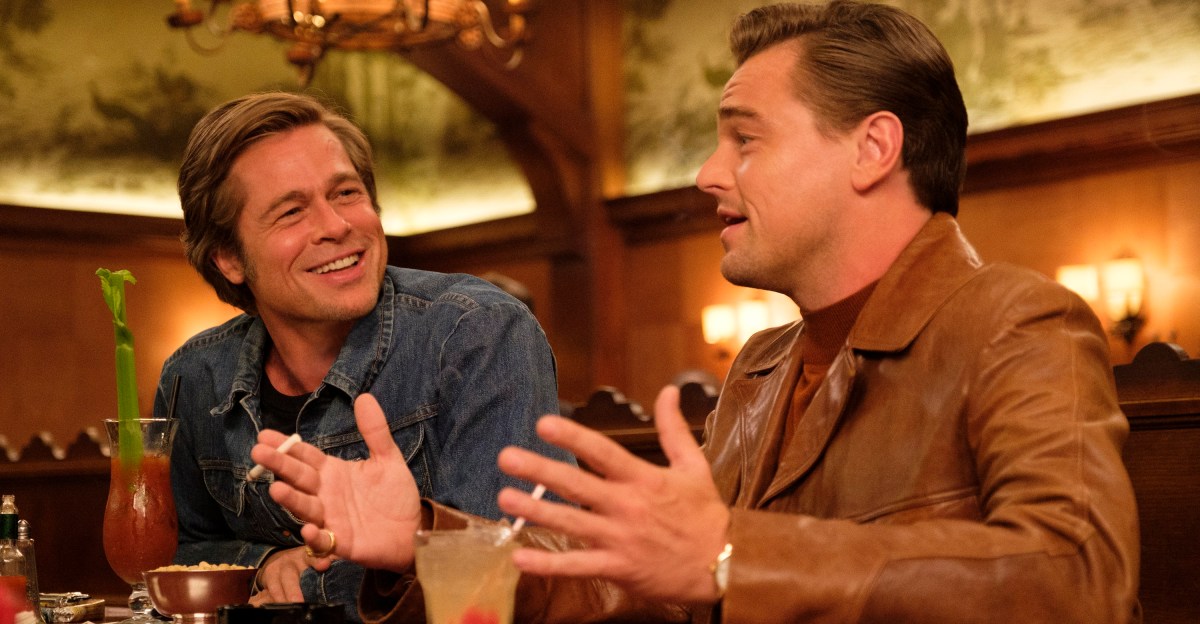
Here, too, a problem with being unable to talk about art that troubles us without reducing that question to a simplistic moral one has only gotten worse. Meanwhile, the state of arts journalism is somehow in more dire of straits than other branches of the media right when we might need it most. This issue has been most dramatically demonstrated by the recent discourse around Oscar nominees like One Battle After Another (is Perfidia a bad character because she makes selfish choices?), Sinners (is Grace a bad character because she makes a destructive choice to save her kid?), and Marty Supreme (is Marty a bad character because he's a bad person?). I am not linking to these discussions — or others — in hopes of finally, finally putting these discourses to a rest! Let's talk about new things! And it's not as though this tendency is Oscar-exclusive. Pick a moment in the pop culture discourse and wander onto social media and you'll find shallow takes aplenty.
To reiterate my 2019 point: I am all for nuanced criticism that points out the flaws in a work, especially those that arise from an artist's limited perspective. No one artist can account for the entirety of the world — try though we might! — and hearing from people who have a different take for literally any reason is often helpful to an audience member wrestling with their own thoughts. But there's a pretty long distance from "The sexualization of Black women in One Battle might be framed through the lens of a reprehensible man, meaning Paul Thomas Anderson thinks he's making clear how awful it is, but he can't help but prop up racist, sexist tropes in the process" and "Sinners is a bad movie because a woman of Asian descent gets everybody killed." (Lest you think I'm picking on either film, both One Battle and Sinners are comfortably in my top 10 for 2025. Great movies!)
And again, to be clear, the vast majority of published arts criticism, especially in publications with an editorial process, falls much more into the former, more nuanced category than the latter, but there's so little arts criticism that receives even the most rudimentary of editing now. And there's even less traditional arts criticism, period, in the face of endless social media posting that tends to radicalize an opinion like "I had some issues with this movie" into "Which means it was deeply wrong, as are you if you like it."
None of this is a new dynamic. People have been saying "This art will make us more immoral as a society" for as long as we've had art and societies. (Probably. Nobody asked me how I felt about the Lascaux cave paintings' transphobic underpinnings!) Where I think some of the recent intensity around these questions has popped up stems from the trend in political journalism described earlier. Generally speaking, we are in an era where we long ever more for moral clarity or at least a straightforward description of what we can see with our own eyes. But journalism — and especially journalism from publications and platforms with a national reach — has largely abdicated this responsibility, despite being the field that is often at its best when it leans into that task. Yes, we can yell at publications endlessly in the vain hope they will listen, but we know that will never happen. And so our quest for an accurate representation of the reality we all live in takes aim at art, an arena that is often at its best when it leans into complication and nuance and a subversion of the world we see in hopes of finding deeper truths.
For instance: If one really wanted to plumb the psychology — such as it is — of Donald Trump, the best place to do that would probably be a novel about a Trump-like character, written at enough of a remove to allow for more nuance than direct representation would suggest. The recent film Wake Up Dead Man featured just such a character in Josh Brolin's Monsignor Wicks — obviously Trumpian without being Trump. Barring fiction, the best way to contemplate Trump would probably be a long-form biography, of the sort that likely won't be written until after he's been dead for a few decades, by which point many of us will be gone as well. The worst possible place in which to try to understand Trump's deeper motivations in hopes of figuring out some grand plan is in an article that might otherwise be about how an already ill-advised war against Iran has turned into an outright debacle for an administration that clearly has no idea what it's doing.
Why is this the case? I don't know. The most obvious answer — the media is built atop access, and giving the White House such a maximally possible good-faith reading that it strains credulity allows the maintaining of access — surely accounts for much of this, as does a deep-seated desire to somehow win over Fox News conservative viewers. But I also think there is a growing sense among many who occupy positions of relative privilege and power that if Trump and his cohort really are destructive nihilists, then we are in the early stages of a terrifying portion of world history. That's scary! It's easier to assume or hope that someone will come along and fix all of this. I sure do! But journalism needs to go beyond, "Wow, somebody's going to figure this out" when it becomes increasingly clear nobody is.
(Sidebar: I can't prove this — hence the tangent — but through my entire career in journalism, I felt like the old idea of journalism being meant to comfort the afflicted and afflict the comfortable had been perverted by the ways in which the most powerful journalists seemed to only see and be annoyed by younger progressives, largely due to their geographic and class circles. Thus, they concluded the power possessed by those younger people far outstripped what it actually was. Talk to any journalist who grew up or lived outside of those circles — even someone like me, a white lady from rural South Dakota — and the conversation would be different. Yet most of those journalists kept getting drummed out of the industry. Food for thought!)
In general, the moments journalists lionize as the very best of their profession tend to involve media figures with immense gravitas speaking truth to power — Cronkite turning on the Vietnam War, Murrow's takedown of McCarthy — or intrepid reporters doing their best to get to the bottom of a story, a la Watergate. Now, however, too much journalism is horning in on the natural territory of art, which leaves us casting about for somewhere to gain more accurate descriptions of the terrifying world we see outside. The worst possible place for that kind of accuracy is art, but we increasingly feel like there's nowhere else to turn.
A Good Song
The free edition of Episodes, which (usually) covers classic TV and film, is published every other Wednesday. Premium subscribers get newsletters every Monday, Tuesday, Wednesday, and Friday. Our editor-in-chief is Emily St. James, and our managing editor is Lily Osler. If you have suggested topics, please reply to the email version of this newsletter or comment (if you are a paid subscriber).