The memories of a deadly pandemic hidden in one of America's most beloved films
Art about pandemics and plagues rarely gets made after the fact. Yet here's the Spanish flu in It's a Wonderful Life.

It's It's a Wonderful Month here at Episodes, where we will celebrate Frank Capra's It's a Wonderful Life – and Every Time a Bell Rings, the book about the film that Emily cowrote with Lauren Theisen of Defector. The film turns 80 in December; the book is out on September 29, and you can preorder it below.
Of late, I've become fascinated by the brief bubble that was "lockdown art." Largely produced in the spring and summer of 2020, between the mid-March period when the world shut down due to the rampaging COVID-19 pandemic and the mid-summer point where safety protocols allowed the film and television industries to get back to work, this art tended to be homebound, frozen in its moment by the obvious circumstances of its creation.
The most obvious examples of "lockdown art" were videos produced via video-chatting platforms like Zoom. These videos often reunited the casts of beloved sitcoms, allowed then-airing shows to keep going, or let celebrities cook up their very own talk shows. They let Broadway performers celebrate a stage legend and musicians keep performing. A couple of filmmakers made whole films and TV shows in lockdown. Also, most infamously, there was this. There is a chintziness to their presentation, an agreeable low-rent quality that made it seem as though even the rich and famous were in the same boat as the presumed viewer.
Yet "lockdown art" also encompasses a lot of projects that were conceived of and even produced in the depths of the pandemic, where the circumstances of their creation are not immediately obvious but can be felt. Perhaps most famously, Taylor Swift's albums folklore and evermore were the products of Swift's prodigious capacity to write song after song being confronted with a long period where she had nothing to do. And when TV shows resumed production in the summer of 2020, most of them had to reflect the pandemic out of sheer necessity.
Lockdown art did have a somewhat long tail. Indeed, a host of novels that began coming out a few years later either directly took place amid the pandemic or reflected the isolation of the lockdown experience. Even movies like Barbie and Oppenheimer, both films about the experience of becoming stuck in a cloistered world and realizing inconvenient things you might not have if not for that quarantine period, bore the influence of the lockdown era.
And then it all stopped. It is not as though zero COVID art has been produced in the last couple of years, but any time it is, it feels almost like a straggler that escaped from that period almost by accident. For the most part, the years 2020 and 2021 are falling into a sort of culture-wide memory hole. What art about COVID that still gets released — mostly fiction — is primarily about the ennui of lockdown, with very little art being produced about the actual experience of the illness or the massive amounts of death people all around the world were confronted with. (For more on this, read Morgan Leigh Davies from earlier this year.)
Yet this is not in any way a new occurrence. The same memory-holing happened with the last society-wide pandemic: the Spanish flu of the late 1910s. Was some art about that period produced? Sure, and Elizabeth Outka has argued that the pandemic itself was a major reason for the rise of modernism in the 1920s, even if little of that modernism directly engaged with the flu. Yet World War I proved far more robust as a direct creative inspiration. Indeed, you can surely name at least one or two major works of art inspired by the Great War, but how long would you have to dig around in the archives to find art directly depicting the Spanish flu? Quite a while.
Or you might find a reference to it hidden in plain sight, in one of the greatest American movies ever made: It's a Wonderful Life.
Become a paid subscriber: You'll get access to all the newsletters only paid subscribers receive, including the 26 Episodes feature and our book club; the Episodes Discord; and almost a decade of archives. Plus you'll get to comment and ask questions in the mailbag! Sign up for as little as $5/month below!
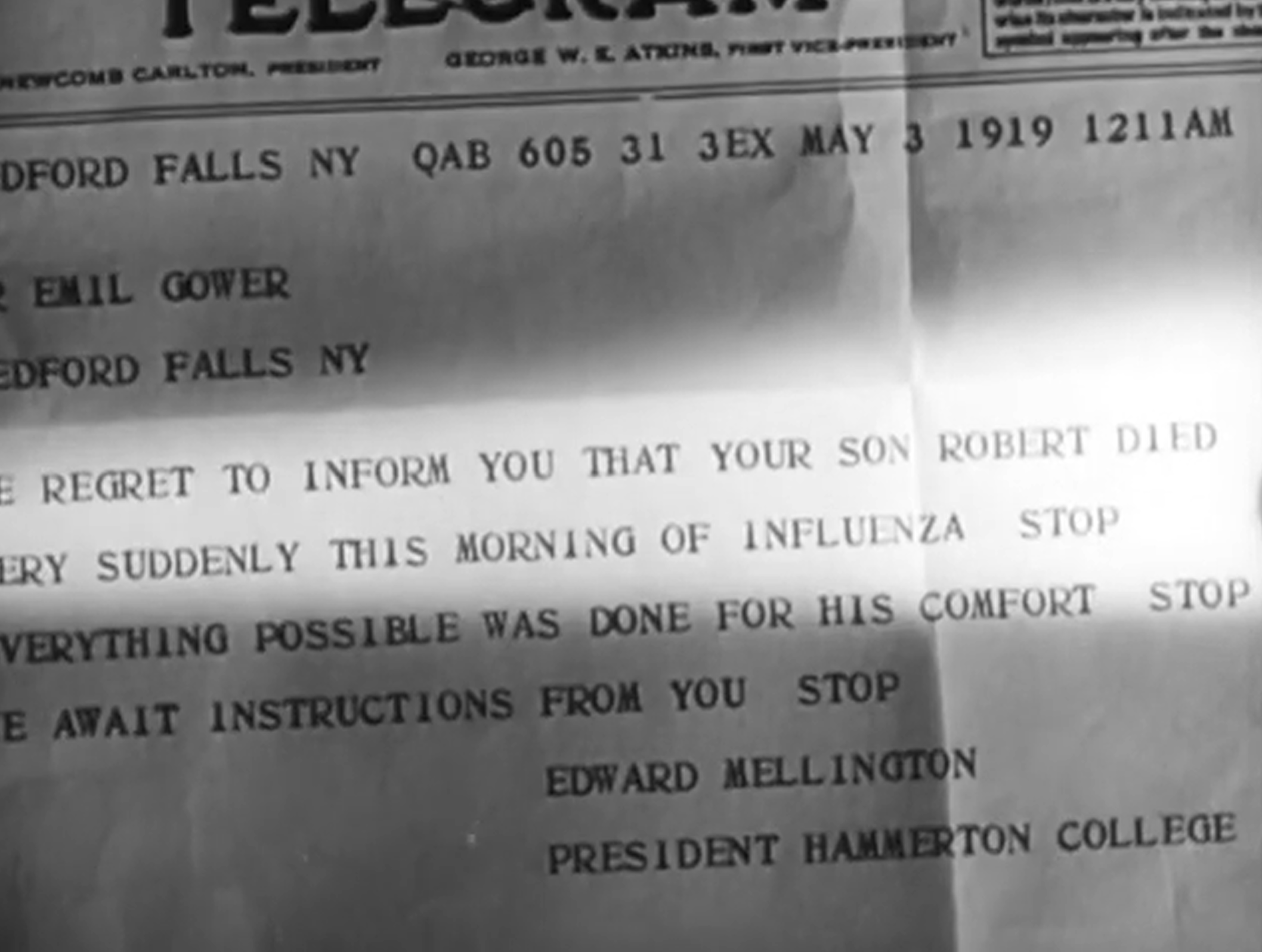
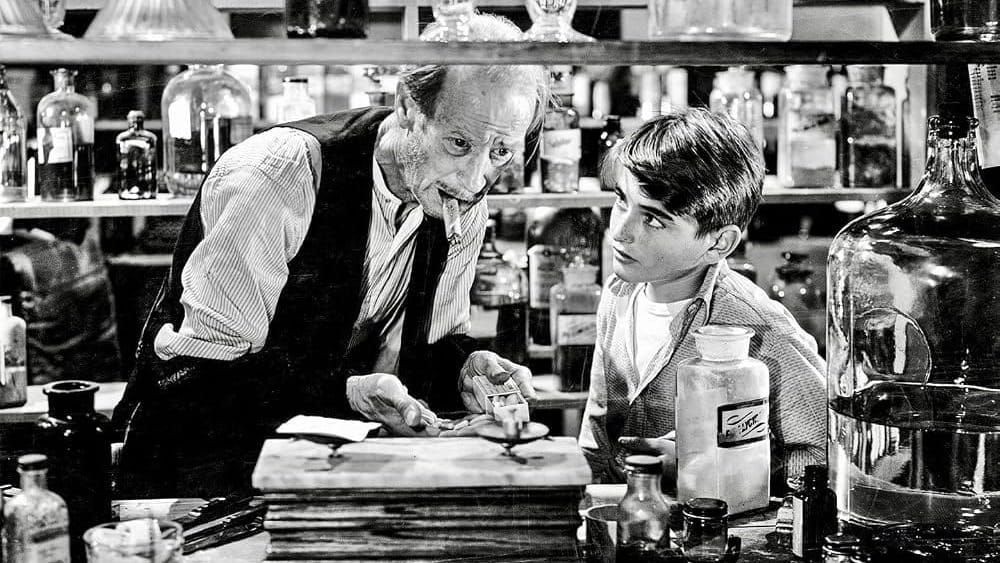
Early in It's a Wonderful Life, the young George Bailey goes to his job at Mr. Gower's drug shop to find the local druggist in obvious drunken distress. The source of that distress quickly becomes apparent when George finds a telegram informing Mr. Gower that his son has died suddenly of influenza. The date on the telegram marks it as being sent in May 1919, at the tail end of the great waves of death that marked the Spanish flu. Does the movie ever confirm that Mr. Gower's son died of that specific influenza strain? No. Would contemporaneous viewers have recognized it as the same? Yes, or so I argue in Lauren Theisen and my upcoming book, Every Time a Bell Rings: The Legacy of It's a Wonderful Life, America's Most Beloved Holiday Film.
Throughout Wonderful Life, director Frank Capra uses the tumultuous first half of the 20th century to situate his viewers in time. He rarely does anything so direct as having the characters say, "My God, it's December 7, 1941, a day that will live in infamy!" but you can roughly track the progression of the Roaring Twenties, the Great Depression, and the World War II years by the events that befall George and his wife Mary. Those years of American history are famous enough that even viewers now, 80 years after the movie's release, can mostly understand what events Capra is riffing on, and the effect must have been even more pronounced for those who saw the film upon its release.
And yet for as many times as I've seen this movie, I had never quite clocked that George's encounter with Mr. Gower as a young man almost certainly nods to the Spanish flu. Some of that is because George is still a child and, thus, less tapped into world events than he will be as an adult. But even more of it is the fact that as time has worn on, the Spanish flu has receded in the collective memory until it has become almost buried underneath the weight of World War I depictions.
That, unfortunately, is all too common for how pandemics and plagues get treated in art. If they pop up, it's in an incidental reference, but they're rarely referenced at all. Shakespeare, for instance, was at work during the London outbreak of the plague in 1603 and 1604. Even though he was producing some of his greatest work in that time, did he write a play about it? Nah. And other major outbreaks have largely been ignored almost entirely in art that has endured.
There are occasional exceptions. Diseases that are devastating to particular communities of people — HIV/AIDS being the obvious example — tend to prompt more art, perhaps because such diseases tend to have easily identifiable villains in the form of politicians and other officials who look the other way as the disease runs rampant. And the Black Death of the 1300s was so enormous in its impact that art almost had to be made about it.
But for the most part, art and disease too rarely mix. Even art about historical pandemics has a hard time getting the green light — see Walter Newman's Harrow Alley, one of the most famous unproduced screenplays in Hollywood history. The most obvious reason for this is that disease rarely follows a conventionally satisfying story arc, and it doesn't offer an easily defeatable villain. A story set in a hospital during the early days of COVID-19, no matter how enthralling, would also be a very grim affair indeed.
Yet I also think that pandemics confront us with the sheer meaningless nature of death, the way in which it can rise up and seize any of us — no matter our social standing — at any time. If the world's richest person gets very sick, they will surely have access to better medical care than you or I will, but it will not matter if that illness is particularly stubborn or ultimately untreatable. In fiction, we often like to greet death on our own terms; disease makes that impossible.
Disease, however, is simply an important fact of life, something that is worth confronting forthrightly in our art. No less than Virginia Woolf argued as much, in her 1930 essay, On Being Ill. Woolf writes:
Novels, one would have thought, would have been devoted to influenza; epic poems to typhoid; odes to pneumonia; lyrics to tooth-ache. But no; with a few exceptions — De Quincey attempted something of the sort in The Opium Eater; there must be a volume or two about disease scattered through the pages of Proust — literature does its best to maintain that its concern is with the mind; that the body is a sheet of plain glass through which the soul looks straight and clear, and, save for one or two passions such as desire and greed, is null, and negligible and non-existent. On the contrary, the very opposite is true.
I am not sure I would go as far as Woolf in arguing that disease should become one of the great themes of art, but it certainly deserves better than being reduced to a footnote in other people's stories, so that almost a century later, people watching a movie that references it obliquely have no idea how enormous the iceberg they've just spotted the tip of truly is.
A Good Song
The free edition of Episodes is published every Monday and every other Wednesday. Premium subscribers get those newsletters, plus extra ones every Tuesday, Wednesday, and Friday. Our editor-in-chief is Emily St. James, and our managing editor is Lily Osler. If you have suggested topics, please reply to the email version of this newsletter or comment (if you are a paid subscriber).