Check out what premium Episodes subscribers were reading in April!

Hello, beloved free subscribers! Today, we close the book on April, and with it a very busy month of publishing for Episodes. We published 17 pieces this month, with new writing from us every single Monday, Tuesday, Wednesday, and Friday on Deadwood, Project Hail Mary, Something Very Bad Is Going to Happen, Pluribus, and more.
Premium Episodes subscribers got all those pieces right in their inboxes, along with Discord access, the ability to ask questions for the Mailbag, and other fun extras. Free subscribers, though, only got two open-to-all Wednesday newsletters. We think those pieces were neat, too! But we thought you might want a sneak peek of some of the ones you missed out on.
Want to unlock all these pieces and more? Pick up a premium subscription using the button below!
Deadwood, God and the coarsening of America | Emily St. James, April 1 2026
 Emily St. James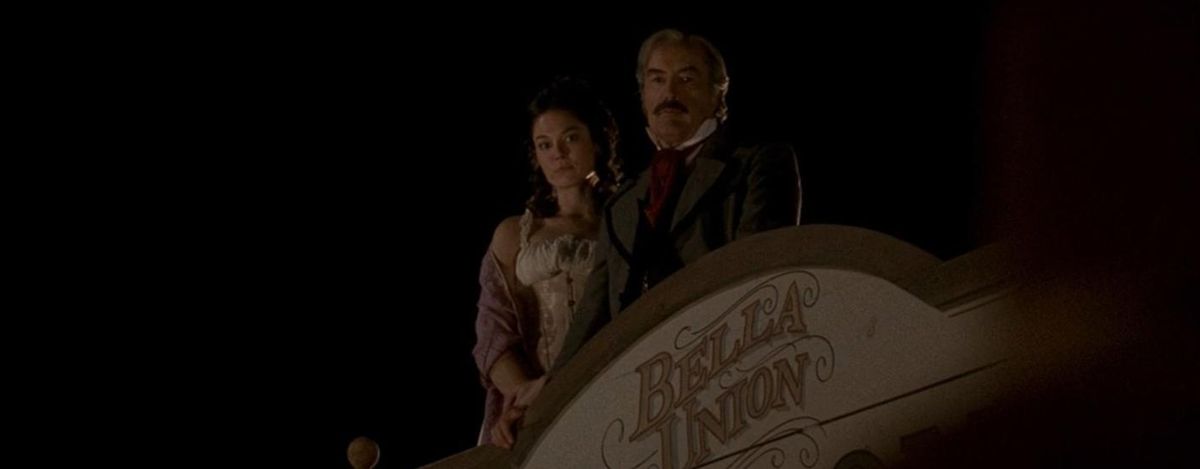
Now, Deadwood is, give or take a Dances with Wolves, the most significant piece of pop culture set in the territory that would become South Dakota. There is a very real Deadwood where you can go and gamble and visit businesses that purport to have been initially established by the characters from the show. Now that the series has slipped a bit in the public consciousness, I doubt there's as much Deadwood tourism, but a few of the faithful still make the pilgrimage every year. In retrospect, Libby and my early love for it had more than a bit of misplaced homesickness involved. Milch's research had gone very deep, which meant that the names and places mentioned on the show, things like "Yankton" and "Ellsworth," were ones we recognized from the state where we had both grown up. If ever there were a time when we were going to be at our most susceptible to Deadwood's considerable strengths, it was the spring and summer of 2004.
But as my attachment to South Dakota has frayed and torn, my love of Deadwood has only grown more profound. It feels to me like it came as close as any TV show ever has to encompassing all of human experience, and if that huge, sprawling canvas means that it could feel a little unfocused compared to its HBO Great American TV Show contemporaries, The Sopranos and The Wire, well, for me, that was always a plus. In 2004, Deadwood felt like it was showing me the place I grew up for what it was; now, it feels like it is showing me the country I currently live in, like a prophecy that has come true.
Pluribus: Episode 7, "The Gap" | Lily Osler, April 21 2026
Lily Osler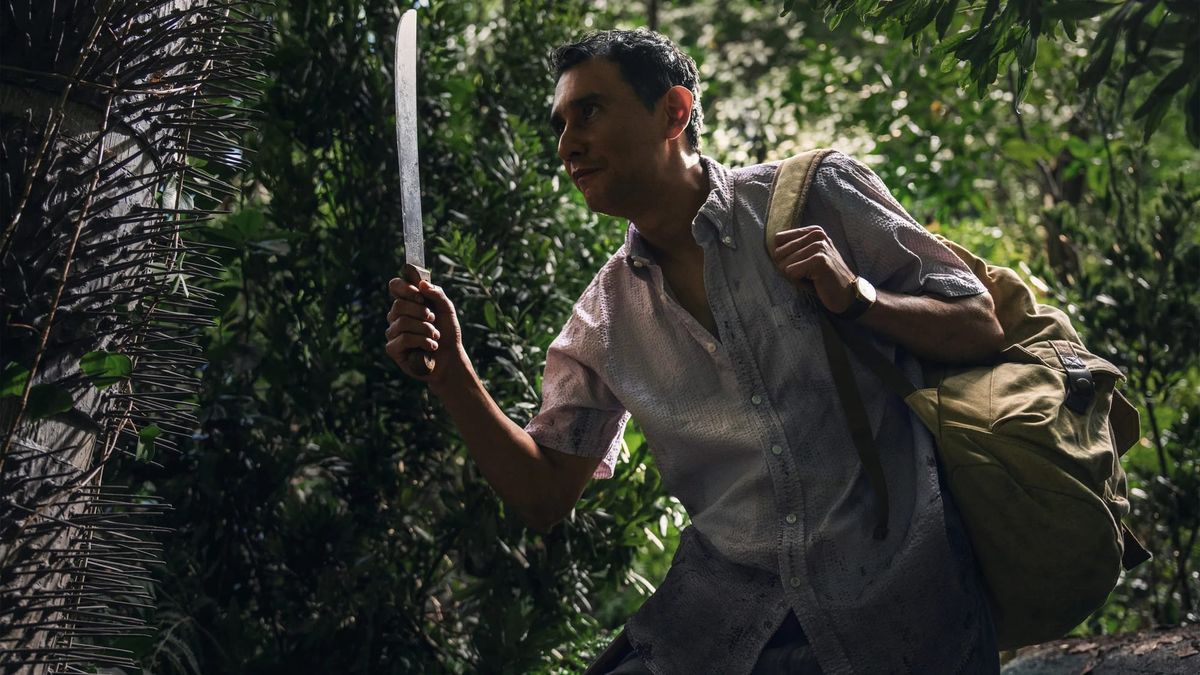
I'm very skeptical of literary foils.
Don't get me wrong: There's truth in the idea of a foil — a character who exists to contrast sharply in meaningful ways with the protagonist, a character whose entire place in their story is to be an opposite. It's just not truth on the abstract level of writing "Jenny is Sophie's foil" in your story outline. Being a foil for someone else is a psychological phenomenon, not an objective one. It happens in a character's brain when, like anyone, they latch onto a person they assume is their inverse in some way and turn that person into an object of pure envy or simmering hatred. Outside the constraints of the pattern-matching human brain, though, people are just too complex to reduce down to opposites. Anyone you choose as your foil is inevitably going to be just like you in many other ways, alien to you in ways that don't correspond to black-and-white thinking in many more. We are all one another's foils and one another's parallel selves at once.
I mention all this because "The Gap" is an episode about foils. As Manousos begins his rules-bound journey north to save the world alongside the only human left alive who agrees that the Joined must be overthrown, that other human is enjoying as decadent and unstructured a life as she can on the Joined's dime. They're living, in many very material ways, opposite lives that spring from opposite worldviews. But Pluribus is a smart enough show not to leave these characters' parallelism in such a simplistic place. Manousos and Carol are both foils and mirrors at once, and more importantly, they're not static. They bend toward one another's views, then bend away, driven just as much by circumstance as by their intrinsic beliefs.
Episodes Monday Rundown April 13–19 2026 | Emily St. James and Lily Osler, April 20 2026
Lily Osler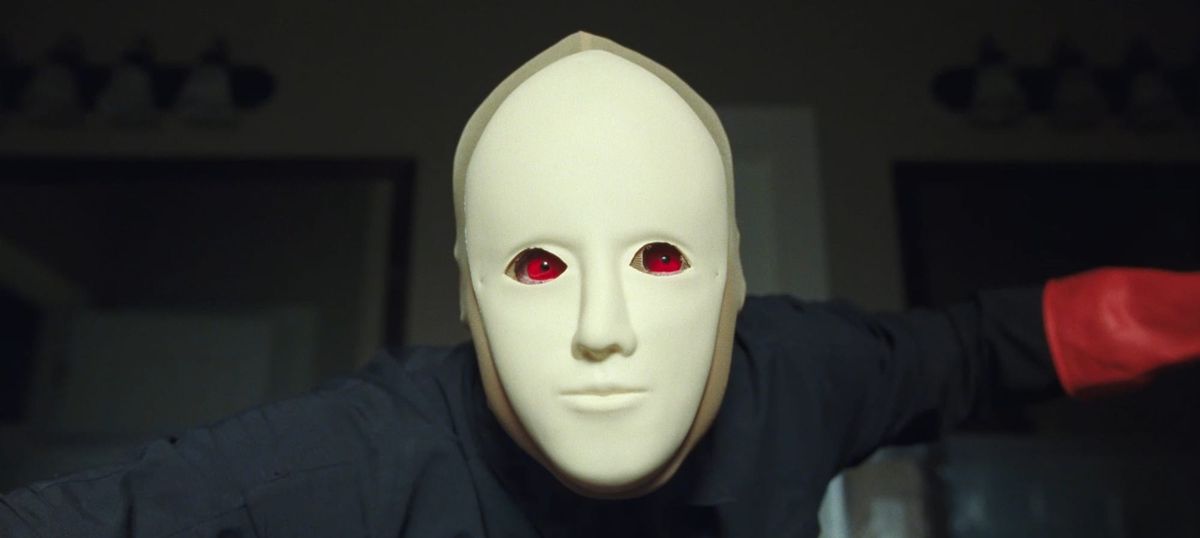
Emily: I'm not quite as high on this [Faces of Death] as some of my critic buddies. To my mind, it loses its way for 15 to 30 minutes in the middle there, and while I was never unengaged, I found myself wondering why characters were doing the things they were doing beyond "people do stupid shit" being a slasher movie convention. Goldhaber and his frequent collaborator Isa Mazzei start in what feels like it's going to become Jordan Peele-influenced social horror, take a detour into Scream-ish meta-commentary on horror as a genre, then take a hard pivot into American giallo, before finally landing in a space that uneasily melds all three things into a climax I found quite effective. But the path to that effective climax features a lot of scenes where the movie sort of just tells you what it wants you to be thinking about. That's a thing Goldhaber often does — How to Blow Up a Pipeline is intent on you knowing absolutely every political thought its characters and filmmakers have had — but it's a weird fit with a slasher movie inspired by faux snuff films of the early VHS era.
Once I let go of my inhibitions, however, I ended up finding the last 15 minutes of this incredibly well done. Barbie Ferreira (who is turning into an actor I like in almost anything — dying to see Chandler Levack's Mile End Kicks) plays Margot, a content moderator at a TikTok-esque social media video platform who starts to suspect that a series of seemingly staged, DIY horror videos she's been allowing through the moderation cracks might be actual murders. Once she realizes they've been soundtracked with voiceover from the original 1970s Faces of Death, she's off to the races, both because she can't resist a mystery and because she has her own social media past to wipe clean. Meanwhile, several states away, we follow a mild-mannered phone store manager (Dacre Montgomery) who turns out to be the man behind this series of videos. (The movie doesn't really hold any reveals back, which is both a strength and a detriment.) Montgomery's performance is... a lot, and it took me the better part of the film to get there with him. But once I did, the movie as a whole clicked into place for me.
A lot of this movie stretches belief to the breaking point, even for the genre. For instance, our killer starts kidnapping people who would be missed, including a prominent influencer (Josie Totah, once again proving trans women can play hot dumb bitches too) and a morning news anchor, and nobody seems to care when Margot turns up with credible leads on where they've gone. But Goldhaber and Mazzei are using some of the "the outside world is oblivious to the horrible violence" tropes of the slasher to make broader points about society. It sometimes lards those points on too thickly, but it's all in service of a final section that goes to some genuinely interesting and even audacious places.
Project Hail Mary isn't competence porn. It's a love story. | Lily Osler, April 24 2026
Lily Osler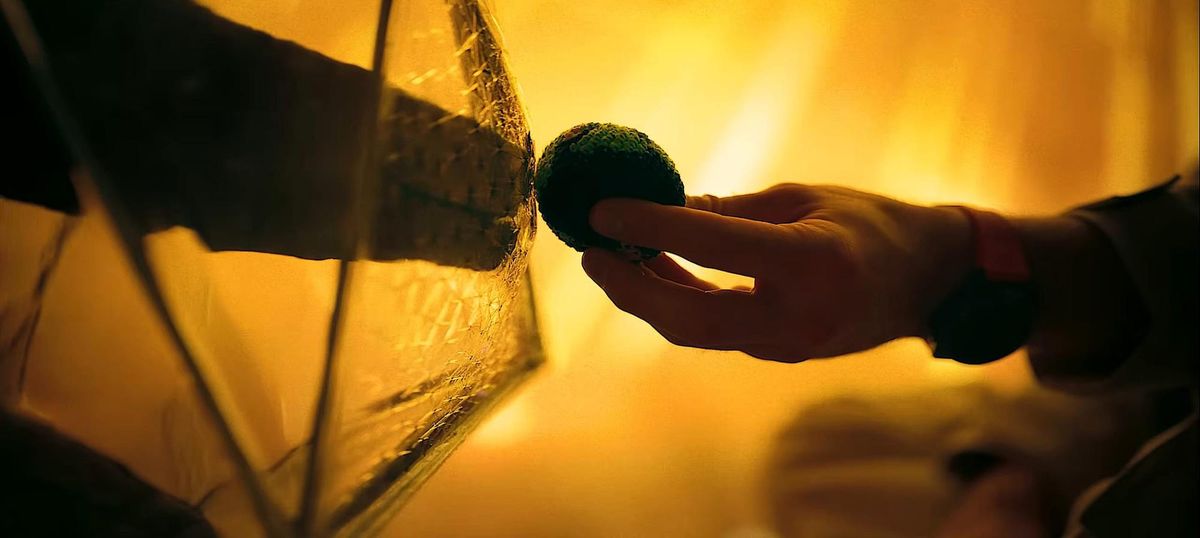
It's of course in no way unusual for a popular science fiction movie to be a love story. Andrei Tarkovsky's Solaris, just about universally regarded as one of the 20th century's great films, is so much about love that Stanislaw Lem, the author of the novel on which Solaris was based, held a grudge against Tarkovsky over it for decades. Robert Zemeckis' Contact is one of the great Movies About Having A Dad of all time. And Christopher Nolan's Interstellar, which is so about Being A Dad that it was the subject of relentless mockery from Nolan's traditional audience when it came out (ask me how I know!), has undergone a serious critical reevaluation in the decade since its release.
More than anything, though, Project Hail Mary lives in the shadow of Denis Villeneuve's 2017 film Arrival, perhaps the ur-"sci-fi movie about love!" of the twenty-first century. It completely apes Arrival's structure and has themes that are obviously indebted to Villeneuve's film. And it does all this to great effect, using the devices of that great 2010s sci-fi weepy to surprise you with a profound message about love and connection. Project Hail Mary is in no way an Arrival ripoff — its themes invert those of Arrival in a really intriguing way, giving a bleakly comic turn to the notion of embracing love in spite of the inevitability of death — but it's so deeply indebted to Villeneuve's picture that it's hard to imagine the former existing without the latter.
So why is Arrival seen as a triumph of grounded, humanist sci-fi while Project Hail Mary gets the competence-porn treatment? Bluntly: gender. Arrival and Project Hail Mary differ in whom they center, whom those protagonists love, and how they love them, and that difference makes it too easy for a casual audience to dismiss Project Hail Mary's love story.
Not every story should be two hours or 10 hours | Emily St. James, April 10 2026
Emily St. James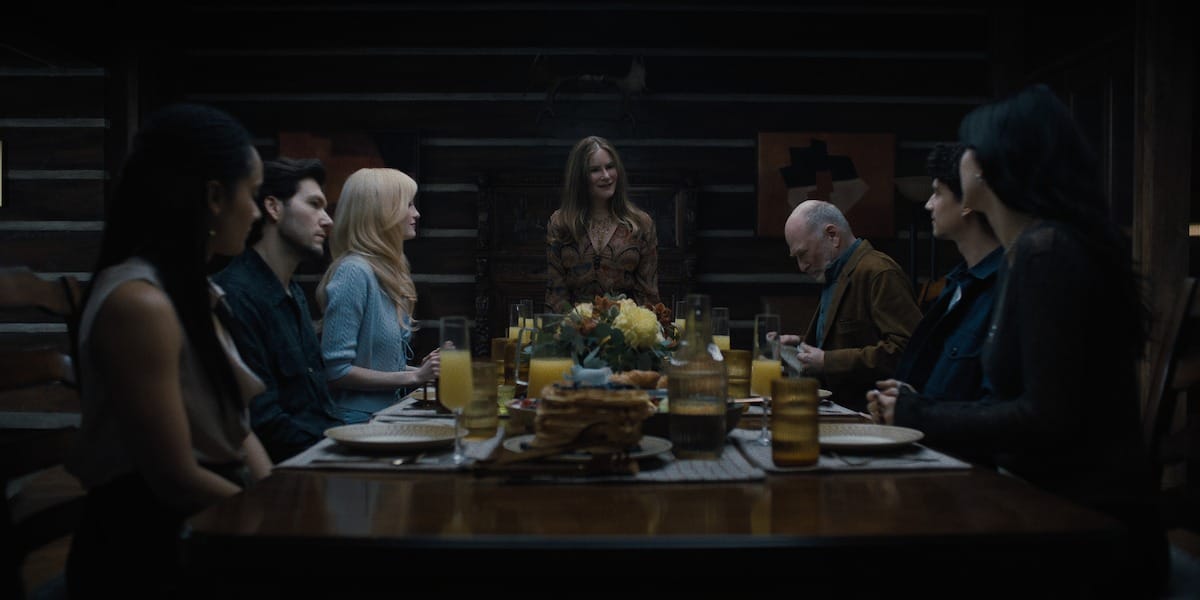
A common theme recurs across the reviews of Netflix's eight-episode miniseries Something Very Bad Is Going to Happen: This miniseries could have been a two-hour movie.
In particular, reviewers point to the show's fourth episode, which radically shifts some of its underlying premise, as evidence of the show not having enough story to actually sustain the number of episodes in its order. What if, this argument goes, the big twist came at the 45-minute mark of a movie? Or what if a movie just started from that baseline, then kept going? The last five episodes of the series have a lot going on, but there's nothing saying you couldn't compress the action into two hours with a few judicious trims to the story.
I understand this criticism on the level of "TV is plagued by formless miniseries" and the fact that the old "it's really more of a 10-hour movie" PR statements of the 2010s still loom large in the critical imagination. But I think that thinking about Something Very Bad mostly through this lens shortchanges all of the things it has done to be an engaging TV show specifically. The second you start trying to compress its story into a movie, you lose a lot of what makes it the story its writers clearly wanted to tell.
Intrigued? Want to read the rest of any/all? Just click the button below to pick up a premium subscription and enjoy Episodes in your inbox four times a week!