Check out what premium Episodes subscribers were reading in August!

Hello, beloved free subscribers! Last week, we finished up July, and with it a fruitful and exciting month for Episodes. We published nineteen original pieces this month, with new writing from us four times a week. Plus, we started our first-ever Episodes Book Club and (at long last!) opened Episodes to freelance pitches.
Premium Episodes subscribers got all those pieces right in their inboxes, along with Discord access, the ability to ask questions for the Mailbag, and other fun extras. Free subscribers, though, only got a couple open-to-all Wednesday newsletters. We think those pieces were neat, too! But we thought you might want a sneak peek of some of the ones you missed out on.
Want to unlock all these pieces and more? Pick up a premium subscription using the button below!
The city burners | Emily St. James, July 24 2026
 Emily St. James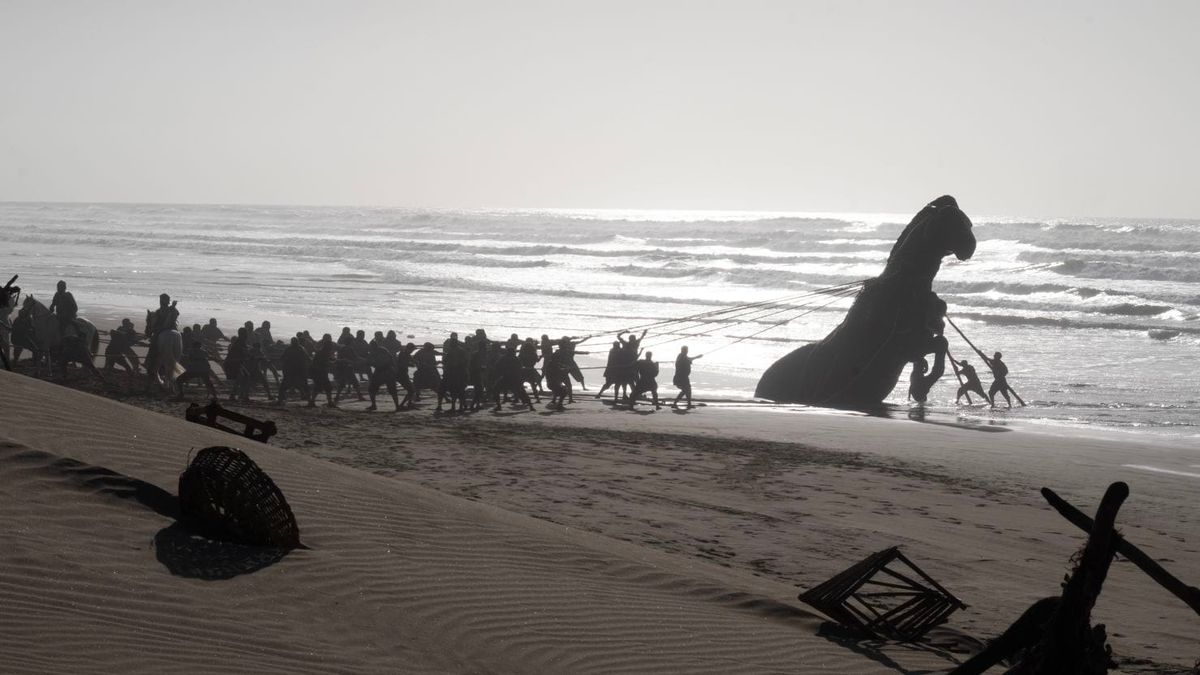
In the 2020s, Nolan has now released two straight movies that take as their premise the idea that the protagonist did at one point become The Joker. (I could stretch this metaphor to its breaking point to include Tenet, but let's not and say I did.) Intriguingly, these two movies are Oppenheimer, a biopic of a famous physicist whose work led to the invention of the atomic bomb, and Nolan's new film The Odyssey, an adaptation of the Homeric epic where Nolan all but explicitly argues that Odysseus's creation of the Trojan Horse was some real Joker shit. (And, yes, the Trojan Horse is not properly featured in the Iliad and is barely mentioned in the Odyssey but is prominently featured in Virgil's Aeneid, but it's the spirit of the thing. Away from me, pedants!)
If The Odyssey isn't Nolan's best film — and it might be — then it's damn close, an astonishing achievement for a man who finally won his elusive Best Picture and Director Oscars just a couple of years ago. The closest analogue I can think of in film history is David Lean making Bridge on the River Kwai, then turning right around and making Lawrence of Arabia, right down to the two men's very British obsessions with duty and honor and mild disinterest in the inner lives of women. (Lean just didn't have women in those movies at all; Nolan is lucky enough to work with Anne Hathaway and Samantha Morton, who both know how to find the heart in his occasionally flat parts for women.)
Nolan's Odyssey is recognizably an adaptation of Homer's epic, featuring all the stuff you half remember from having read the poem in high school, things like the Cyclops, the Sirens, and the witch Circe. But it's also unmistakably a Christopher Nolan film, and he has taken the material and warped it to his own ends, namely a single question: Once you've set the world on fire, can the inferno ever be put out?
Episodes Book Club: Infinite Jest, Week One | Emily St. James and Lily Osler, July 30 2026
 Emily St. James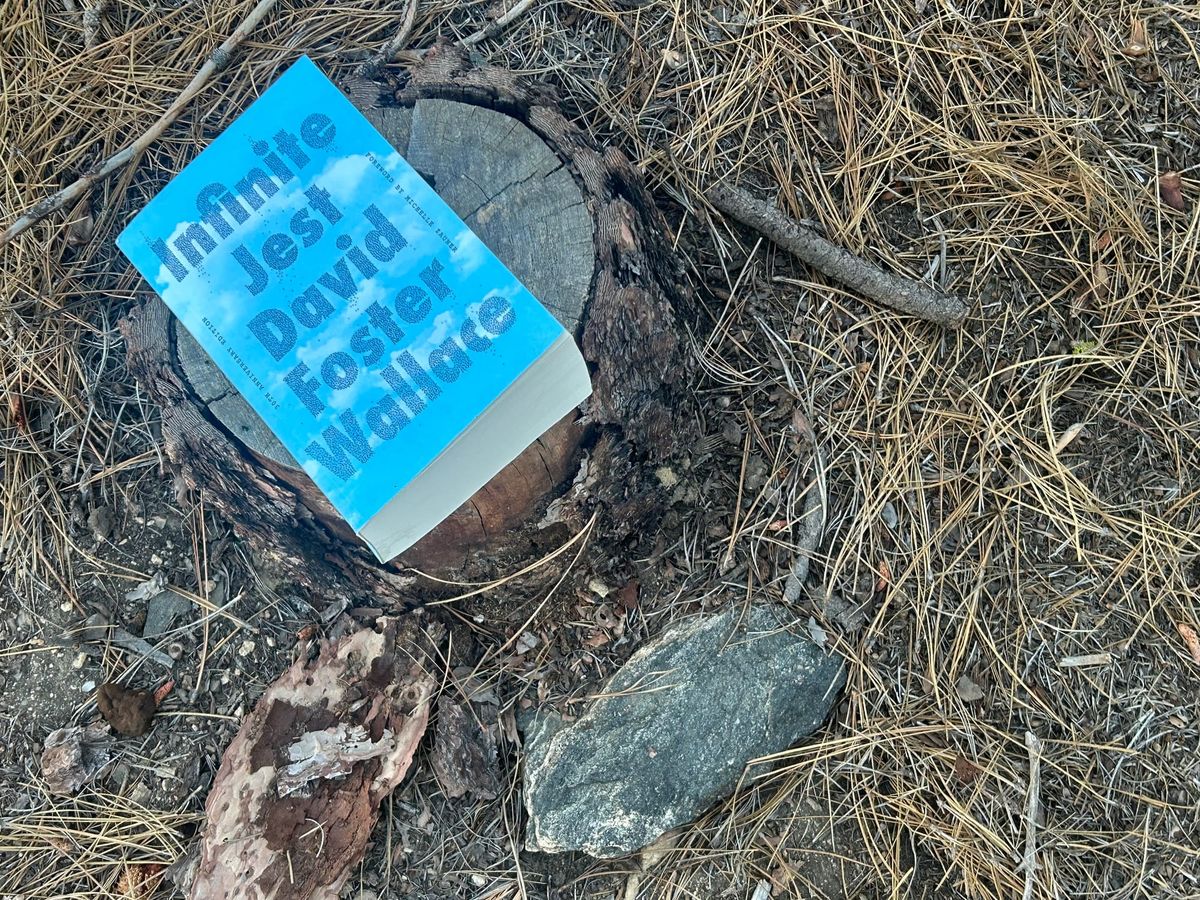
Emily: One thing that has happened since I became a mom and a working writer is that essentially all of my reading for pleasure — which this is not quite because I'm reading for work but go with me — now comes while I'm laying in bed before falling asleep each night. And this is maybe not the right way to read Infinite Jest the first time because I frequently found large portions of the story sliding off my brain. This problem went away somewhat when I made sure to read each morning before my kid woke up, but I want to flag that all of my opinions are heavily informed by this dilemma I find myself within.
Even so, when I got to endnote 304 — a several pages long story from an academic book about Quebec kids playing chicken with trains, interspersed with the ruminations of a boy trying to not plagiarize it and failing — this morning, I muttered, "Oh, Jesus Christ." The endnote was very good! It was compelling! I still felt the exhaustion of having to read it. I just wanted David Foster Wallace to settle the fuck down already. When I got back to the main story after reading it, I remembered I was in the middle of a long, aggressively transphobic passage depicting the meeting between two spies of questionable allegiance, one of whom is a possible trans woman named Steeply. (I know the espionage angle makes everything about Steeply's identity suspect, but I will be she/her-ing her, and David Foster Wallace can't stop me.) Weirdly, winding up back in a section that made me — a known trans woman — bodily cringe also made me more inclined to cut Wallace some slack. Then, a couple of pages later, I said, out loud to my wife, "I think the plot is starting?" I felt very annoyed by this, too, until I remembered that one could say much the same of nearly any long novel.
So why is Infinite Jest so trying my patience? After all, reading long novels is one of my favorite things typically. I try to read one or two a year, and I always feel better on the other side. Yet I'm struggling with this in a way I didn't Middlemarch or Moby-Dick or even War & Peace. Yes, those books all contain long, frequent digressions on topics that seem somewhat beside the point. Yes, it takes, like, 50 pages before Ishmael sets foot on a boat in Moby-Dick, and there's a long section where a preacher just sort of harangues everybody, including the reader. And yes, the "plot" of all of these books is frequently a suggestion of a thing happening amid incredible levels of atmospheric detail and worldbuilding.
July mailbag | Emily St. James and Lily Osler, July 17 2026
 Emily St. James
Emily: The thing that's so delightful about the Pride & Prejudice thread is that it's someone reading a book that is so thoroughly subsumed into our culture that they get the fun of checking out the place where a lot of the tropes started – and even if you haven't read the book in question, you can play along at home. Like you might not specifically remember how various plots resolve or anything, but you've probably seen an adaptation or reimagining somewhere along the line, so waiting for the reader to get to your favorite parts is kind of a spectator sport, like a higher-brow version of book readers waiting for Game of Thrones viewers to get to the good parts. (Sidebar, but: My favorite romcom novel of the past... however long... is Alexandria Bellefleur's Written in the Stars, a book I didn't realize was a Pride & Prejudice riff despite its leads being named Elle and Darcy. So. I may not be the target for any of this.)
Anyway, my suggestions are the complete works of Shakespeare and the Bible. I thought maybe I was joking, but I do think there's value in the idea of either, though Shakespeare would necessarily require some heavier lifting for a literature newbie. Blogging the Bible was a semi-pastime in the 2000s, and I feel like skeeting the Bible could follow just as well. Granted, everybody knows what happens to Romeo, Juliet, and Jesus Christ, but what about all the other guys? Do you know them?
If we just want novels, I always love when people fight their way through Moby-Dick or War and Peace, but I do think there would be some real juice in somebody reading Frankenstein or Dracula for the first time in this form. They're shorter, so clawing through them in a few weeks is totally possible. Both have been live-posted before, but those are foundational texts for a reason, and watching someone discover just how foundational in real time would be a blast.
The three deaths of Charli xcx's Music, Fashion, Film | Lily Osler, July 31 2026
 Lily Osler
What is left of rock, the dominant genre that once was, is a series of dead signifiers. The rock star — a megalomaniacal multimillionaire living a life of unfathomable luxury and admiration off their record sales — is an extinct species. It lingers in the popular consciousness but has lost its tether to material reality. The glamour and glitz of a rock and roll lifestyle are simply no longer possible in a musical landscape in which rock is not perched atop the highest peak. (AMC's The Vampire Lestat is a great send-up of exactly this disconnect — Lestat insists on living the rock star life even though he can't sell out even a modestly large venue.) The same can be said of the musical tropes that make something, in a cliché way, a rock song. The kind of punishing loud guitars that many of us imagine when we imagine what rock sounds like bear little resemblance to the instrumentation of currently popular rock bands — see, again, that Tame Impala song, which is mostly Halloween sound effects with occasional verses by Jennie from BlackPink.
Is it a surprise, then, that Charli would want to play around in a genre that the world has, by and large, passed by? That, after all, is the process by which pioneers like her producer A.G. Cook invented what we now think of as hyperpop. It's been thirteen years since PC Music, Cook's extremely influental hyperpop label, was born. In that time, rock has only gotten deader. Why wouldn't it be time for Charli to make a rock record?
Breaking Bad's clockwork universe seems almost comforting in 2026 | Emily St. James, July 15 2026
 Emily St. James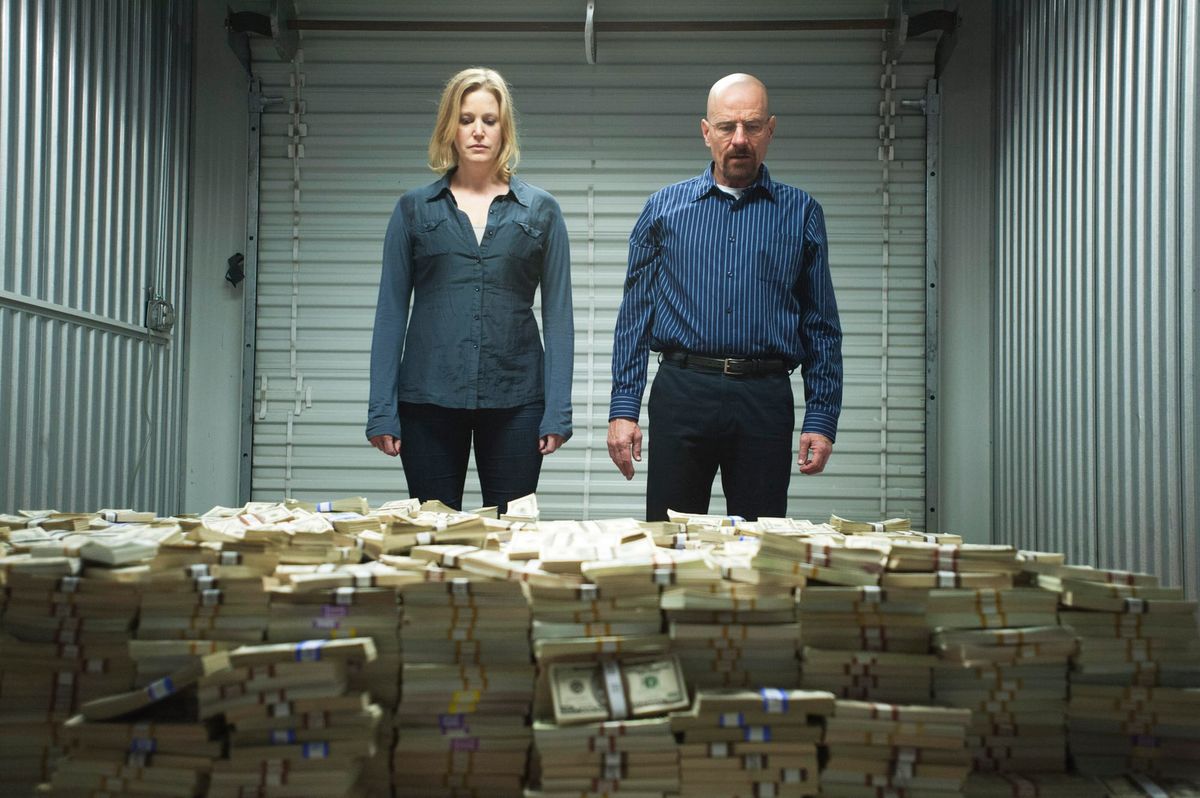
I would never make the claim that "Gliding Over All," the episode that brings the first half of Breaking Bad's final season to a close, is the show's best hour. This, after all, is the series that produced "Sundown" and "Fly" and "Face Off." This, for God's sake, is the series that produced "Ozymandias," one of the handful of TV episodes where absolutely no one will laugh at you if you say it's the best ever made. Indeed, on the initial schedule I made for this series, "Ozymandias" was one of the earliest additions, an episode of TV I love that I had somehow not once written a word about.
The problem is: I love "Gliding Over All" more. It is probably my favorite episode of Breaking Bad, for reasons even I can't quite understand.
In most respects, "Gliding Over All" is an example of a false climax, a serialized TV episode form that usually tries my patience. Essentially nothing happens in it, at least in terms of the characters we know and love, and there are several scenes that exist primarily to have one character or another reminisce about the way things used to be. All of these scenes are quite evocative — indeed, one ends with a character quite reasonably assuming he's about to be murdered — but they're not exactly pulse-pounding. It is a pause, a brief glimmer before the real storm arrives. It even ends on a cliffhanger that promises the fireworks you've been waiting for are just an episode away — or a full year away if you watched this in 2012.
Intrigued? Want to read the rest of any/all? Just click the button below to pick up a premium subscription and enjoy Episodes in your inbox four times a week!