What's the matter with trans panic media?
Scholar Katherine Alejandra Cross on why it's so profitable to "sell panic to trans people."

Over the past few years, I've found myself growing ever more agitated by the state of journalism by trans people, covering trans issues. My primary agitation remains with mainstream publications that almost never allow trans reporters to write about issues affecting our community, but a secondary agitation has quickly developed that's related to the first. Namely, too many publications exist that seem to solely consist of articles heavily intimating that trans people are doomed.
This is where you'd expect me to name names, right? To tell you which trans journalists I find most disreputable? But I didn't want to do that. I was convinced that the problem was less with any specific publications and more with the various incentive structures the trans journalism space is trapped within. If the main way to make a living covering trans issues is to make people feel vaguely panicked all of the time, then the problem is less with any individual writer and more with the system that props up that panic.
To better understand those systemic issues, I called up Katherine Alejandra Cross, a lecturer at the University of Washington, contributing editor at Liberal Currents, and (most importantly for purposes of this article) author of the wonderful social media manifesto Log Off, which (full disclosure) I blurbed. Cross remains one of my favorite sanity checks out there, and even if I don't always agree with her on everything, I find her perspective a valuable one in the midst of ever-increasing terror.
We chatted for over an hour about this moment in trans journalism, how the movie Independence Day explains the problem a little bit, and what we can learn from how our queer ancestors fought back in the depths of the HIV-AIDS epidemic.
This conversation has been edited for length and clarity.
Early in the Biden era, probably like 2022, a lot of state legislatures' bills were getting introduced to do horrible things to trans people, and even though they ended up going nowhere, some publications would write about them as though a random state had made it illegal for trans people to exist or something similarly dramatic. I had conflicted feelings about it. I do think it's good for people to be aware of these efforts from the fringe because that's often where right-wing politics is moving, but they also didn't become law. There was a disconnect between how it was written about and how it was catastrophized about. What did you make of that?
In some ways, the tendencies here stretch back even earlier, to the Obama years and the tail end of the blogging years, which led to a lot of people learning that you're always going to get more clicks from being contrarian or scaring people.
No one wants to read, Oh, here's how everything's fine. Truly. There is a deep, almost libidinal allure to catastrophe, and while people say they want reassurance, what most people actually want is a sense of mastery over events. This is by no means limited to trans people; it's the whole population of media consumers! When you combine that desire with the ambient cynicism that exists in the world, you're talking about people who are primed to believe that the real story is terrible, worse than they've been told, and that mastery or control will only come from knowing what [that worse story] is.
That links together a whole range of awful maladies in the media ecosystem — pick your favorite conspiracy theory, whether it exists on the right or the left. When you combine that feeling with actual events, like the fact that, yes, Republicans are going after the trans community and some of the laws they are mooting do get passed and do change trans people's lives for the worse, it makes it even easier to put a slant on certain stories that goes from "This is bad" to "This is the worst thing imaginable." It takes less energy to do that.
There are a few other factors at play here. Around the early Biden years, the Republicans really began to put the pedal to the metal with their anti-trans legislative efforts. But also, that was when a lot of so-called liberal media institutions in the US began to fall off with trans coverage, with the New York Times being the big, obvious example. It led to a lot of people having the not entirely incorrect assumption that if we are going to have our stories told, we need to do it ourselves. We need to become the trans news desk, writing about the stories that affect our community. And frankly, a lot of trans journalists couldn't get into legacy media, both because of the economic factors that are leading to awful contractions and mass layoffs and then institutional transphobia, the idea that you don't want to hire a trans person to write about trans people because that would be biased.
That leaves everyone caught between a rock and a hard place where you need these stories told from a sympathetic perspective or even an actually objective perspective — because who else is going to do it? — and you have trained trans journalists who cannot easily find work in the mainstream media who want to cover the rising tide of anti-trans legislation that is a genuine movement coast to coast, along with a rising tide of anti-trans scapegoating. For me, that's the backstory for this.
I think about this as a journalist and a novelist: I cannot control how the reader takes what I write. Especially when reporting, I try to be as careful as I can, but somebody might read what I write and conclude, Well, we're all going to die. And there's such an incentive structure to walk right up to the edge of catastrophe or even stick a toe over the line, and even publications I think are terrific will get as close to that line as they can because they know that drives subscription dollars and clicks. That's not just true of trans media; it's true of the media writ large. How do you think about that incentive structure, especially as it relates to social media?
There's two ways to generate clicks about trans issues. One is to sell panic about trans people; the other is to sell panic to trans people. The social media incentive structure there, as it is with so many issues, is the septic, perverted version of that old classic about local TV news: If it bleeds, it leads.
Selling people that sense of control is, as I noted, the same thing at the root of a lot of conspiracism: not to trust mainstream sources who tell you things aren't quite so bad or things could get better or don't panic. It's the cinematic logic of a disaster movie where the people who are saying, "Actually, you should panic!" are correct. Think about everything from the narrative structure of Independence Day or Mass Effect. The catastrophizer is actually correct against all the people saying, "I'll calm down. It won't be so bad." That story structure is very, very popular, and it gets you invested in the protagonist with a pleasing sense of dramatic irony for the audience. They know something many of the other characters don't or refuse to accept.
We are all reared on some version of this story, and it seeps into everyday life. There's an excellent piece from CBS News in 1967 by Eric Sevareid reporting on the findings of the Warren Commission [which investigated the assassination of John F. Kennedy] and explaining in very clear terms why he felt like there were many Americans didn't want to accept its conclusions. In it, he basically said that Americans have — he put it very colorfully — this old Yankee horse trader desire to not be taken in. Even when he was a reporter during World War II, when he came back to the US, people would pull him aside after town hall meetings and say, "What's the real story?"
There's always an assumption that the wool is being pulled over your eyes by the people in power who don't want you to panic because if you panic, you might change things. This, again, is not unique to the trans community. It's a master narrative we all buy into. But the trans version of it is based on a terror of genocide. We are faced with the horror of a group of people that, yeah, I believe do want to make life unlivable for us or even kill us. But in the face of that, the only thing to do is panic, flee, give up, essentially. Giving into that provides a sense of control, so if you are writing about these issues and want attention, you want to cater to that sensibility.
While people say they want reassurance, what most people actually want is a sense of mastery over events.
And these reporters do try to share good news when it comes up, but it never escapes my notice that those are the articles that don't get shared nearly as often. The ones that validate certain fears are the ones that do light a fire in our community, so even if you're trying to be responsible, you're not necessarily gainfully employed as a journalist by an outlet with the resources of the New York Times or Wall Street Journal. You make a living off a blog or a Substack, so walking right up to the catastrophe line is going to get the attention that will drive the traffic you need. Then you hope that people read more than the headline.
I have enormous sympathy for why our people need to do this, but we also need to be sensitive to the fact that doing this kind of work, where you are studying transphobia day in and day out, is going to mess with your brain, even with the best of intentions, even with the utmost skill. It can make you angrier, it can make you more paranoid, and it can make you more depressed. I can't say log off forever, because that's not going to be propitious for your platform or your personal work, but when you're on social media, your presence may become more toxic because you're driving yourself mad doing this work, and you need to be aware of when that's happening and when you need to take a step back.
Any journalist who has covered difficult and sensitive topics will tell you you're not immune to PTSD or trauma. At the end of the day, you need to be honest about how much you're staring into the abyss and how much it's staring back into you and be real with yourself about that.
Is this approach spotlighting the crisis in trans rights for cis readers?
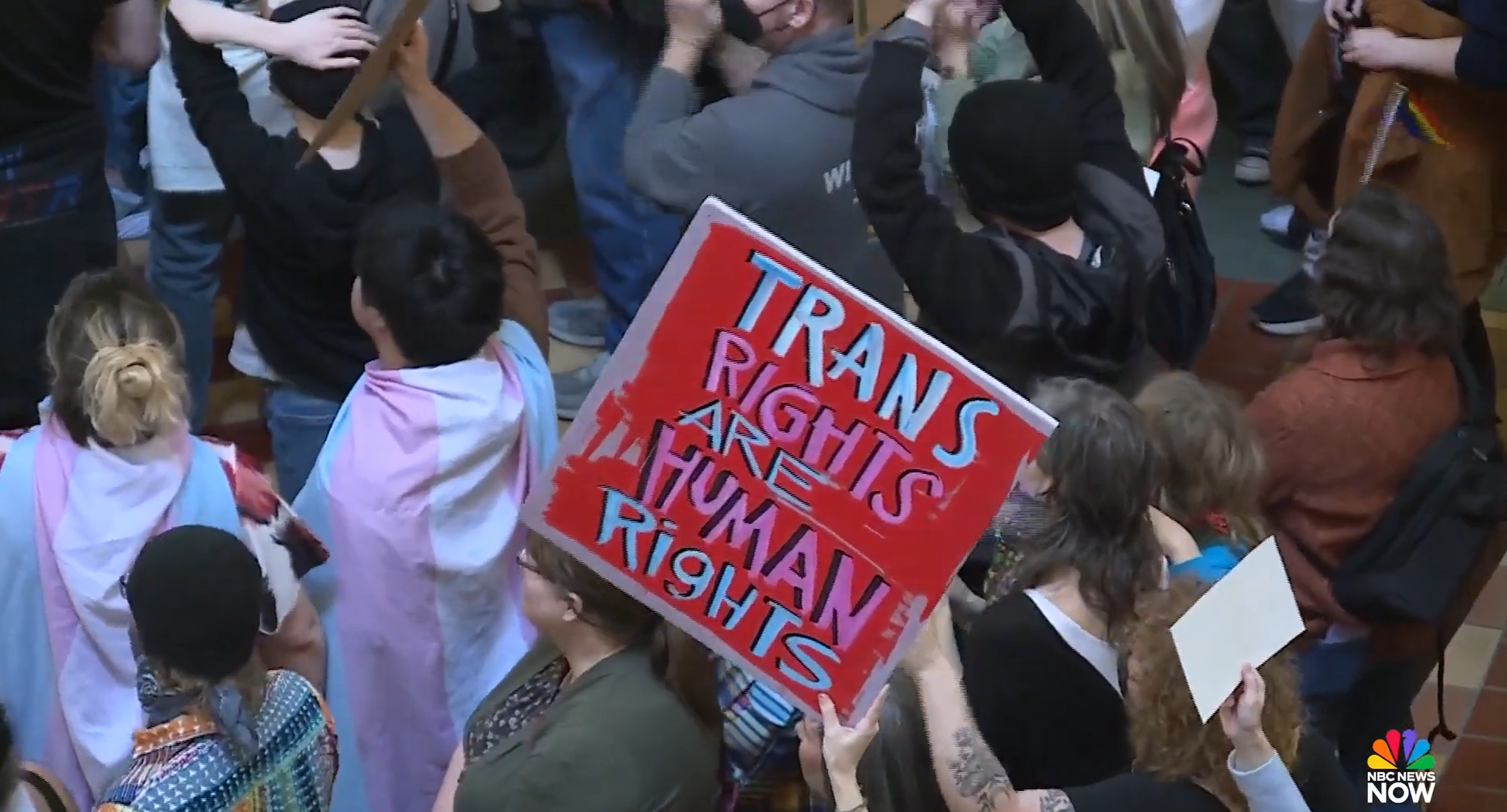
Let me argue the devil's advocate position for a second, which is that we live in a world where much of the media treats the Trump administration and Republicans as a whole through a lens of, essentially, mid-20th century politics. That argument is that they are rational actors with a specific political philosophy that mostly makes sense and is within the bounds of good, honest living, despite the huge amount of evidence to the contrary. The classic example is the sanewashing of Trump. So I always wonder if it's worth pushing a little too far in the opposite direction of the Times or the Atlantic in hopes of getting closer to something honest. Do you think there's value in that kind of opposite but equal reaction?
That's what a lot of people tell themselves when they purvey this panic. There's an aspiration that your audience isn't just trans people but also cis liberals who might be in positions of authority to either influence things or even outright do something about it, so if you ring the alarm bell loudly enough, you'll get the fire brigade. I don't think that theory of the case holds. I don't think the equal and opposite reaction strategy has paid any meaningful dividends. It hasn't created a situation where people are responding with the requisite seriousness.
If anything, I would argue, this kind of rhetoric is demobilizing. You either make outsiders think you're crazy or you make insiders — in this case trans people — panic and demobilize themselves, where we cease to be political actors are instead in full-on fight-or-flight mode. That's not how you mobilize a community. Our numbers are tiny, and by ourselves, it's difficult to influence things. But we need to organize ourselves effectively to begin with. You can't get allies unless you build an institution or bloc to ally with.
There are people who have made it their entire wheelhouse to say it's done, it's over, stick a fork in it. It's the camps for us, and it might already be too late to flee. To me, that is quitting the field effectively and enticing other people to quit the field when there's still a fight going on. If people want a cinematic narrative, I prefer the battle of Minas Tirith [from Lord of the Rings] and Denethor getting thwacked full in the face when he tells the soldiers of Gondor to flee their posts. You have to fight it out to the bitter end, to whatever end, and you have to boost people's morale in order to do that. You can't be telling people the truth is that they have to just give up and run.
So that's how I respond to the devil's advocate idea. It's having the opposite of the intended effect. People are scared, they are hurt, and they feel terrified — with good reason. Add to that, especially in our community, widespread untreated mental health issues because people either cannot afford or access affirming mental health care, and you get a pretty awful stew of people screaming in the night, hoping that someone comes to save them.
It's ironic that so much of this media infrastructure is built around the idea of knowing cynicism, of savviness, because it's actually so cynical to the point of inducing naïveté to suggest that if you scream loudly enough on social media, someone somewhere will somehow help you. That's just not how it works. It's inducing people to shirk the hard work of politics.
My nephew recently graduated high school, and he lives in Idaho. I didn't go to his graduation, partially because Idaho has a really strict anti-trans bathroom law. [It is not currently in effect due to a judge's injunction. –ed.] I am not particularly worried for myself if I go to the bathroom in Idaho, but I can't entirely escape that fear all the same. But I also know if I tell my sister, "I can't come to your son's graduation because I might go to jail," that is both factually true and me overstating the case a little bit. So even in this personal relationship with someone I love, I'm trying to figure out how to walk the line of talking about this honestly and convey my concern without making it seem like I'm about to be imprisoned.
I think wrestling with it privately in your own mind and in discussions with other loved ones is the place to start in terms of figuring out how to say, "I know it's unlikely, but I might need some extra support while I'm out there," or, "There's additional things I have to think about while I'm out there, so maybe we should be thoughtful about where we go out to eat or where we gather." There are ways to have that discussion.
There's a difference between necessary precautions and living in fear.
I've often joked darkly that I'm never going to Florida at this point, but I also think this is where those maps that show what states are safe for trans people versus not, where certain red states are the color of deoxygenated blood, may do a lot more harm than good. There are real trans people living in these places and still making a life for themselves, and it doesn't mean there isn't an added risk quotient. But this is yet another circumstances where many things can be true. Yes, we're experiencing significant internal migration of queer people, mainly from ruby red states to blue states, but those maps don't tell the full story of who's surviving and fighting there. Every time you see any news report about anti-trans legislation being mooted in these states, there are trans activists protesting at the Capitol in the picture, or they're the plaintiffs in various cases brought by the ACLU and other organizations against these laws. These people live in these states and don't want to give up just yet.
I was born and raised in New York City, and I have a deep love and attachment to that place. For a lot of trans people, their hometowns or home cities are places that made them, where they've built their lives, made memories. That's a tough thing to give up. Shouldn't they get all the support and love in the world from their own community if they decide to stay and fight?
Your struggle is a perfect embodiment of something I also go through, which is that even living here in Seattle, there's no such thing as a perfectly safe place. There have been hate crimes against trans people in the Seattle area over the last few years, and it's something that's always in the back of my mind. But I also ask myself what does it mean to live in fear versus staying safe? To me, the line is: You don't take stupid risks, but you also don't lock yourself away or restrain yourself from doing the things you want to do. You live your life and don't openly tempt fate. I'm not going to go up to a MAGA bar in Snohomish and taunt people to their faces, but I will go out to places I know I can trust with my friends and loved ones in my city. There's a difference between necessary precautions and living in fear.
Become a paid subscriber: You'll get access to three weekly newsletters only paid subscribers receive, the Episodes Discord, and almost a decade of archives. Plus you'll get to comment and ask questions in the mailbag! And for one more week, our Pride sale is running! Get 20 percent off an annual subscription! Click the button below for more!
What role does a better understanding of civics play?
Some of this is maybe poor civic education too. I saw one of those maps that suggested California was in the at-risk within two years category, and so far as I could tell, it was largely because of Gavin Newsom. I strongly dislike Newsom, who has been my governor for a while, and he's been shakier on trans rights than I would like. But there's also a whole California legislature that is much more supportive of trans rights in general, and there are cities where the city government is as well. Newsom can't just make something happen because he says it should. Similarly, when Trump signs an executive order, there is little thought to either how it's going to be carried out or what legal or legislative mechanisms might stop it. To what extent is just not knowing all the wheels and gears behind this driving some of the panic?
That's a huge part of it, but there's an added step where when it's explained, either in an article or on social media, people will say the rules don't matter anymore. To speak to the collision of actual events with this paranoia, we are living with a Calvinball Supreme Court. This administration, aided by the sanewashing of the media and the way the Republican Party has made itself into a cult of personality for Trump, has effectively or at least temporarily gotten away with a lot of violations of rules and codes. That's all true.
But what's equally true is that that strategy is not invincible. Many times, public pushback and legal mechanisms have stopped them from doing loads of terrible shit, including to the trans community. The worst anti-trans legislation that Republicans have tried to pass at the federal level has kept getting gummed up in the works of the legislature, largely abetted by the fact that Democrats in the Senate have filibustered it. Even John bloody Fetterman helped to filibuster anti-trans legislation directed at school sports. That also is a reality that exists alongside a rogue Supreme Court.
I think worse than a lack of civic education is that people refuse to be civically educated or think it doesn't matter anymore because Trump waves his magic wand and gets whatever he wants. But that's not true. Pushback has worked at every level — protests, public outcry, legislative maneuvering, suing in the courts. Every victory is to be savored. Our constitutional crisis has been marked by elite capitulation but the average citizen raising a stalwart middle finger. That's a huge part of this story, and it is tripping the Trump administration up.
There's also a question of capacity. They don't have enough guys. Their Department of Justice, gutted and hideously politicized as it is, is simply incapable of doing the things Trump wants them to do, even with compliant cronies in certain offices. All the darker realities coexist alongside the reality where ICE has had to sell or give away seven of the warehouses they were planning to use to store the human beings they've snatched off the street. They don't have the administrative capacity to do what even the evilest people in the administration want to do. You have to be able to take those wins, and a lot of that is perceptual.
I'm a lecturer, a teacher, and a scholar. Believe me, I want to believe that if you give people the right information, tell them the truth, teach them something new, they will respond in better and more productive ways. But a lot of the time, what I see is people refusing to accept that not everything is Calvinball, that there actually are profound limits to what these people can do, and we can impose those limits. Saying otherwise is ceding the field without a fight.
The big story that's been popping up in my feeds the last few weeks has been whether Zohran Mamdani is capitulating to the Trump administration in not forcing various hospitals in New York to resume gender-affirming care for youth. I don't know enough New York city or state law to know what avenues he has, but from what research I've done, it seems like this is something more suited to the state's attorney general. Can you make the argument Mamdani should be more forcefully defending trans people in his rhetoric? Sure. But what he can really do beyond that is a much trickier question. There's an idea that now that we have one of the — huge air quotes — "good guys" in office, he should make things better by fiat.
My thoughts on this are certainly complicated. I do think in rhetoric he has done quite a bit, but to a lot of people in our community that has been rejected because they say it has to be matched with action, that, in refusing to go after the hospitals harder for their suspension of trans care, he's abandoning the community and giving into the Trump administrations anti-trans, anti-gender affirming care crusade. This argument goes that you can't give an inch because it won't stop there.
And there's a lot of validity to this! We know there are many forces in the Trump administration very open about saying that going after children is what they're doing because it's easiest. You can get some people are not MAGA on their side for that. But then they want to go after gender-affirming care for all people, regardless of age. It already feels like they're testing the waters by making the age limit 19 instead of 18, which is very arbitrary.
There is also an argument put forward by trans journalists covering this beat that there are levers Mamdani or the Attorney General could pull but haven't. I think that is dramatically overstated, and the Attorney General especially is operating under certain constraints that make it difficult for her to do what some activists want. How do you sue these hospitals? How do you force them to choose between state and federal law when funding is at stake? When do you want to start that fight, inevitably on the terms the Trump administration wants, because they want to have that fight? I have some sympathy for both New York City and state governments.
In the midst of this darkness, little precedents are being established that we can build on top of.
What I find troubling is the latest blowup about Mamdani creating effectively a publicly funded clinic for gender-affirming care, particularly for HRT, which serves New Yorkers 19 and up only. To my mind, the blow up was people looking at the glass being nearly full and turning it over. For the first time, we have publicly funded HRT in a clinic in New York City, which will act as a stopgap and alternative for so many people who need it and may not be able to afford private care. It'll be an enormous resource, and it's something to build on. Instead, the discourse I've seen from trans people on Bluesky has been, "Oh, Mamdani has betrayed us again!" because the clinic is not providing youth care. Yet the issue here is that if federal funding is at stake, then gets revoked, nobody gets healthcare. This is why what the Trump administration is doing is evil. These are invidious choices that are being imposed, but I frankly think it's a big win that we're getting a publicly funded HRT clinic in New York City. That should be cheered on.
If what politicians hear from the trans community is that nothing they will ever satisfy us, that anytime you talk about the trans community or do anything slightly positive for the trans community, we're going to be yelling at you from your left while MAGA people are yelling at you from your right. That doesn't create a great incentive structure for politicians. Their cis advisors may tell them that the only winning move is not to play, and that's not a position I want especially our most progressive politicians to be in. Mamdani has, in fact, hired trans people into his administration, and I do not want that to be lost in the shuffle or forgotten. In the midst of all this darkness, little precedents are being established that we can build more on top of.
What are other movements to learn from?
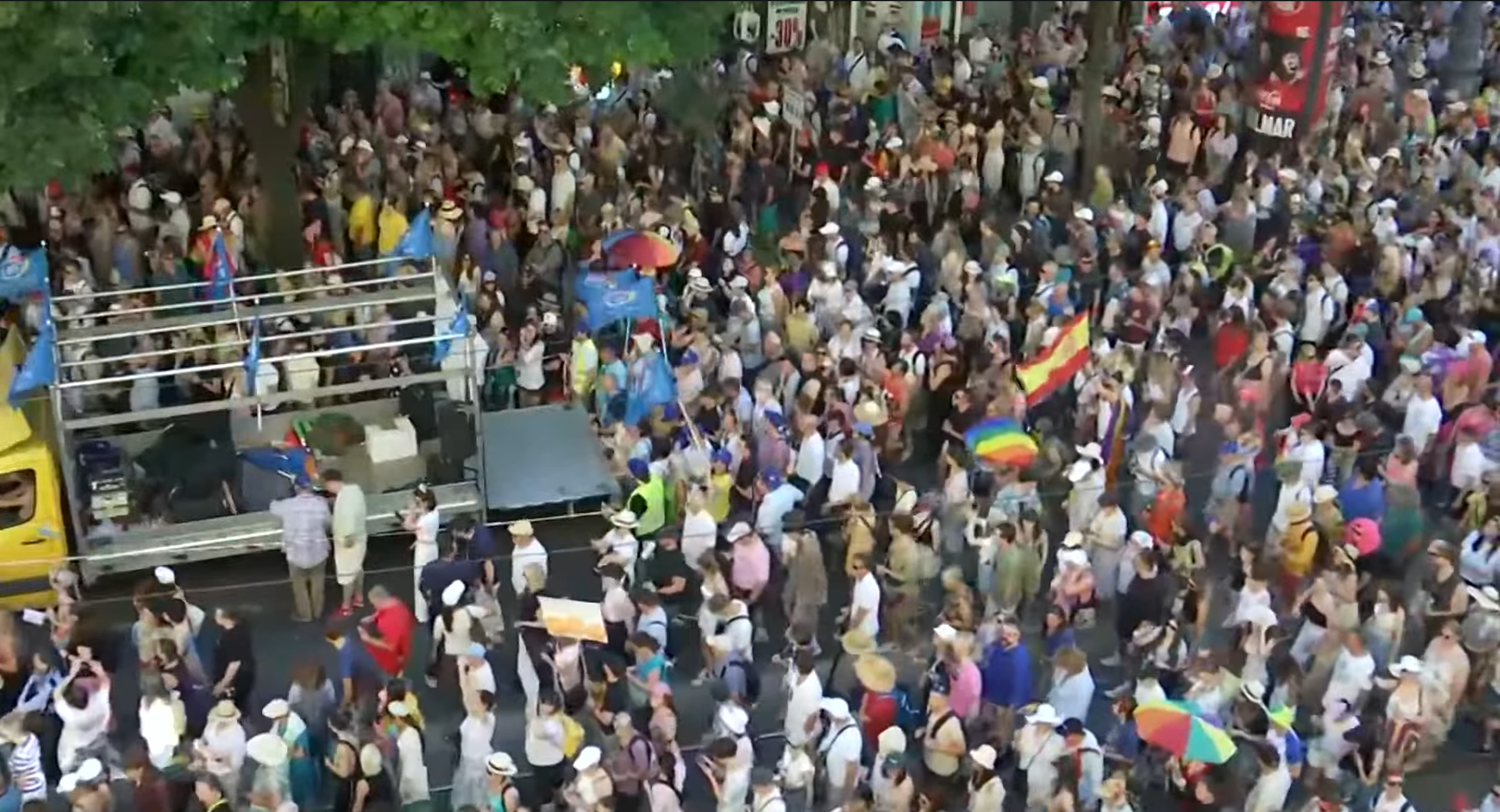
We know how often there's a temptation to turn to the Holocaust as a metaphor for whatever's happening, but we have an actual queer plague in very recent history, in living memory of many queer people, and the pushback and fight from the queer community in that moment was so strong. What can we learn from that history to live through this moment?
I get frustrated with the way people over-index on a shallow reading of the history of Nazi Germany. There are some who even use it as a step-by-step blueprint that the force fit onto current events, but if you actually look at the timeline, comparing it one to one, we're way past the point when the regime should have consolidated fully. But queer history offers a rich text, as does the history of communities of color in this country, and of course, there's enormous overlap there.
The history of the HIV-AIDS pandemic teaches us a lot about community solidarity and about how it is vitally important for us to build our own institutions to create a political constituency with specific, actionable demands that can be heard, cultivate institutional allies, and force movement on key issues. What was essential for the queer community was to increase and improve medical research on HIV, to find treatments and one day a cure, and to not treat it as this inevitability, this gay disease, but to actually put the shoulder of the state to the wheel and get that research done. Those were actionable demands.
If you weren't there, imagine how devastating and apocalyptic it must have felt. It was not just a horrible disease for which there was no cure that was absolutely devastating to the body; it also seemed to be vastly, disproportionately affecting your already under siege community. And the poorer you were, the more vulnerable you were. It affected our ability to love one another. It affected people doing survival sex work. It cut the heart out of the queer community. So many young artists lost, so many people with so much left to give, to contribute, lost at the tenderest of ages. How demoralizing and demobilizing that must have been. But people fought back, and part of it came from the fact that they recognized there was nowhere to run to. Where were you going to go to escape AIDS? It was affecting queer communities everywhere.
This is an imperfect analogy, but I think this part remains true: The fight against transphobia is global. There is no magic safe place to run to. The right wing is scapegoating and attacking trans people everywhere, and I don't have to tell you how much worse off Britain is than the US right now in very significant and material ways. In terms of authoritarianism, what did queer people do in Hungary? What did queer people do in Argentina? What are queer people doing in countries that are hybrid authoritarian regimes? How does queerness survive and thrive in Türkiye, for instance?
The fight against transphobia is global. There is no magic safe place to run to.
There's also perennial lessons to be learned from the Black civil rights movement [in the US]. When you're talking about generations of Jim Crow in this country, that was not something people framed as genocide and encouraged the mass of the populace to flee. Things like the Back to Africa movement were not enormously popular. The mainline tendency was to stay and fight in your communities. Build parallel organizations if you have to or engage with the powers that be if you must, but stay and fight.
Even on the left, people have a very weird sense of American exceptionalism that I think blinkers them to the realities of our own history. We keep looking to Nazi Germany for the powerful example of authoritarianism in action. Yet to me the bigger metaphor — and I love the work of Jamelle Bouie because he's a good popularizer of this idea — is the post-Reconstruction backlash that gave us Jim Crow. Lots of what you see happening now, including January 6, has plenty of correspondences in that part of American history. We don't need to look to Nazi Germany because it's a very imperfect fit. It's just what everyone thinks of when they think of dictator fascism. There are horrible American traditions that Trump stands in very firmly that we can talk about at length without having to turn to Nazi Germany, which I find is very imprecise and paralyzes people far more than it motivates or mobilizes them. Instead, we can look to the fact that we overcame this once in the American context, and we can do it again. We can look around the world. Queer people in Hungary held an enormous Pride march in defiance of the actual law in Budapest and turfed out Viktor Orban within a year. These things are not inevitable. The fight is never over.
We said we wouldn't talk about who was handling this poorly, but do you have sites or journalists you think are generally handling coverage of American transphobia well? Who deserves our money?
I have to be a good assistant editor and plug Liberal Currents. We're not doing beat journalism; we're more cultural commentary and being a journal of ideas, but in terms of providing realistic analysis of transphobia and the role of it in the current fascist turn, I think our trans authors, including yours truly, are doing a great job of it. Several of our cis authors also have been very thoughtful about how they're talking about the role of transphobia in this moment. While being unsparing about the moment, we never go out of our way to rob people of hope.
Among trans journalists doing good work within our community, Evan Urquhart at Assigned Media is doing damn good stuff, especially because he's able to get new and junior trans journalists to be contributors.
I also think Katelyn Burns brings a wealth of experience to the job and has insightful commentary. And The Flytrap [which Burns writes for] also has the potential to build a platform [for younger writers].
A Good Song
The free edition of Episodes, which (usually) covers classic TV and film, is published every other Wednesday. Premium subscribers get newsletters every Monday, Tuesday, Wednesday, and Friday. Our editor-in-chief is Emily St. James, and our managing editor is Lily Osler. If you have suggested topics, please reply to the email version of this newsletter or comment (if you are a paid subscriber).