The biggest danger of over-licensed music in movies and TV
Maybe the song doesn't need to do all the feeling for the audience!

I will never forget the first time I realized I had gone through The Change.
I was watching "Long, Long Time," the third episode of The Last of Us Season 1 and one of the most acclaimed episodes of TV this decade. In it, the show takes a break from its main narrative to follow two middle-aged guys played by Nick Offerman and Murray Bartlett, who find love together post-zombie apocalypse. Offerman's character has never allowed himself to enjoy the touch of a fellow man, but the end of civilization also allows him a permission structure to stop caring about his internalized homophobia. Anyway, it's a very sweet love story, and if it occasionally feels like a queer love story largely made by the cishets, well, that's what it is.
The point here is that at the end of "Long, Long Time," something very sad happens. I had mostly been vibing with the episode to that point, and even if the Very Sad Thing felt far too telegraphed to me, it was in keeping with the episode's overall tone. So I didn't mind.
And then I heard the opening strings of Max Richter's "On the Nature of Daylight" and was violently thrown out of the episode. I found myself rejecting every emotion the show was trying to get me to feel, to the degree that I retroactively soured on the entire episode. Because of one relatively minor creative choice! To this day, if you ask me about it, I will tell you that I think the episode is "fine," but if I really have to pin down a criticism more substantial than "I can tell this was mostly made by straight people, but it's good in spite of that," I will just go, "And they shouldn't have used the Richter song!"
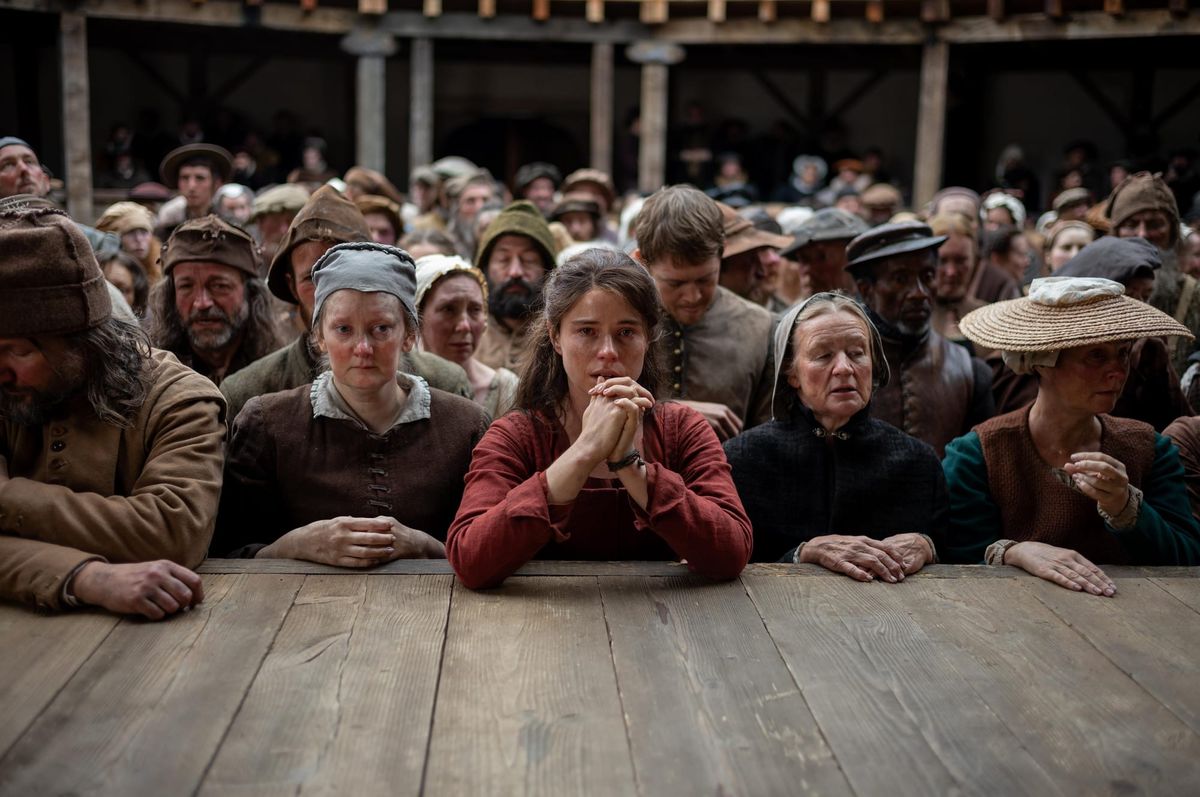
Fast forward to 2025 when I was incredibly excited for Chloé Zhao's Oscar-nominated "did you know Shakespeare had a dead kid?" movie Hamnet. I like Zhao's work, I love the two leads (Jessie Buckley and Paul Mescal), and since I've become a mom, stories about dead kids hit me hard, a thing I tend to like. Then, somehow, I got spoiled on the fact that the climax of the film, which left lots and lots of people a sobbing mess, used "On the Nature of Daylight," and I started dreading the film. I just couldn't imagine the movie using the song in a way that would keep me engaged with its emotional content. When I finally did see Hamnet, I found myself approaching sobbing mess status as the film reached its climax... until "Daylight" started, when those tears retreated back into my body. I didn't have as violent a reaction as I did to the Last of Us episode, but I still had my experience adversely affected.
To some extent, I wonder if the fact that "Daylight" has ceased to work on me stems from just how long I've been aware of it. I would not call myself a Max Richter superfan, but I became engrossed by The Blue Notebooks, the 2004 album from which "Daylight" hails, in the late 2000s when I started using it as writing music for a bunch of melancholy pieces about how I didn't have gender dysphoria, no siree. "Daylight," with its gradual build, haunting strings, and thunderingly emotional climax, ended up being a particular favorite of mine, and its deeply mournful tone — conceived of by Richter in protest to the Iraq War — informed a lot of what I wrote at that time. Therefore, I've been living with it nearly two decades now, and just the sound of it reminds me of a time when I felt very unsure in my own skin. Take all of my statements with a grain of "Emily should have come out in the 2000s" salt.
But pre-Last of Us, I tended to like "Daylight" when it was used in film and TV. "Daylight" has been used in movies almost since its initial release in 2004, but it really came to prominence in a big hit film where it was used in unmistakable fashion in 2016's Arrival, which used the song to melancholy effect over scenes depicting the main character's sadness over the loss of her daughter. If I were to award a "best use of 'On the Nature of Daylight'" prize, it would go to Arrival. Notably, "Daylight" is used early in that film because "I lost my daughter" is necessary context for the character's journey in that movie. Therefore, director Denis Villeneuve is using the song to create an emotional context via musical shorthand. It's a mood-setting piece of music. That choice is very different from gilding the lily of an emotional climax as happens in Hamnet.
Become a paid subscriber: You'll get access to three weekly newsletters only paid subscribers receive, the Episodes Discord, and almost a decade of archives. Sign up for as little as $5/month below!
I am far from the first person to have had this complaint. Indeed, this article arguing that "Daylight" should stop being used in film and TV hails from 2020. And it does feel as though Hamnet served as a tipping point for many people in the way "Long, Long Time" did for me. I imagine that Hollywood will back away from the track for a while. Richter, who has become an in-demand composer of film and TV scores, will hopefully be fine without the licensing fees of his most famous piece. Eventually, a piece of music becomes so overused that everybody has to find something else. As an example: When was the last time you heard "I Got You (I Feel Good)" in a movie, used to indicate that a character was, indeed, feeling good?
What I'm more interested in is why "Daylight" has come to seem so annoying to me, and Hamnet finally helped me put my finger on it: The song is so mournful that it ends up doing much of the feeling for the audience. Like, I do not need one of the saddest pieces of music ever written telling me to feel sad about the death of a child! I can get there on my own, thank you. Letting the music tell the audience what to feel is always a huge danger in a movie or TV show, where the soundtrack automatically engages different sensory inputs than everything else onscreen, but the vast majority of film composers are good at leaving viewers just enough leeway to have their own feelings on top of the ones the film is hopefully inspiring. This 15-minute composition by John Williams, for instance, plays over the entire climax of E.T. and travels the emotional gamut in a way that makes that movie one of the most emotionally resonant ever made. But if you listen to it in a vacuum, you're not going to have the same experience. It supplements the images; it does not override them.
Licensed music always runs a different risk in that a piece of music composed specifically to be heard on its own creates a different emotional experience for the listener. And as someone who almost always writes to music, I get the reason it can become so impossible to imagine a film or TV show without the music you hear in your head. In my brain, there are songs that play over specific sequences even in Woodworking, which exists in a medium that cannot allow for auditory inputs by its very nature. (Every time my characters listen to a piece of music, you're supposed to play it in your home.) In the process of making Hamnet, Zhao was struggling to stage the final sequence, and playing "Daylight" on set helped her finally see it in her mind's eye. I cannot imagine how that cemented the music as the soundtrack of that scene for Zhao, to the degree that even when Richter composed a new piece of music for the sequence, she booted it to the end credits instead.
Obviously, I think this was the wrong impulse, but I'm clearly in the minority. And for as much as I'm complaining about a single piece of music, I think the issue here goes beyond Richter's composition to any licensed piece of music — especially one that has been used as many times as "Daylight" has. When a piece of music becomes a cinematic shorthand for "FEEL THIS WAY NOW!" then a film or TV show is in danger of either over- or under-cranking its emotional content. And if you're like me, you'll walk away from the whole thing feeling just a little bit like you weren't allowed to make up your own mind.
A Good Song
The free edition of Episodes, which (usually) covers classic TV and film, is published every other Wednesday. Premium subscribers get newsletters every Monday, Tuesday, Wednesday, and Friday. Our editor-in-chief is Emily St. James, and our managing editor is Lily Osler. If you have suggested topics, please reply to the email version of this newsletter or comment (if you are a paid subscriber).