It takes an ex-believer to make a film as holy as Wake Up Dead Man (preview)
A preview of Emily St. James's essay on the third Benoit Blanc film

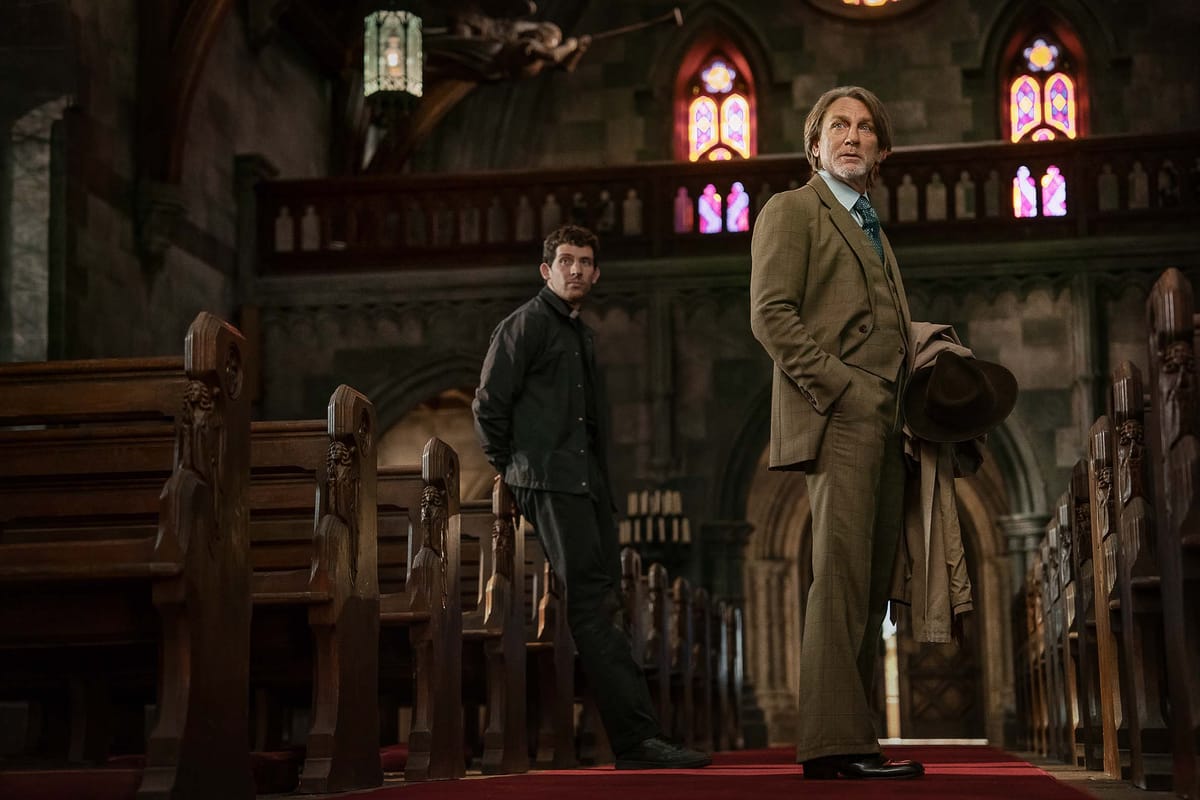
Every week, Lily or Emily write and publish a Friday newsletter about what's happening right now in pop culture. It's only for paid subscribers! If you'd like to become one of them, click the button below. Here's an excerpt from this week's piece, in which Emily writes about the third Benoit Blanc mystery, Wake Up Dead Man.
With the release of Wake Up Dead Man — out today on Netflix and still playing in a few movie theaters — Rian Johnson and Daniel Craig have completed their contractual obligations to deliver a trilogy of Benoit Blanc murder mysteries. (The other two films are, of course, 2019's Knives Out and 2022's Glass Onion.) A common refrain in reviews of the film is that the critic would happily go see Johnson, Craig, and an all-star cast unravel an elaborate puzzle every few years. There's nothing stopping the continued production of Blanc films until either Craig or Johnson shuffle off this mortal coil, and Johnson's deep knowledge of mystery fiction suggests he could keep remixing the plots of classic novels for the rest of time. Sure, both seem to want to do something else for a bit, but why not revisit the character in a few years' time?
I tend to agree with this sentiment. I'm not a Blanc super fan, but these movies are generally a treat, especially when seen in a theater. (There's something exciting about sitting in a dark room full of people trying to solve the same set of questions.) Yet at the same time, I'm surprised at how well the three existing Benoit Blanc films hang together as a trilogy and one very much rooted in the long, long Trump era of American politics.
Johnson's most consistent idea as a screenwriter in these films is to use them to explore what it means to be alive Right Now. As such, the three Blanc films use the murder mystery — traditionally one of our best literary genres for examining tricky topics like race and class — to tackle three pillars of Trump-era conservatism. Knives Out examines the uneasy status of the old-money folks who have been the traditional base for Republicanism in the U.S., while Glass Onion endlessly skewers the tech billionaires whose rapacious consumption of everything is the background radiation of reality. Both of those films, for better or worse, used their milieus to offer particular takes on the American political landscape.
Wake Up Dead Man seems like it will do something similar before it pivots into doing something more interesting and occasionally profound. Centered on a small church in upstate New York, Dead Man uses the murder of Monsignor Jefferson Wicks, a dogmatic priest played by Josh Brolin, to tackle the question of why so many American Christians have been taken with a vicious demagogue who espouses precisely zero of the virtues professed by Jesus in the New Testament. For the first half of the film, you'd be forgiven for rolling your eyes at the obviousness of the allegory. Oh, this little church is under the sway of a hateful man who turns the flock into a self-perpetuating cult of personality? Sound like anybody you know? Yet right around the halfway point, Johnson does something really compelling: He stops trying to share a take on American Christianity and starts asking himself why so many people feel the need for faith in the first place.
For more on both the film and the rise of exvangelical art, click the button!