In defense of the feel-bad comfort watch
Sometimes you watch a movie to feel better. And sometimes you watch a movie to feel human.

I spent most of January 24th — from the moment in the morning when my wife ran down to the gym to tell me that ICE had executed another person in my neighborhood to the time the sun finally set on a haze of acrid smoke — profoundly dissociated. That was the day I watched an ICE officer wearing a sweatshirt from my graduate alma mater mock people for protesting at a murder site, the day the National Guard trapped one of my friends in her apartment when they blazed in on the governor's orders, the day that the smell of tear gas wafted dozens of blocks to choke me in my own home. It was one of the worst stretches of time I hope I ever have to witness, and in my memories, it is simply a blur of noise and color. I can remember what it looked like but not what it felt like. I was there, and yet I wasn't.
What little I do remember of that day is the aftermath, the long hours after ICE's presence had mostly dissipated but the city was still on edge. Late that evening, I looked at the clock on my laptop, and I realized I'd been in bed for three hours. I thought it had been 45 minutes. I have a history of dissociation — being a queer kid in Texas will do that to you! — and, while it's something I've mostly recovered from at this point, it's been coming back hard recently as the Trump administration has terrorized my city, kidnapping and murdering my neighbors as their agents taunt us from the safety of their cars. I knew that if I wanted to be a human again — and, thus, a person who could help in any capacity when the sun rose on another day of occupation — I would need to find some way to reset my brain, to slip my soul back into my body.
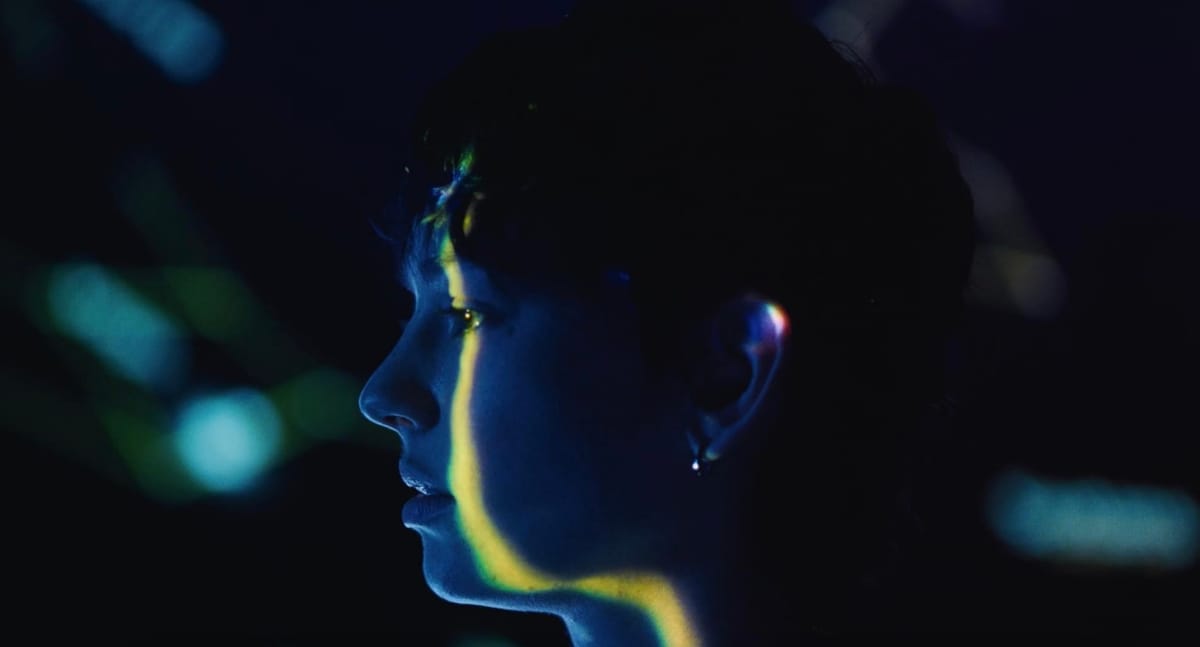
And so I staggered to the living room, sat down, and watched I Saw the TV Glow, a movie I've seen maybe six times now. It's a piece of art that's very close to my heart; I can recite most of Maddy/Tara's speech in the astronomy bubble by memory at this point. And yet that familiarity does nothing to keep me from sobbing every time I watch it. If anything, knowing the despairing implications of Owen/Isabel's choice at the end makes the whole thing sadder; what makes a tragedy painful, so often, is knowing the whole time that the protagonist will make choices you so desperately wish they wouldn't. It's the definition of a tough watch, and that's exactly what I needed. After a terrible day, it let me feel again. By the end of the film, I no longer felt as if I were floating a few feet above my own head at all times. I felt sad and reamed-out and, most of all, human.
I'm not about to argue that I Saw the TV Glow is a typical example of what's often termed a comfort watch. But I don't think it's uncommon, either.
Comfort watch is a vague term, one that's often thrown around in explaining, with a little bit of stigma on it, your own media preferences over a really difficult period. Here's the closest I can come to a synthetic definition of the popular conception of a comfort watch: a familiar, low-conflict TV show or movie that lets you turn your brain off during a difficult time. Essentially, comfort media is often held to be the screen equivalent of dry toast and applesauce for an upset stomach. It's something mild-flavored that's not particularly healthy or tasty, but, hopefully, it will help you feel just a little bit better. Under this definition, comfort watches are utilitarian, a way to mask pain without erasing it, movies as ibuprofen.
There are certainly ways in which this stereotype of the comfort watch is true! I do think, for instance, that familiarity is an important part of what most want out of a comforting show or movie. But, by and large, the stereotype above doesn't accurately reflect how people I know and love watch comfort media, or, more importantly, why they watch it.
In my experience and that of many, many people I know, comfort watches, especially the feel-bad sort that I believe are secretly quite common, are less an anesthetic and more a way to bring yourself back down to human scale in a time of world-historic crisis. They can be a means to reduce the constant emotional and informational overload of the 21st century to something you can comprehend, feel, and live your way through. Comfort watches aren't just things that make you feel good. Just as often, they are simply things that make you feel, full stop.
As I mentioned above, I do think that familiarity is a major uniting factor in what makes something a comfort watch. But I don't think "familiar" necessarily means "realist" or "unadventerous." Rather, what makes a comfort watch familiar is, often, simply that it's a rewatch. I know that there are people who go for new comfort watches, who binge a TV show they've heard is good as a way to regulate when they're feeling particularly bad. More often, though, comfort watches are familiar because you know their beats already, because they're films and shows whose shapes you already understand intimately, whether those shapes are soft and gentle or strange and spiky.
Which brings me to my much bigger quibble with the popular conception of comfort watches: that they are, in any way, "low conflict." Unlike the familiarity element, this is something that doesn't comport at all with how I've (anecdotally) seen my friends, family, and acquaintances engage with film and television when they're in a difficult emotional place.
Become a paid subscriber: You'll get access to three weekly newsletters only paid subscribers receive, the Episodes Discord, and almost a decade of archives. Sign up for as little as $5/month below!
When people I know go for a comfort watch, it's often a weepy romance: I've met partisans to Titanic, The Notebook, A Walk to Remember, and, yes, even Love Story. Other times, I've met people whose go-to comfort watch is a movie they remember from their childhood, something that seemed kind of grown-up when they were a little kid and that aged with them: The Big Chill, Lawrence of Arabia, The Age of Innocence, The Shining. I had a friend in college who would watch Star Trek: The Next Generation's sadder and more emotionally moving episodes — "The Measure of a Man," "The Inner Light" — over and over when she was depressed or anxious. Another friend watched Twin Peaks, including the parts that are (to say the least) not terribly low-conflict, every time she was feeling low. Again, this is anecdata, but for every person I've met who watches, like, Schitt's Creek when they're sad, I've met three or four others who have some idiosyncratic and not particularly conflict-free work of art they turn to when times are tough.
The throughline of all the watches I mentioned above is profound, often devastating emotionality. Whether romance, drama, or horror, whether high art or low, they're all pieces of media that demand that their audiences feel deeply alongside their characters. Again, to be eminently clear: I am not arguing that this is the norm for all comfort media! There are so many people who do, in fact, just want to watch something with very little conflict in it when times get tough. But doing the opposite — leaning into conflict — is more common than you may expect. Think, for a moment, about whether you yourself have something you watch when you're feeling bad that, by most definitions, is not terribly "comforting." Something where, when you tell a friend you watched it after a rough day, you might laugh a little bit at your own expense at how odd it is to turn to this particular movie or show when times get tough. Most people have pieces of media like this, and I think most of them conform to the pattern I mentioned above.
And this is where I really take issue with that popular definition of comfort watches: I don't think they're actually something that most people use to turn off their brains. Another thing all the works above have in common, to one degree or another, is loss: lost love, lost adolescence, sometimes even lost lives. In many of those works, that loss gets reversed in a moment of catharsis; in many, it doesn't, and it's just something the audience has to sit with in the long minutes after the screen goes dark. Every loss, reversed or not, is still the focal point for a lot of yearning. It is still the source of vicarious, insidious pain, a melancholy that reveals the frailty of all things. It speaks to a set of themes that are painful, relatable, and — crucially — human-scale.
One major issue with living in this particular part of the twenty-first century is that we are made to exist in a constant state of what I might call overreality, one in which any trauma we may endure is magnified by the way we subject ourselves to a constant feed of everyone else's thoughts and opinions, accurate or distorted, about it. On January 24th, as I walked around my neighborhood, searching into alleyways for ICE trucks and dashing away from tear gas canisters, my phone was constantly vibrating with my local Signal group chat as people shared rumors, reports, and fears back and forth at a rate no one could possible keep up with. Once I was home, I found myself instinctively checking social media to see if the Trump administration was planning to try to destroy Alex Pretti's reputation the same way they tried and failed to destroy Good's; they did, and just because it didn't work to change public opinion on the killing doesn't mean it wasn't horrible to witness in real time. It's not just social media, and it's not just the internet: it's the way our information environment, writ large, at every scale from the interpersonal to the international, is constantly and consistently overwhelming us.
I am not interested in arguing that the conditions of that information environment are universally bad. I'm immensely grateful for my local Signal group, messy as it can be (and it can be pretty messy). But, for good or ill, trying to exist as a physical body within the 2020s information landscape can become so overpowering that you temporarily lose your ability to feel like a person.
This, then, is the true benefit of the feel-bad comfort watch: It grounds you in human scale. It puts you in the place of individual people, individual characters, as they navigate conflicts that are no less painful for having stakes that are less than world-historic. A great feel-bad comfort watch will take your mind out of a place of constant awareness and vigilance by focusing you intently on a story that demands your complete and total emotional buy-in. It's a beneficial thing, both psychologically and, I believe, spiritually, to sink completely into someone else's tragedy for a little while. I often think about the opening lines of Shirley Jackson's The Haunting of Hill House: "No live organism can continue for long to exist sanely under conditions of absolute reality; even larks and katydids are supposed, by some, to dream." We cannot live in conditions of overreality at all times. We need the productive estrangement of dreaming someone else's dreams for a couple hours.
Sometimes, after a national tragedy or just a really bad day at work, the only way to be able to seem like yourself again is to feel someone else's pain so achingly that it overwhelms everything else about you. I find the inclination many of us have toward feel-bad comfort watches so beautiful: They remind you, in a world that constantly makes you want to forget, that you're a human.
More from Episodes
 Emily St. James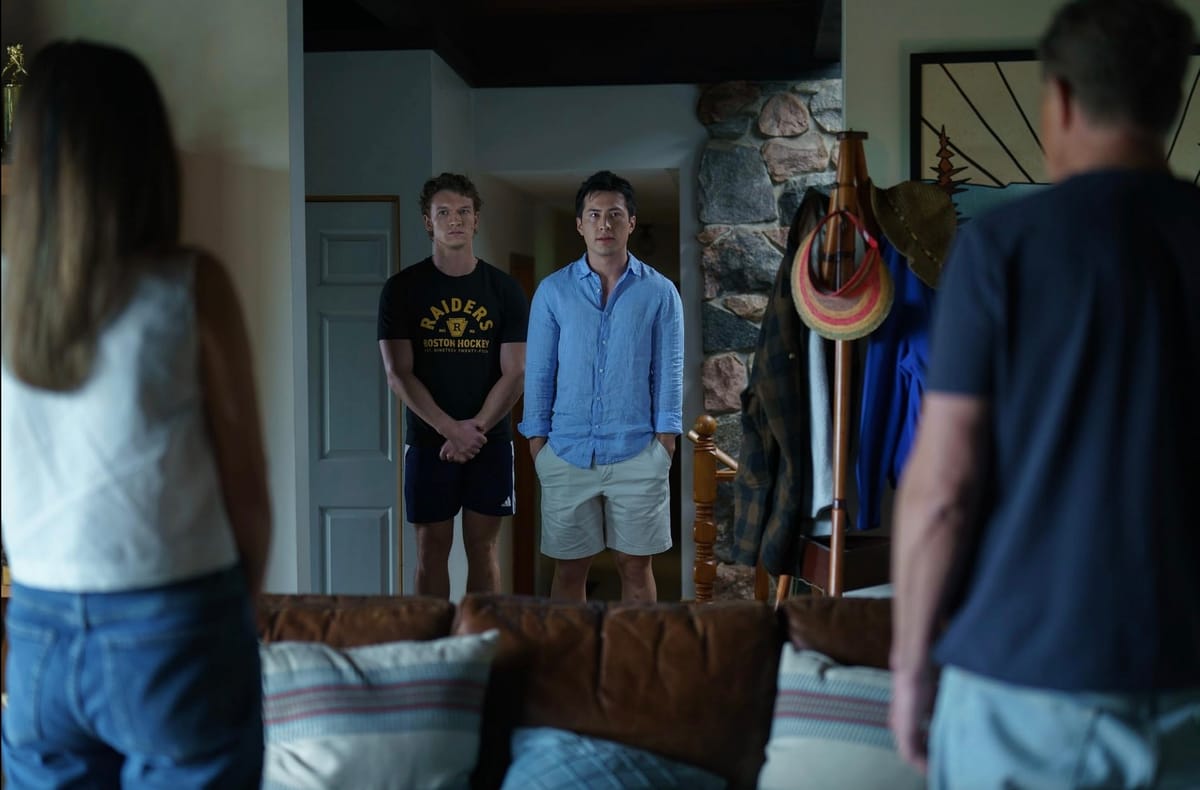
 Lily Osler
 Emily St. James
A Good Song
The free edition of Episodes, which (usually) covers classic TV and film, is published every other Wednesday. Premium subscribers get newsletters every Monday, Tuesday, Wednesday, and Friday. Our editor-in-chief is Emily St. James, and our managing editor is Lily Osler. If you have suggested topics, please reply to the email version of this newsletter or comment (if you are a paid subscriber).