Episodes Monday Rundown January 26–February 1 2026
This week: Blue Moon, Song Sung Blue, and some other movies that don't have the word "blue" in their titles.


The Monday Rundown is a weekly post talking about some of what the Episodes staff has been watching, reading, listening to, and playing in brief. It's for paid subscribers only and is a shameless ripoff of Fran Magazine's Sunday Dispatch.
This is normally only for paid subscribers, but today, on the last day of our winter sale, we thought we'd make this available to everyone. This is your LAST CHANCE to get a year of Episodes for 20 percent off! Click the button below!
Before we get to the rundown proper, I (Emily) want to note that I was in a pretty serious car accident early Friday morning. I didn't have to be hospitalized, but I am pretty banged up. People keep looking at me with that "Wow, she made it through that??!" expression, which I guess is a normal reaction to someone walking away from a car that was T-boned by someone speeding through a red light, then subsequently rolled. (Having now been inside a rolling car, I do not recommend it.) I keep looking at my kid and bursting into tears because I am starting to realize that there was a timeline where I wasn't so lucky to get to see any more of her life. That sort of thing.
Anyway, I might have a slightly reduced presence around here this week, but I told Lily that, then proceeded to write roughly 1,000 words for this rundown [Ed. note: closer to 2,000], so...
Thank you for understanding, whether I buckle down and write 500 more things or don't pop up again until next week. —Emily St. James
Watching
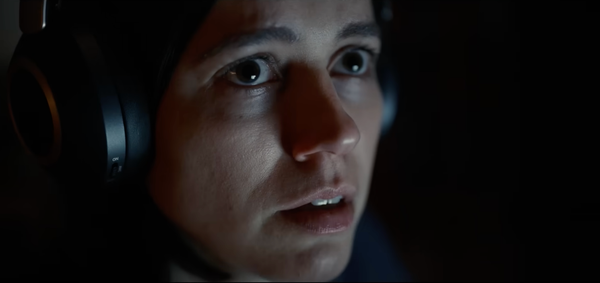
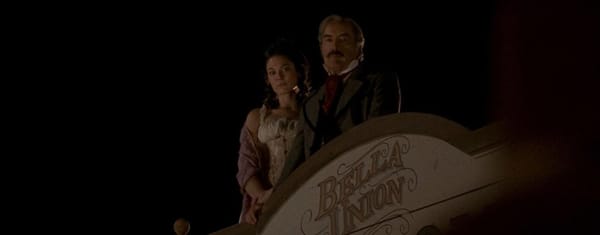
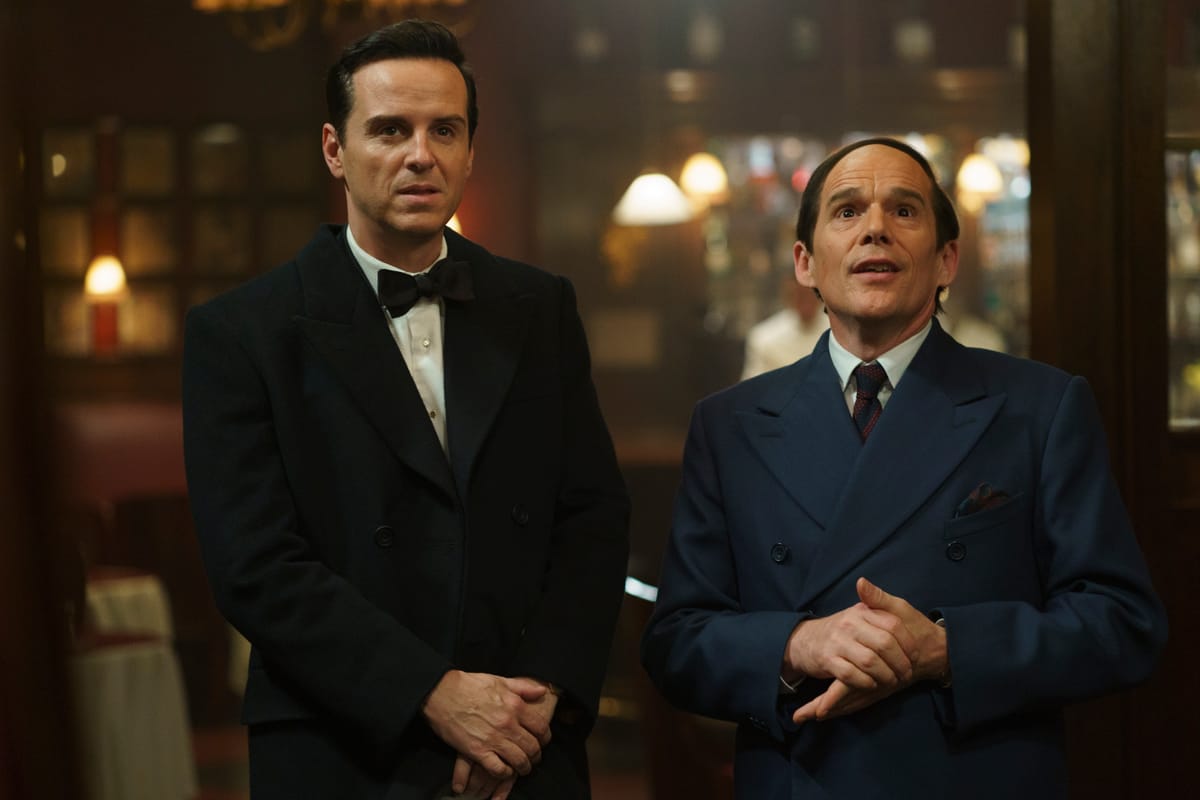
Blue Moon (dir. Richard Linklater, 2025): It may not surprise you to learn that this is such an Emily movie. It's basically a filmed stage play, except it's clearly written for the screen, and its cast of characters – Ethan Hawke is Lorenz Hart! Andrew Scott is Richard Rodgers! Bobby Cannavale is the friendly bartender Eddie! – consists of a bunch of people I would like to hang out with. I love movies that take place over one night as a general rule, and this one would make an interesting double feature with Sinners. They're both about musical folks who endure a trying night that ends in disaster. Blue Moon just doesn't feature as many vampires.
The chief reason to see this movie, as many awards bodies have figured out, is Hawke's performance, which somehow adopts all of the "I'm playing a historical figure of ambiguous sexuality in a biopic" tricks and simultaneously transcends them. The movie needs a central performance that indicates Hart's genius while also underscoring why he was a terrible creative collaborator. The scenes with Hart's former collaborator Rodgers — who has just seen his new show Oklahoma!, written with Oscar Hammerstein II, open to great triumph — stung me slightly, as I recognized a lot of myself in Rodgers, a writer whose professionalism and commitment to his work doesn't allow for the kinds of flawed fuckups who can also be great artists. There's a scene where Hart and Rodgers are chatting, and Rodgers keeps checking around him for anyone else he can talk to, and I felt it in my bones. There's also a scene where a very Young Sheldon-esque child Stephen Sondheim reads Hart for filth, and it would seem like one of those silly biopic things, except I've read enough of Sondheim's reflections on his childhood to know he was really like that. A similar plot with E. B. White is even more silly but helped considerably by Patrick Kennedy's performance.
If there's a place the movie doesn't quite hang together for me, it's in its depiction of the probably-historical-but-there's-some-debate-about-this Elizabeth Weiland, a 20-year-old Yale student who struck up a correspondence with Hart. Screenwriter Kaplow wrote the film after happening upon some letters Weiland wrote to Hart, without seeing any responses from Hart, and, thus, constructed a whole relationship for them to center the film on, one that Hart, mostly gay but able to appreciate fine beauty in all creation, hopes turns sexual. Weiland seems less into this.
There's nothing wrong with this level of fictionalization, but casting Margaret Qualley creates a disconnect between the importance of the character and her role in the story. I understand why you want a known quantity in the role, and Qualley — an actress I always like but almost never love — does a solid job at playing someone head over heels with the idea of being taken seriously by one of her idols. But she's also a touch old for the role, what with being in her 30s where Weiland is meant to be 20. I know Elle Fanning is the other young actor who gets cast in parts like this — she's basically doing a riff on it in Sentimental Value — but I think she might have been better in the role.
Anyway, good movie, worth watching if you just need to soak in the vibes of a bar full of cool people in 1943 New York City, which we all need from time to time. And Mean Child Stephen Sondheim should be in more things. Not the actor (though he was good!). The character. Add him to Avengers: Doomsday. —ESJ
Song Sung Blue (dir. Craig Brewer, 2025): Is this movie exactly what you think it's going to be? Yes, in a couple of different ways. It's both a charming underdog story about two amateur musicians who find love and overcome the odds to make it biggish and a rousing true-life story about a couple who have to overcome some major obstacles life throws in their way. Is Kate Hudson good? Yes! She should sing all the time! Is Hugh Jackman good? Sure! I never bought that he was a normal Midwestern guy, but he does a mean Neil Diamond tribute singer, which is different from a straight-up Diamond impersonation in a way I can't entirely pin down but he can.
As a once and future Midwesterner, however, I was most impressed by how this movie absolutely nailed The Kinds of Guys You Meet when you are involved in the arts at all in the Midwest, particularly Jim Belushi as a man who includes seven totally unrelated facts about every single person he introduces you to who might further your career. This movie is mom-core to the max, but, well, I'm a mom. I liked it! —ESJ
Best in Show (dir. Christopher Guest, 2000): This was the first Catherine O'Hara movie I saw, way back when I was thirteen or fourteen and watching on a DVD my dad had brought home from the library, so it felt only right to return to it this week after O'Hara passed away. I hadn't seen it since that initial watch, so it was a bit of a surprise realizing just how many lines from it I remembered verbatim. Why, for instance, did "I was on an El Al flight to Haifa faster than a walnut can roll off a henhouse roof" stick in my head for five presidential administrations? Who's to say, truly.
One thing that surprised me on this watch was the film's odd humanistic streak? Like, this is obviously a cynical movie in the way Guest's mockumentaries tend to be; there is no question that you are meant to point and laugh at, not with, these characters. And yet I found myself legitimately excited when Winky won the dog show. I'm inclined to give a lot of the credit here to O'Hara and her scene partner Eugene Levy, who are characteristically fantastic. O'Hara in particular takes a kind of stock and potentially really sexist character and imbues her with a lot of unexpected heart. She was a phenomenal performer and I'll really, really miss her. —Lily Osler
It Happened One Night (dir. Frank Capra, 1934): Watched this at literally the last minute I could — it left the Criterion Channel at midnight on January 31, two hours after my wife and I finished it. Do I even need to say that I thought this was great? Obviously this was great. It's well-known for being one of the best movies of all time, and it's aged shockingly well.
While intellectually I know the way that screwball comedy gave birth to turn-of-the-millennium romcoms and the romance novels that take after them, I was not entirely prepared for just how many romance/fanfic tropes this movie contains! First there's only one seat, then there's only one bedroom (which, yes, contains two beds because it's 1934, but still), then they're pretend-married as she runs away from her cruel father and they movie quickly from frenemies to lovers. It's kind of stunning. What's more, the movie adds many fun new tropes — Forced Proximity Due to Bawdy Folk Band on Greyhound Bus, Father-in-Law's Written Permission to Fornicate — that I think many romance novelists would do well to incorporate into their works today. — LO
"We got a BIG donation of marshmallows & peanuts and the bears were very appreciative" (Orphaned Wildlife Center, 2026): This is the only good thing. —ESJ
Reading
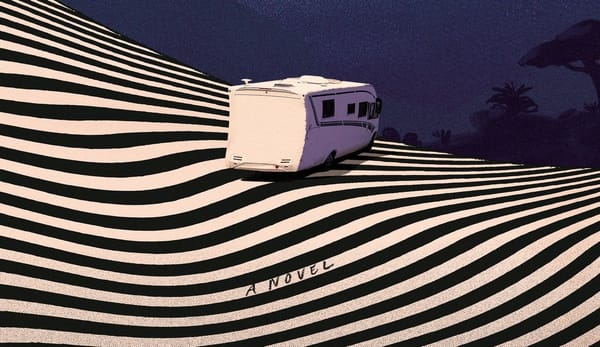
King Sorrow (Joe Hill, 2025): The entirety of Joe Hill's career can perhaps be best understood by the fact that he publishes under that name because he initially wanted some distance from his extremely famous horror author dad (Stephen King himself!), even as he looks exactly like his dad. It's been many years since he embraced the fact that his talent for writing doorstopper horror novels is, indeed, a genetic one. It's also been many years since he published a novel, with his last novel, The Fireman, arriving in 2016. In the meantime, he's gotten involved in any number of film and TV adaptations of his books and short stories, and he's also clearly put a lot of himself into King Sorrow, which is his best novel by some distance. And I like Joe Hill a lot! This book is just on some other level.
Six kids — five college students and a high-school senior they hang out with sometimes — decide to help one of their number get out from under the thumb of some criminals who are blackmailing him into stealing rare books. Naturally, they do this by calling forth a dragon named King Sorrow, a dark spirit from humanity's collective unconscious. King Sorrow loves to kill people on Easter, he loves toying with them in the months leading up to their death, and he talks like Robert Shaw in Jaws. He's a hoot, and he's in less of the book than you'd think, given how much of a shadow he casts over it.
I said in the Discord a few weeks ago that I have a huge weakness for books structured like seasons of television, and King Sorrow broke down so cleanly into a three-season adaptation in my mind that I was powerless against it. The long and intricate story told in the book's first section gives way to a second section that might as well be named "This is what your Season 2 premiere will be, adapter friends," and Hill ladles on the twists and turns as his story proceeds from the early 1990s right up to the near-present. The book is clearly indebted to It, but its core idea of "What if you and your friends made Pennywise?" is different enough to give Hill plenty of space from the earlier book.
Most of all, it's nice to have a big-ass horror novel that doesn't feel the need to constantly tell you what Real Life Thing it's about. King Sorrow is sort of a metaphor for US foreign policy in the post-Cold War era — the book starts in 1990 for a reason — but he never maps so cleanly onto the real world that you find yourself distracted by the political message. Indeed, it's possible to just read this as a story about a mean dragon and have a great time. There are a couple of moments when Hill gets a little too clever with, like, the idea of internet trolls, but they're few and far between enough that I didn't mind.
I highly recommend the book, but I do have to say there's a trans lady character in it who is a lot of fun and seems to be constantly defined by her transness in a way I didn't mind, exactly, but also found kind of curious. Hill switches character PoVs a lot, and he will occasionally clue you in to, like, a character's innate goodness or whatever by if they just immediately see this woman — who is apparently clocky as hell? — as a woman or if it takes them a second. As trans people become better known to general society, more and more places are using this one weird trick; Billions did something very similar with Taylor. But it was weird to have this constant reminder of "Oh, see, trans people are there as a sort of moral test. Isn't that interesting?!" I think Hill is better at writing outside of his own experience than his father is, but the treatment of this character was frequently borderline. Fortunately, she was enough of a supporting character that it didn't really take me out of the larger narrative. But buyer beware! –ESJ
Playing
Hollow Knight: Silksong (Team Cherry, 2025): I absolutely did not have the worst week of an Episodes staffer — that honor goes to Emily by a mile, and please join me in wishing her well! — but my week did still culminate in me slicing off the tip of one of my fingers finger with a mandoline. I needed a comfort game, so I started a new Silksong file.
This time around, I tried the Phantom route. For those not in the know, the Phantom route is an alternate way to get through Silksong's first third; it avoids The Last Judge, an infamous run-ending boss, but adds in many, many other annoyances. My main takeaway was that the game is phenomenally well-balanced: the Phantom route is, on the whole, harder than the Last Judge route mostly because of the Mist, but the skills the Mist teaches you (patience, not tanking enemy encounters, careful wayfinding) mean you're much better prepared for the Citadel when you arrive there. It's another example of Silksong feeling just as fair as it is difficult; the way the game teaches you how to play it means that even incremental improvements feel satisfying and well-earned. And it's amazing that it's in the game at all! With everything else that Team Cherry added to Silksong — a main storyline that's easily twice the length of Hollow Knight's, hundreds of hand-animated enemies, all that good stuff — it would be ridiculous to assume they would have populated the game with full-on hidden routes, and yet they did.
I am just old enough that physical games on cartridges or discs still feel like the default to me, and so the idea of a frequently-updated single player game — something that's a dynamic object, that you can buy on launch day but which you know won't get good for a while longer — still feels wrong to me. I appreciate that Team Cherry doesn't buy into that philosophy. Taking the seven years they did to develop Silksong meant that they delivered an astonishingly rich game on the first try. I dream of a world in which #gamers are patient enough that more studios can follow their example. —LO
A Good Song
The free edition of Episodes, which (usually) covers classic TV and film, is published every other Wednesday. Premium subscribers get newsletters every Monday, Tuesday, Wednesday, and Friday. Our editor-in-chief is Emily St. James, and our managing editor is Lily Osler. If you have suggested topics, please reply to the email version of this newsletter or comment (if you are a paid subscriber).