Always winter, never Christmas: 21 snowy entertainments without a Santa in sight
Celebrate winter - and NOTHING ELSE - with our list of recommendations.
It's December again, which means that for those of us in the Northern Hemisphere, winter swiftly approaches and the holiday season with it. Yet because "winter" is so associated with Christmas and assorted other winter holidays, it can be hard to find entertainment that gives you a wintry vibe – whether cozy or stark – without completely tumbling over into Christmastime frivolity or – even worse – Valentine's Day propaganda. Indeed, if you google "good stories set in winter no Christmas," one of the most consistent suggestions is C.S. Lewis's The Lion, the Witch, and the Wardrobe, which technically, yes, is set during a winter when there is no Christmas but a) features a cameo from Father Christmas and b) is Christian allegory. Thus, it shouldn't count!
We have taken it upon ourselves to come up with a number of winter entertainments that have absolutely nothing to do with any holidays at all and are, instead, about snow, ice, and so many of the other enchanting and annoying things about the wintertime. They range from survival video games to classic children's novels to Fargo, because how would you do a list like this without Fargo? If you're looking for chilly vibes, you've come to the right place.
Note: We decided Groundhog Day didn't count because it's technically set during a holiday, but if you wanted to say otherwise, then that's another good option.
Watch
ER, "Blizzard" (Season 1, Episode 10; aired Dec. 8, 1994): To me, this is the first great episode of ER, unfolding over one long shift when a snowstorm-induced 40-car pileup brings injury after injury into an ER that's short-staffed due to the storm. It invented a kind of amped-up, pulse-pounding storytelling that the show would eventually come to rely far too much on, but here, you can see the show figuring out exactly what it's capable of. Some wonderful stuff! –Emily St. James
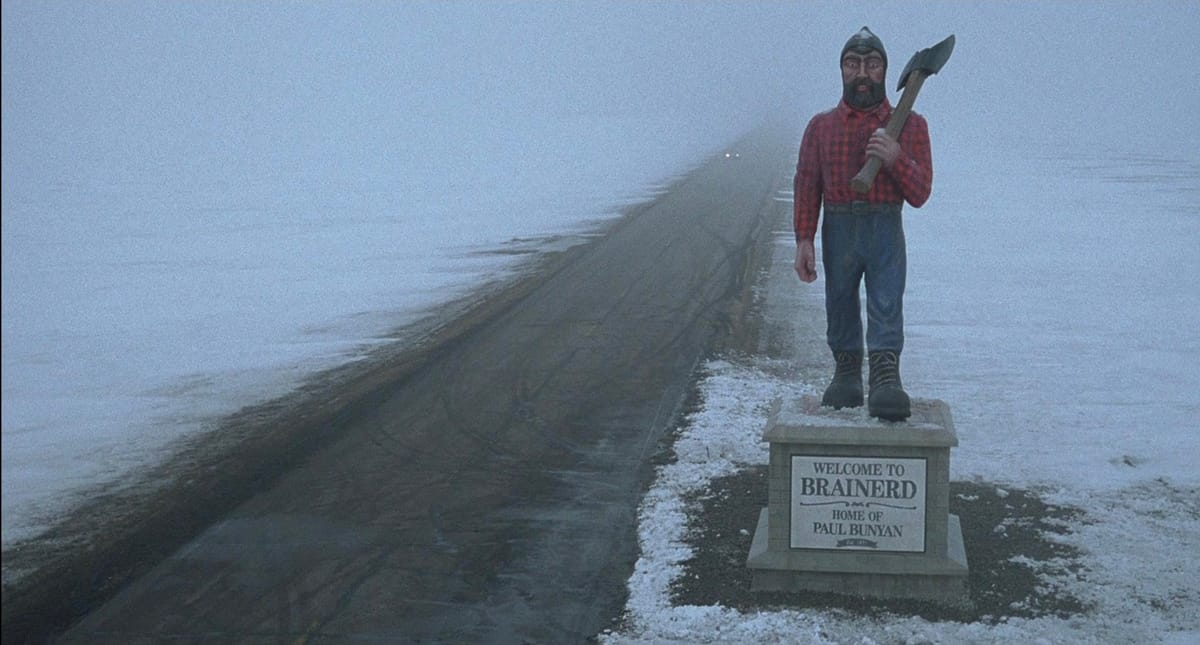
Fargo (dir. Joel Coen [and Ethan Coen], 1996): Lily would tell you that if winter has a middle name, it's "Minnesota." (You might ask: What is winter's last name? And to that, I say: Be quiet.) And perhaps the foremost pop cultural depiction of that accursed season in that state is the Coen brothers' masterpiece about a crime gone wrong among a series of people who have probably been to far too many Lutheran potlucks. Cinematographer Roger Deakins belongs on a very short list of people who've managed to turn snow and ice into the perfect backdrop for a classic film. –ESJ
Frozen (dir. Chris Buck and Jennifer Lee, 2013): I wrote this one down as a joke in our brainstorming document, but then Lily told me I had to write about it. So, this is your reminder that Disney's Frozen is technically all about winter and not about Christmas. And you probably forgot, but: It's technically set in summer because it's about Elsa's ice powers going out of control. So, there's that! Let it go! Let it go! Can't hold it back anymore! Etc. –ESJ
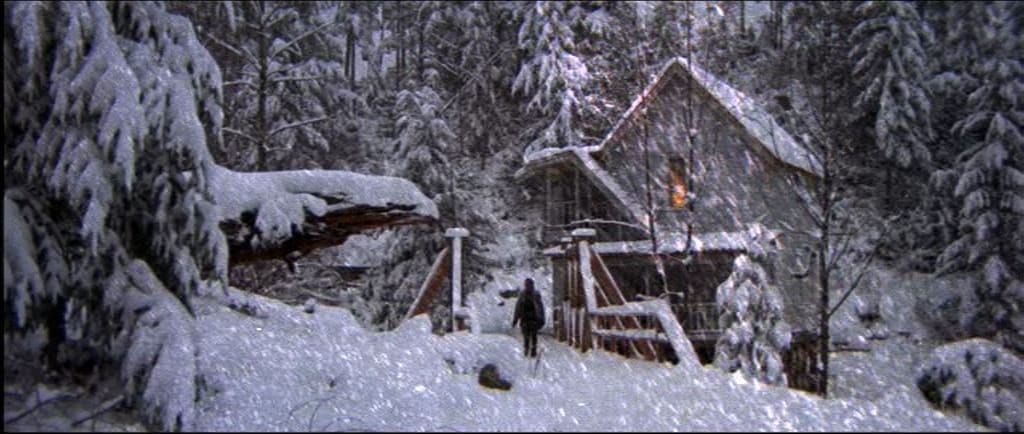
McCabe and Mrs. Miller (dir. Robert Altman, 1971): Altman directed seven or eight films you could credibly call among the best of all time, and by far the snowiest of them is this grimy anti-Western about gambler McCabe (Warren Beatty), who comes to a Western boomtown and immediately starts making his mark on it, thanks to a combination of charisma and the intelligence to hitch his wagon to the madam Constance Miller (Julie Christie). The two have a tempestuous relationship, and Altman eschews many of the usual tropes of the Western in favor of something more down-to-Earth – that is until the final shootout, which takes place in a snowstorm and is one of the best in film history. The snow wasn't planned, but Altman and his team worked around it, resulting in one of the best wintry sequences in film history. –ESJ
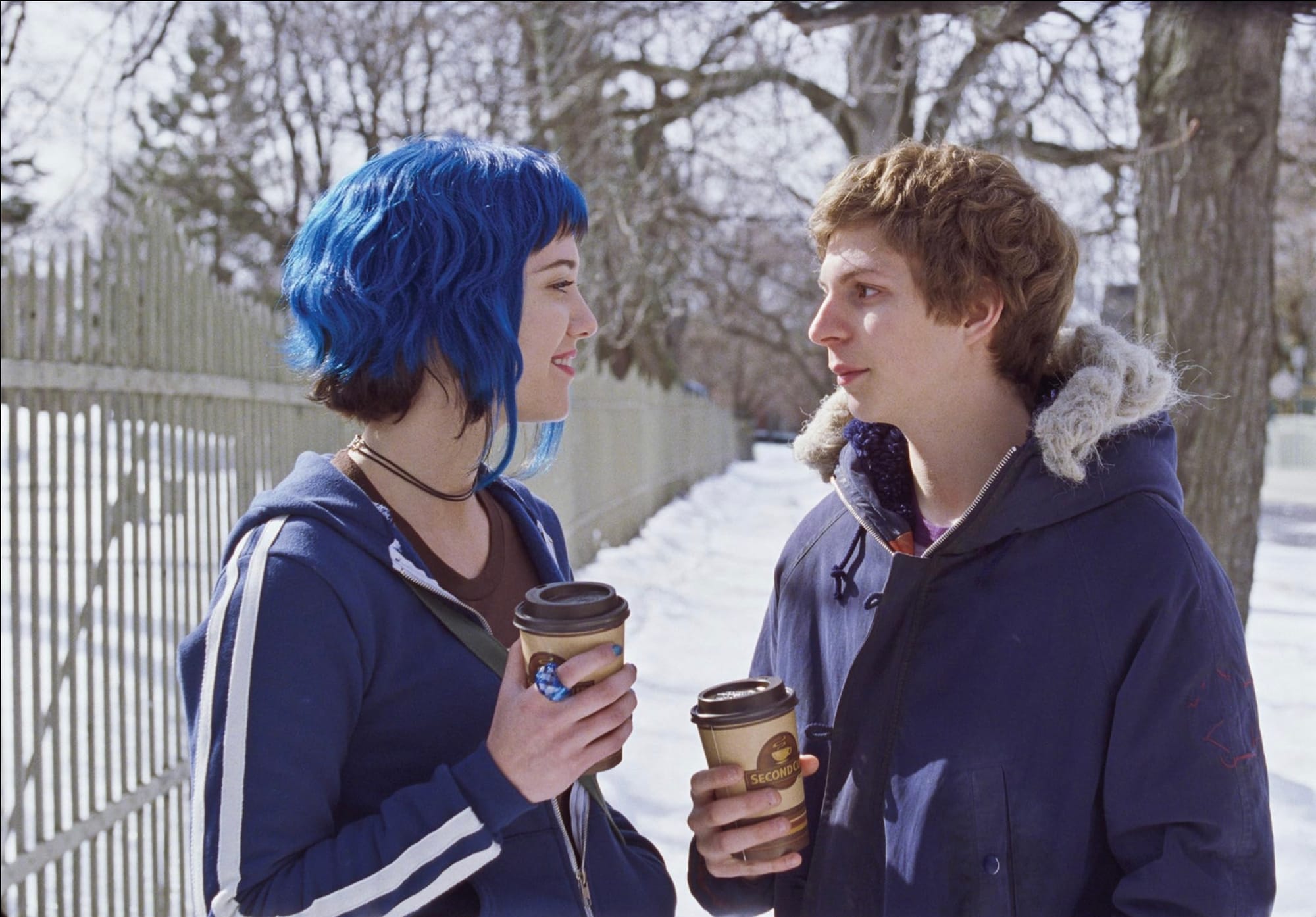
Scott Pilgrim vs the World (dir. Edgar Wright, 2011): It feels spiritually right to me that this movie (unlike the comic series it's adapted from, which spans multiple seasons) is set entirely in a grimy, slush-filled Toronto midwinter. Scott Pilgrim is a pitiful little man who does not deserve to feel spring's warm kiss 'pon his cheek. —Lily Osler
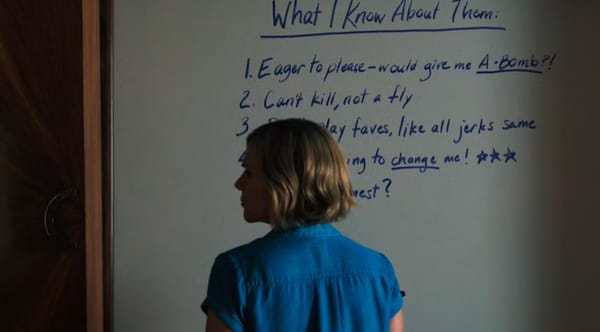
Severance (created by Dan Erickson, 2022-present): I've got mixed feelings on Severance (Make! Helly! The! Lead!), but one thing I unequivocally love about the show is the uncanny way it manages to blend ambiguity with specificity. And just like how the show's weird retrotechnology—a mushy amalgam of Seventies-style computers, DVDs, and modern cell phones—feels dreamlike rather than vague, I'm transfixed by the show's setting in the bitter late winter of a fictional high-latitude state. The way Mark's outie barely sees the sunrise before heading into work at nine and then comes back out at five to a dark parking lot covered in black ice feels like it's giving me secondhand seasonal depression, in no small part because, as a Minnesotan, I've lived that rhythm of life many times. It's a kind of pathetic fallacy that works better for never being remarked upon in the show: the outside world is frigid, colorless, and dangerous, and it's going to stay that way so much longer than you've got patience for. How could it ever feel more real than the bright warmth of your office life? —LO
The Shining (dir. Stanley Kubrich, 1980): This is a quintessential winter film in the same way Do The Right Thing is a quintessential summer film: it's an emotionally intense movie where the harshness of the weather, hot or cold, violently resurfaces what lies latent in characters' thoughts and actions. Jack Torrance has always been manipulative and cruel toward his family, so when drifts of lofty mountain snow trap him inside the Overlook with them, it only takes a little push to turn his idle threats into actions. I've always been fascinated/terrified by what an oddly neutral force, morally speaking, The Shining's frigid climate is. It drives the family inside the hotel to face Jack's wrath, then kills Jack himself when he freezes to death in the hedge maze. It's kind of like the Overlook itself in this way: the Shining is a movie where (much to Stephen King's endless consternation) evil can be augmented by natural and supernatural forces, but it can only emanate from the hatred in our own hearts. —LO
The Simpsons, "Homer the Heretic" (Season 4, Episode 3; aired Oct. 8, 1992): I skipped church last week because it was -15 degrees outside, so I feel legally obligated to add this to the list. It's a very good episode in (famously!) a very good season of television, and it captures, among other things, the feeling of just knowing from the sound of the wind outside that you'd be better off just staying in bed all day. —LO
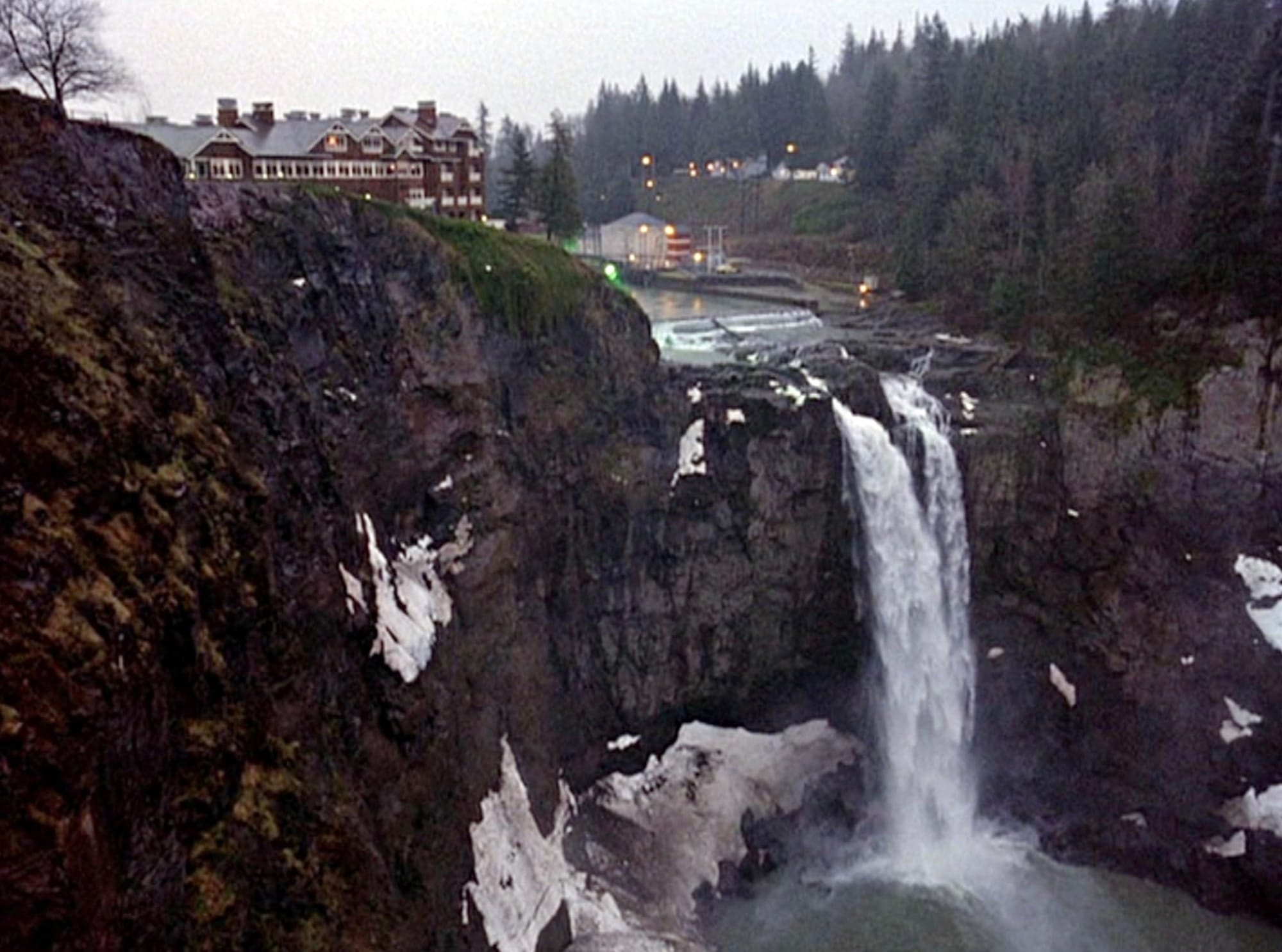
Twin Peaks season one (created by Mark Frost and David Lynch, 1990): I've got family in the Pacific Northwest, and every time I visited as a kid I was amazed at the region's weird (to me) European-ish winters. So it's, like, fall for half the year? I'd ask my cousins, to which they'd kind of nod and look at me weird, because, like, why didn't I understand that winters were supposed to be rainy and misty-cold like an eternal November? It's a season for long nights and strange dreams and shapes in the fog, and I've never seen it expressed better on film than in Twin Peaks' original run, especially in the show's first season and especially in its pilot. Lynch et al.'s camerawork captures the sense of damp cold seeping in everywhere — the woods outside town seem infinite and haunted, but the endless mist brings that same feeling to the alleyways and manicured streets of town where the show's real villains live. —LO
The X-Files, "Ice" (Season 1, Episode 8; aired Nov. 5, 1993): And this, for my money, is the first great episode of The X-Files, even if it's just ripping off The Thing. Mulder and Scully go to an Arctic research base and encounter a worm that makes people very angry. Violence ensues! Is it weird having this on here and not The Thing? Maybe. But you've probably already seen The Thing and maybe haven't seen this! –ESJ
Listen
December (George Winston, 1982): This is cheating a bit, since Winston has a couple of Christmas songs on this album, but they're generally of the "this song has had Christmas shoved into it for some reason" variety. Think "The Holly and the Ivy." Regardless, this is some lovely smooth piano jazz, all centered on the snowy season, and I have a lot of nostalgic affection for it. It's very good dinner party music if you are throwing a dinner party in 1988. –ESJ
"A Long December" (Counting Crows, 1996): THE SMELL OF HOSPITALS IN WINTER AND THE FEELING THAT IT'S ALL A LOT OF OYSTERS BUT NO PEARLS ALL AT ONCE YOU LOOK ACROSS A CROWDED ROOM TO SEE THE WAY THAT LIGHT ATTACHES TO A GIRL AND IT'S ONE MORE DAY UP IN THE CANYONS IT'S ONE MORE NIGHT IN HOLLYWOOD IF YOU THINK YOU MIGHT COME TO CALIFORNIA, I THINK YOU SHOULD. (One of the few things that I think truly captures "California winter.") –ESJ
"The Winter Solstice" (Dan Romer and Emily Greene, 2022): I spent a lot of this year working on a novel set during the Christmas season, and this ethereal track from perhaps my favorite episode of HBO Max's Station Eleven adaptation was a constant companion. Through simple fiddle and vocals, it captures perfectly the feeling of the longest night of the year. –ESJ
Read
Ethan Frome (Edith Wharton, 1911): This slight but beautiful short novel is one of my favorite things Wharton wrote, taking her gift for keenly observation of human psychology and wedding it to a story about the ways in which humans cannot help but betray each other. Plus, so many wintry landscapes and a sledding scene you are absolutely, positively never going to forget. I promise. –ESJ
The Golden Compass (Philip Pullman, 1995): My favorite book as a kid, in no small part because of just how cozy Lyra seems when she's up in the Arctic. Like, to be clear, I also liked the daemons and all that! I was just an unusually coziness-motivated kid. I was, obviously, terrified of Bolvangar, and the whole polar bear succession crisis thing always felt like it dragged on a bit, but the part where Lyra's flying with the witches above the arctic and is taking a nap in the furs?? That was the good shit, to me. —LO
Nordic Noir: Technically speaking, the Nordic noir need not be set in winter. Plenty are set in spring or even summer! But the classics of the genre tend to gain a certain power from being set among the snowy wastes, where a troubled investigator has to solve some grisly crime that has polluted the pristine snow with blood. Also, there are plenty of Nordic noirs that are films or (especially) TV shows. Yet at this time of year, there are few things better than a good murder mystery on a cold night. You can poke around the classics of the genre with this Goodreads list, or a 2025 recommendation of mine is Melissa Larsen's The Lost House. –ESJ
Shadow Tag (Louise Erdrich, 2010): If you're a Minnesotan who reads, like, at all, you're basically required by law to have a favorite Louise Erdrich novel, and this is mine. It's an insane bummer of a novel (my favorite kind of comfort media) about the bitter dissolution of two artists' abusive marriage, but it's got some of her sharpest character- and sentence-level writing and features a final reveal that I, personally, find delightfully bonkers. It is also, like, THE quintessential Minneapolis winter novel. It's got both a clear-eyed sense of how the season can inflame interpersonal tensions even among people who've long since gotten used to living somewhere this cold and an appreciation for the special and solitary beauty you can only find when a thick layer of snow makes you feel like you and your family are the only people who exist in the world. —LO
The Winternight Trilogy (Katherine Arden, 2017-2019): Winter in reality is one thing; winter in a fairy tale is something else altogether. The nights are longer and colder, and the snow is deeper and more crystalline. Perhaps no recent wintry fantasy series captures that vibe as well as Arden's trilogy of books that began with The Bear and the Nightingale in 2017. Deeply informed by Russian folklore, Arden's series centers on a young woman who discovers she can see magical creatures, something that brings her into conflict with the Russian Orthodox Church. It's a sly spin on historical fantasy that has more than a little in common with The Golden Compass while charting its own course. –ESJ
Play
Celeste (EXOK Games, 2018): I think one of Celeste's best qualities is how its levels capture the radically different way snowy landscapes can feel, which I think often gets ignored in media about winter! "Forsaken City" and "Old Site" are both frigid levels, sure, but the former feels swirling and anxiety-inducing, like being caught in a blizzard, while the latter has the cold, clear lucidity of a crisp winter midnight. Meanwhile, the early screens of "Golden Ridge" feel warm and lazy in the paradoxical way a cloudless January day can, and "Mirror Temple" is a gorgeous tribute to my personal favorite kind of winter weather: being chased through the shadow realm by a sentient eyeball. —LO
City of Winter (Ross Cowman, 2022): So, technically, this tabletop game isn't "really" about winter, since it's a collaborative story that could, in theory, be set at any time of the year. But I find that its core idea of refugees fleeing to a city where they hope to find protection gains a certain power from having a lot of scenes set in the snow and ice. And "winter" is in the title, right? Right??? The tabletop version of this game – which is very expensive – comes complete with a full scroll that rolls out to reveal more of the city's map, but if you don't feel like dropping over $150 on a game, the digital version is still pretty good and just $20. Worth it! –ESJ
The Long Dark (Hinterland Studio, 2017): Winter stories tend to be about attempts to stay warm and alive in the cold weather, but the question is always whether those attempts will be coded as (complimentary) or (derogatory). The engaging survival video game The Long Dark comes down firmly on the "derogatory" side of the ledger. You play someone whose plane crashed in the far northern Canadian wilderness and now has to survive as long as possible as the snowy elements attempt to take every little inch of progress you make in the name of survival. The game's story mode, which presents a complete narrative, is pretty good; its sandbox mode, in which you can just sort of futz around in a snowy wilderness, is the stuff winter dreams are made of. (Also good in this regard but so, so, so, so much more difficult is the strategy game Frostpunk.) –ESJ
A Good Song
The free edition of Episodes, which (usually) covers classic TV and film, is published every other Wednesday, and the subscriber-supported edition of Episodes, which covers more recent stuff, is published every Friday. Paid subscribers also have access to the weekly Monday Rundown. Our editor-in-chief is Emily St. James, and our managing editor is Lily Osler. If you have suggested topics, please reply to the email version of this newsletter or comment (if you are a paid subscriber).